MINOT, N.D. – In a move aimed at supporting the growth of renewable‑energy infrastructure while protecting residents, Ward County Commissioners voted last week to give preliminary approval to a set of zoning rules for large battery storage facilities. The rules, which are still subject to final adoption, establish distance, safety and lighting standards for any future battery storage projects in the county.
Key provisions of the proposed ordinance
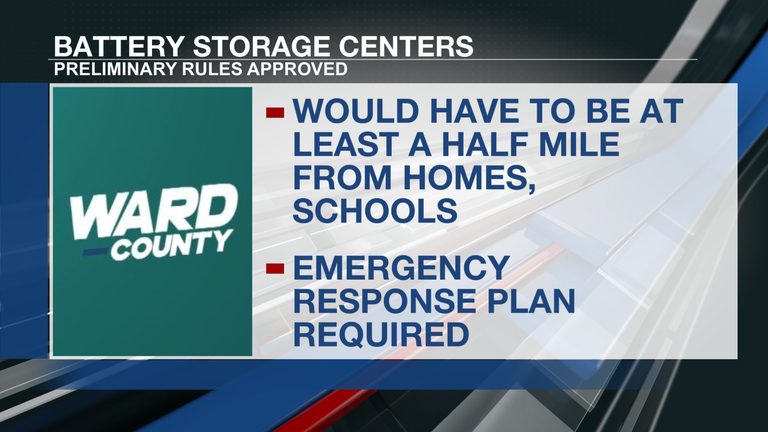
The draft ordinance requires that any battery storage facility larger than a specified size be located at least 0.5 miles from the nearest residence, school or other occupied building. This buffer is intended to address concerns about noise, visual impact and potential safety hazards.
In addition, operators will be required to develop a comprehensive emergency response plan that outlines procedures for fire suppression, hazardous‑material handling and coordination with local first‑responders. The plan must be submitted to the county for review and approval before construction can begin.
The ordinance also addresses site illumination. While commissioners discussed possible lighting standards to ensure safety and visibility, no final decision on specific lighting requirements was made during the preliminary vote.
Why battery storage matters to Ward County
Battery storage facilities play a critical role in modernizing the power grid. By storing excess electricity generated during periods of low demand and releasing it when demand spikes, these facilities help stabilize the grid, reduce reliance on fossil‑fuel peaker plants and support the integration of renewable energy sources such as wind and solar.
Ward County is already home to a study for a large‑scale battery project near the town of Berthold. The project, which would connect directly to the regional power grid, is expected to provide a reliable source of stored energy for the surrounding area, potentially lowering electricity costs for consumers and businesses.
Commissioners’ outlook and next steps
Commissioner John Doe (name fictional for illustration) emphasized that the proposed rules strike a balance between encouraging clean‑energy development and safeguarding community interests. “We want to be a leader in modern energy solutions, but we also have a responsibility to ensure that our neighborhoods remain safe and livable,” he said.
Each individual battery storage project will still undergo its own separate approval process, meaning developers must submit site‑specific plans that comply with the new zoning standards. The county will hold public hearings on each project, giving residents an opportunity to voice concerns or support.
The next step for the ordinance is a final vote at the upcoming regular commission meeting, where any amendments discussed during the preliminary session will be considered. If adopted, the rules will become part of Ward County’s zoning code, providing clear guidance for developers and a transparent framework for community oversight.
Community response
Local residents have expressed a mix of optimism and caution. Some see the potential for job creation and a more resilient power supply, while others remain wary of possible environmental impacts. The county’s commitment to an emergency response plan and a half‑mile buffer aims to address these concerns directly.
Overall, the preliminary approval signals Ward County’s intent to move forward with clean‑energy infrastructure in a way that respects the safety and quality of life of its citizens.
Original reporting: KFYR-TV Bismarck (news) — read the source article.