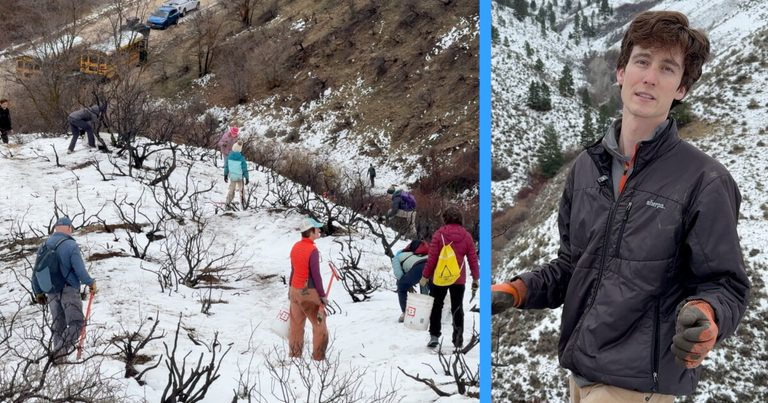
Volunteer crews gathered Saturday in the Boise Foothills to plant roughly 5,000 native seedlings across the 6,600‑acre area scorched by the 2023 Claremont Fire. The effort, reported by KIVI‑TV, is part of a larger restoration project intended to give the burned landscape a head start on natural recovery.
Snow covered much of the foothills as participants dug into the moist soil to install bitterbrush, rabbitbrush, native grasses and wildflowers. Boise State University ecology Ph.D. student Liam Getzloff explained that the wet conditions actually benefit planting: “Not a good time to plant tomatoes, but a pretty good time if you’re trying to put in a native plant garden… to get things kind of going.” He added that the damp earth helps seedlings establish roots before winter dormancy, allowing some plants to show green leaves as early as March.
Restoring native vegetation is seen as a key strategy to reduce future fire risk. Getzloff noted that invasive grasses can accelerate fire spread, while native shrubs and grasses create a more resilient ecosystem. The newly planted seedlings also provide essential habitat and food for wildlife. “A lot of these shrubs are pretty important in terms of parts of diets for wildlife… it provides some thermal refuge, a little bit of shelter from the elements in the winter and then a food source year‑round,” he said.
Evidence of wildlife activity was already visible, with deer tracks crossing the snow near the planting sites. The seedlings are expected to support pollinators later in the season as native wildflowers bloom.
The volunteer drive attracted a diverse cross‑section of the community, including mountain bikers, runners, hunters and wildlife enthusiasts. Getzloff highlighted the broad local connection to the foothills, saying, “A lot of people really care about these landscapes.” Another group spent the morning collecting seeds elsewhere in the foothills, further bolstering restoration supplies.
Idaho Fish and Game confirmed that the project aims to plant roughly 5,000 native seedlings overall. While the current planting took place in snowy conditions, organizers plan to continue seeding throughout the winter months, with additional planting slated for early spring when seedlings can emerge from dormancy.
What’s next: Volunteers will keep planting native seedlings through the winter, and a larger planting push is scheduled for early March when warmer temperatures allow new growth to appear. Residents interested in joining the effort can contact the restoration team via the Boise Foothills volunteer hotline.
Sources: kivitv.com