The Commonwealth Transportation Board met on Oct. 13 to address a looming $1.7 billion shortfall in Virginia’s highway‑maintenance budget. The board’s proposal would earmark an additional $239 million annually for pavement repairs beginning in fiscal year 2028, while shifting funds away from new construction projects and tapping $300 million in GARVEE bonds to mitigate the impact of those cuts.
Impact on Smart Scale grant program
Under the plan, the Smart Scale grant program – a statewide competitive fund that has awarded $7.6 billion to transportation projects since its 2016 launch – would see its funding reduced by roughly 25 %. Councilmember Laura Dent of Harrisonburg, a frequent Smart Scale recipient, warned that the reduction could hurt local safety projects such as sidewalks, transit improvements and other non‑highway initiatives.
Proposed project reshuffling
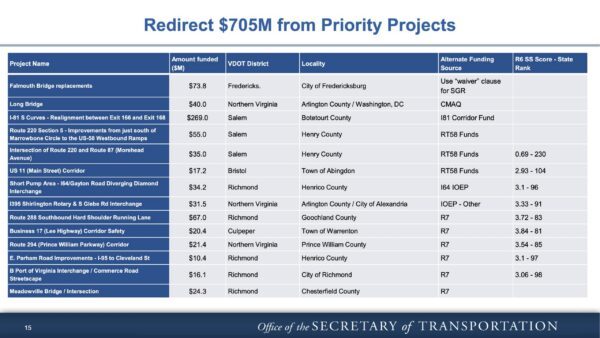
The board also discussed moving about $705 million from priority projects to alternate funding sources, or allowing six projects to re‑enter the seventh round of Smart Scale competition. The six projects slated for possible resubmission include a $67 million hard‑shoulder running lane on Route 288 in Goochland County, a $20.4 million safety corridor on Route 17 in Warrenton, a $21.4 million corridor project on Route 294 in Prince William County, a $10.4 million improvement on E. Parham Road in Henrico County, a $16.1 million streetscape project at the Port of Virginia interchange in Richmond, and a $24.3 million bridge/intersection project in Chesterfield County.
Funding sources and administration response
In November 2025, the board allocated roughly $715 million from GARVEE bonds and the Priority Transportation Fund to a list of projects, of which about $10 million has been spent, leaving roughly $705 million still available. The Office of the Secretary of Transportation recommends using more restricted funding sources for projects totaling about $555 million, preserving flexible funds for other transportation needs.
Secretary of Transportation Nick Donohue said all projects would compete on merit with no scoring preference, and existing projects would not need to be rescored. He likened the addition of six projects to “expanding the field of 68 to include another six,” emphasizing that they would not receive preferential treatment beyond skipping the initial application process.
Board concerns and next steps
Board members, including J. Randall Minchew, voiced concerns about fairness, comparing the injection of six projects into the competition to an “unfair” mid‑tournament entry. The board will take a final vote on the proposal on Dec. 9.
Construction and maintenance costs have doubled over the past decade, according to the National Highway Construction Cost Index, with asphalt accounting for 33 % of the increase. The board also discussed a policy requiring explanations for any pavement or bridge‑maintenance spending changes exceeding 5 %, and a four‑year data‑based reassessment of road and bridge conditions to forecast needs over the next 20‑50 years.
Original reporting: Alexandria, VA News – WTOP News — read the source article.