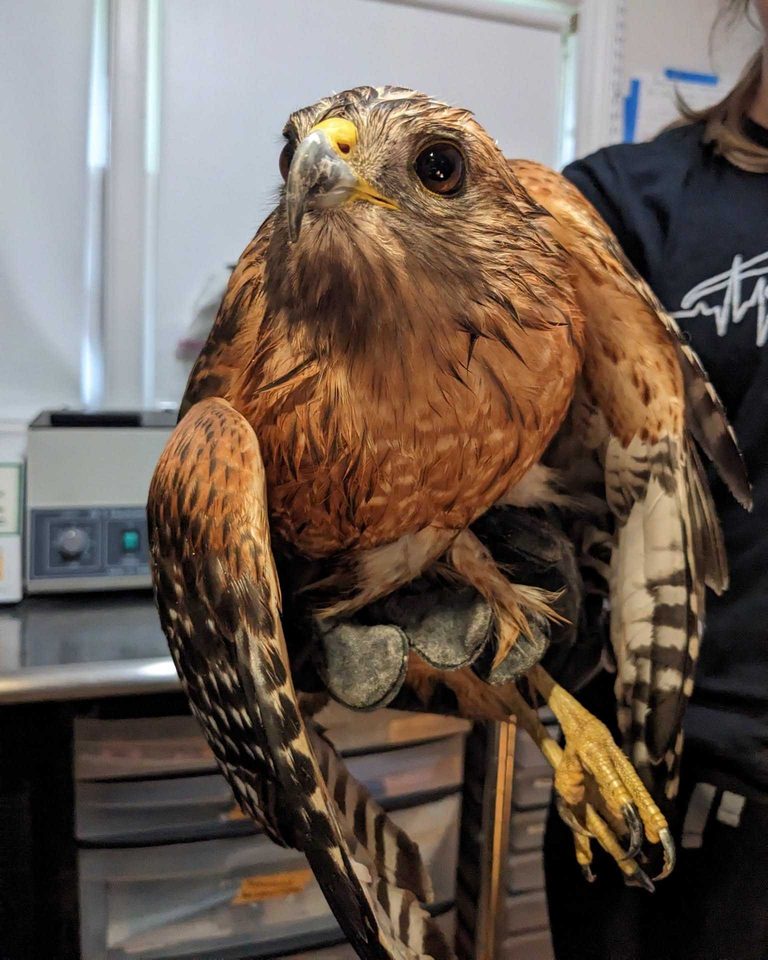
A mature red‑shouldered hawk was discovered grounded in a driveway about a mile from the Southwest Virginia Wildlife Center in Roanoke, Virginia. The center’s staff responded quickly, conducting a thorough examination to rule out common health threats such as broken bones, lead toxicity, eye problems, head trauma, emaciation, and collision injuries.
Examination reveals unexpected cause
All standard health checks returned normal results. However, further inspection uncovered an unusual diagnosis: the hawk weighed over 910 g (approximately two pounds), making it too heavy to achieve flight. “We couldn’t even palpate her keel because of the thick layer of fat covering it,” staff noted.
Feeding wildlife creates dangerous consequences
The person who found the hawk reported that neighbors had observed a rapid disappearance of their free‑roaming chickens over recent weeks. Wildlife officials concluded that the hawk had been preying on these chickens, consuming enough to gain excessive weight, then resting in nearby trees until ready to hunt again.
“Our mystery was solved. This queen was picking off the buffet of easy prey set out before her, eating her fill, and then snoozing until she was ready to eat again,” the center wrote in a Facebook post. “The chickens were let out in the morning, she ate another, and repeat.”
Warning to the community
The center emphasized that this incident serves as a clear warning against feeding wildlife, whether directly or indirectly. A bird unable to fly is extremely vulnerable to predators and other hazards, and the situation could have ended tragically if a larger predator had encountered the grounded hawk.
“This story is kind of funny unless you’re the chickens getting eaten, but there is a sobering reality: this is a man‑made issue,” the post continued. “It could have had a sadder ending if she had been found by a larger predator instead of the finder. Without flight, she is extremely vulnerable.”
What residents can do
Wildlife experts advise residents to keep domestic animals, such as chickens, secured and to avoid leaving food or feed that might attract raptors and other predators. By preventing easy access to supplemental food sources, communities help maintain the natural balance and protect both wildlife and livestock.
For anyone who discovers an injured or grounded bird, the Southwest Virginia Wildlife Center recommends contacting local wildlife rehabilitators promptly. Early intervention can often save the animal’s life and prevent further complications.
Original reporting: KCCI Des Moines — read the source article.