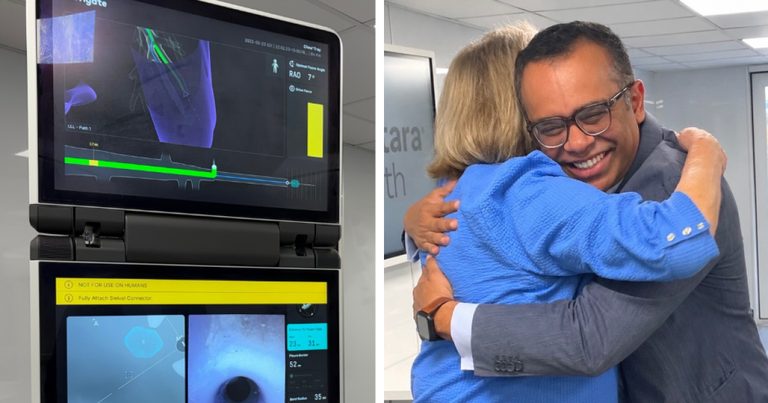
Virginia Beach – When longtime smoker and grandmother Terry Kristofak received a routine low‑dose CT scan at Sentara Health last September, the results showed a small lung nodule. Six months later the nodule had doubled in size, prompting her doctors to act quickly.
Kristofak, who quit smoking after 45 years, was referred to Dr. Simanta Dutta, a pulmonary and critical‑care physician at Sentara Leigh Hospital. Dr. Dutta performed a robotic bronchoscopy – a procedure that uses a robot‑guided tube to navigate the airways and obtain tissue samples with high precision.
Robotic bronchoscopy’s early‑stage success
Dr. Dutta, who began using the technology in February 2026, says the first 100 patients treated with the device yielded a striking result: 73% of diagnosed lung cancers were in stage I or stage II, allowing for more effective treatment and better survival odds. He adds that each week of delay in testing can increase the risk of upstaging a cancer by about 4%.
“As we become more proficient with this device, we’re targeting smaller and smaller lesions,” Dr. Dutta explained. “The smallest lesion we’ve removed was a 7‑millimeter nodule – roughly the size of a kernel of corn.”
Patient perspective
Kristofak described the experience as “so easy” and emphasized that the procedure was quick and painless. “It was my lifesaver,” she said, noting that the early diagnosis allowed her to begin treatment before the cancer could spread.
She also highlighted the importance of regular screening for those with a smoking history or family history of lung cancer. “I plant my flowers, trim my bushes, and crochet – I need to be able to breathe and stay active for my family,” Kristofak said.
Broader implications
Robotic bronchoscopy is gaining attention beyond Virginia Beach. The technology was reportedly used by Pope Leo XIV in October for a pre‑surgical lung evaluation, a case the Vatican later reported required no further treatment after diagnosis.
According to the American Cancer Society, lung cancer remains the second most common cancer among both men and women in the United States. The organization recommends low‑dose CT screening for adults ages 50‑80 who have a 20‑pack‑year smoking history and who currently smoke or have quit within the past 15 years.
In an episode of the “Healthy Dude” podcast, News 3 anchor Kurt Williams spoke with Dr. Raffaele Marchigiani, clinical chief of thoracic surgery at Sentara Leigh Hospital, about lung‑cancer screening, treatment options, and outcomes for non‑smokers diagnosed with the disease.
Kristofak’s story underscores how advanced medical technology, combined with vigilant screening, can dramatically improve outcomes for lung‑cancer patients in Virginia Beach and the surrounding region.
Original reporting: WTKR News 3 (Scripps) – local — read the source article.