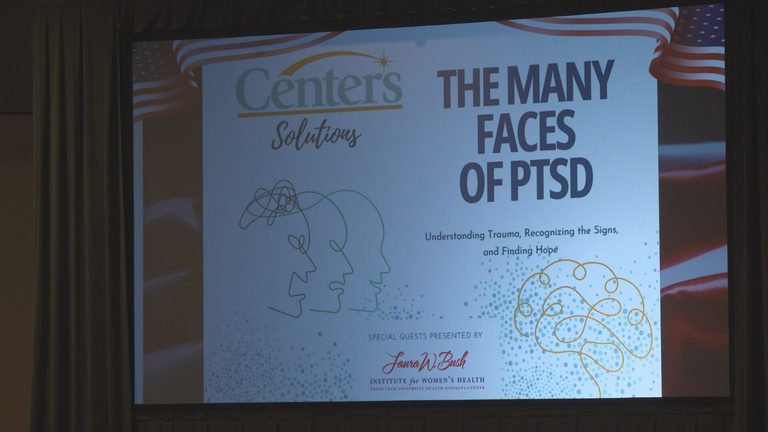
ODESSA, Texas – Community leaders gathered at a local luncheon to shine a light on post‑traumatic stress disorder (PTSD), a condition that often goes unnoticed yet profoundly affects veterans and their families. The event, hosted by Clinical Solutions, featured speakers from Texas Tech University Health Sciences Center and local veterans who shared personal insights and practical resources.
Understanding PTSD as a silent threat
Dr. Sarah Mallard Wakefield, chair of psychiatry at Texas Tech University Health Sciences Center, explained that PTSD is a “silent” condition that can manifest in many ways. She described the disorder as an over‑active protective response that, while originally meant to keep a person safe, can begin to signal danger where none exists, leaving the body in a constant state of alarm.
“Using a normal adaptive response of trying to protect you from something dangerous, it starts trying to protect you from things that aren’t actually dangerous,” Wakefield said. “It feeds your body cues that you are in danger, even when that’s not the case.”
Why community education matters
Wakefield emphasized that educating the broader community is essential. When families and neighbors understand the signs—such as withdrawing from social activities, increased irritability, or heightened reactivity—they are better equipped to intervene early and guide loved ones toward help.
“People staying home more often, not joining things, not being a part of their community, we also see people when they get triggered out in the community, maybe being more irritable, more reactive,” she noted.
Addressing common fears about treatment
Marc McQueen, a mental‑health professional, addressed a frequent concern among veterans: the fear of having to recount painful details of their trauma. He reassured attendees that clinicians are not required to force patients to relive the most difficult moments.
“There’s often a fear that the clinician, or the psychiatrist, or the case worker is going to make them tell all of the details of that story,” McQueen explained. “They’re not required to go into any details that are too difficult, which eases some of the fear.”
Veterans speak out on the importance of peer support
Noah Wakefield, a Navy veteran, shared his own experience, stressing that PTSD can affect anyone who has endured trauma. He urged listeners to check in on one another and to reach out for help, even when it feels daunting.
“There’s help out there. You may feel alone, but recognizing that you don’t want to be with other people is the time it’s most important to seek help,” Wakefield said. “Talk to your family, friends, or the buddies you served with, and take that first step, even though it could be very difficult.”
Resources available for veterans and families
Attendees left the luncheon with a clear list of resources. Clinical Solutions offers counseling and referral services, while the Department of Veterans Affairs provides a range of programs, from outpatient therapy to peer‑support groups. Both organizations encourage veterans and their families to contact local VA clinics or call the national helpline for immediate assistance.
By bringing together medical experts, mental‑health professionals, and veterans themselves, the Odessa luncheon underscored the community’s commitment to caring for those who have served. The message was clear: recognizing the signs of PTSD and connecting with trusted resources can restore hope and strengthen families across West Texas.
Original reporting: CBS7 / First Alert 7 KOSA (Gray) — read the source article.