Somewhere around 1965, a group of paddlers started dragging traditional Hawaiian outrigger canoes into Ventura Harbor, and the club they built has been quietly operating on the same stretch of water ever since. The Pacific Outrigger Canoe Club is not a tourist outfit. It’s a working paddling club — dues-paying members, weekly practices, real races up and down the California coast — which is exactly what makes it interesting to anyone who stumbles across their racks of canoes along the harbor’s south edge.
On a weekday morning, the harbor here is calm in a way the beach never quite is. Pelicans ride the channel markers. A few fishing boats idle out toward the mouth. The club’s storage area holds a lineup of six-person outriggers, the long, stabilizer-rigged hulls that look nothing like the kayaks and SUPs rented a few hundred yards away. Members arrive in ones and twos, pulling gear bags from their cars, moving with the easy rhythm of people who’ve done this hundreds of times.
Practices typically run early — before work hours on weekdays, Saturday mornings draw the larger turnout. The paddling takes place on flat harbor water, out through the channel, sometimes around the breakwater if conditions allow. Coaches call cadence from a trailing motorboat or from within the canoe itself. The stroke technique is specific: high angle, quick catch, rotation from the torso rather than the arms. New members spend a few sessions just learning it before they’re trusted in a boat heading for open water.
Joining costs in the range of $80 to $120 annually depending on membership category, with some trial participation options during outreach periods. The club actively recruits — particularly adults who’ve never paddled before — and they run beginner-friendly introduction sessions through spring and early summer. Equipment is provided through club membership; there’s nothing to buy to get started.
What draws people who stick around isn’t the fitness, though the paddling is genuinely demanding work. It’s the racing calendar. The club competes in the Na Wahine O Ke Kai and Molokai Hoe relay events, the Catalina crossing, regional sprints up the coast. These aren’t recreational fun runs. They’re competitive ocean crossings in heavy swells, with training cycles built around them. For people who want athletic structure and community in the same package, that combination is rare in a city where most water activity is solo or low-stakes.
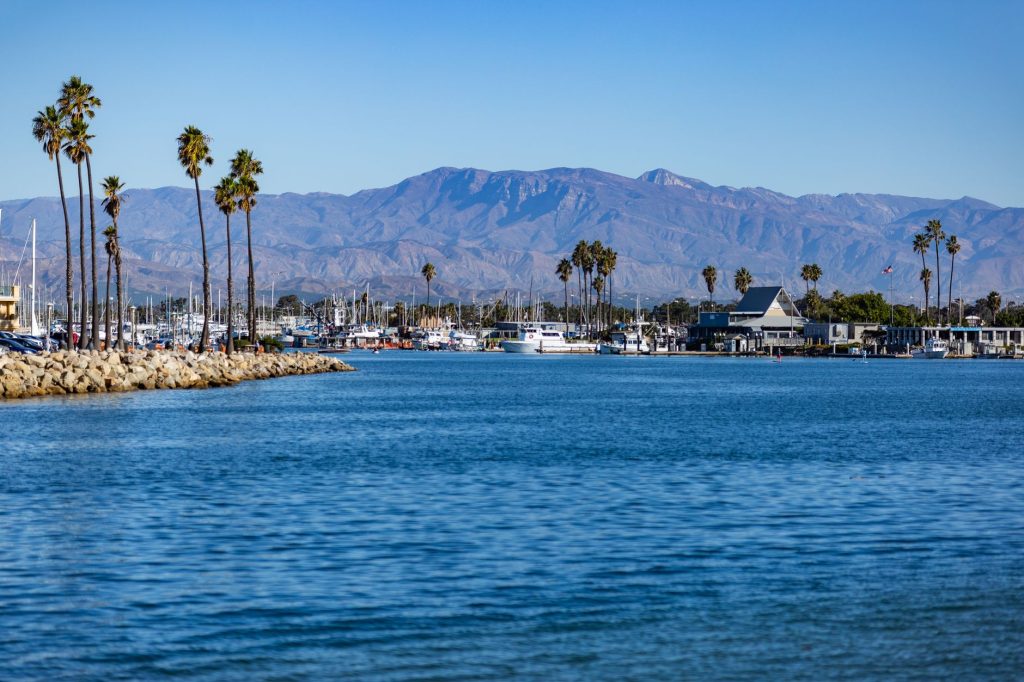
The harbor setting rewards a visit even without paddling. Standing near the club’s launch area, the view east takes in the mountains behind Ventura, the ones that come into sharp relief when the marine layer burns back midmorning. The harbor itself is oddly peaceful for a working facility — a mix of commercial fishing docks, recreational slips, the whale-watching boats from Island Packers, and this club that’s been here longer than most visitors realize.
Saturday morning around eight is the best time to show up. Practice is usually underway, the light is good on the water, and someone from the club is almost always willing to talk about how it works, what the season looks like, whether a beginner could handle it. The answer to that last question, based on what members consistently say, is yes — but it takes a few months before it stops being hard.