The Dinosaur Discovery Museum in downtown Kenosha has a staff paleontologist. Not a volunteer in a polo shirt, not a docent reading from a laminated card — an actual working scientist who publishes research and whose day job happens to be inside a building anyone can walk into for four dollars.
That detail alone sets it apart from most small-city natural history rooms. The museum is run by the Carthage College geology department, which means the fossils on display aren’t replicas filling space — they’re part of an active collection, and the people who work there can actually tell you something about them. The place sits in the old post office building at 5608 10th Avenue, a sturdy beaux-arts structure that suits the material better than a suburban strip would.
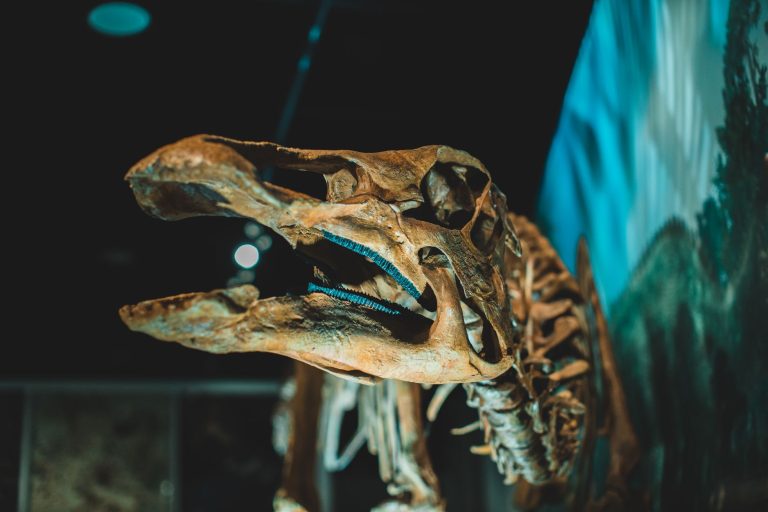
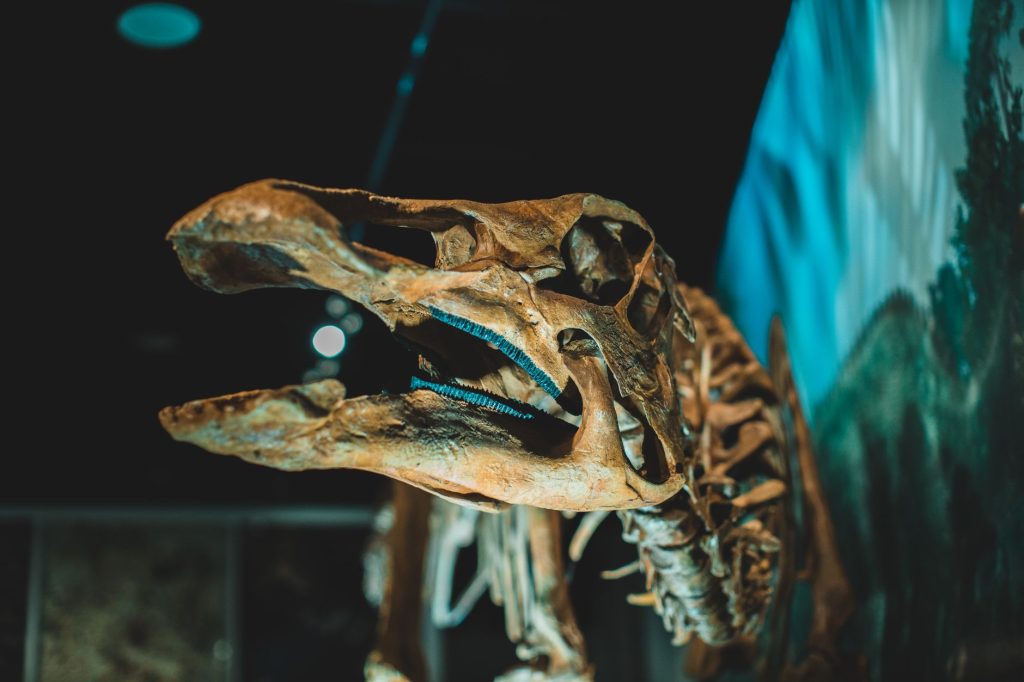
The focus is narrow on purpose: theropod dinosaurs and the evolutionary line that produced modern birds. If you’re expecting a full Jurassic diorama with a Brachiosaurus looming over the gift shop, you’ll be recalibrating fast. What you get instead is a tightly curated argument — displays laid out to actually demonstrate that birds are living dinosaurs, using fossils and skeletal comparisons rather than just asserting it with a placard. It’s the kind of place where the exhibit design trusts you to follow a logical thread rather than just gawk.
Admission is free on Sundays, which is when it gets crowded in the way that free things in mid-sized Midwestern cities always do. If you have strong opinions about elbow room, go on a Tuesday. The museum is open Tuesday through Sunday; hours run roughly 10 a.m. to 5 p.m., though checking their site before you go is worth the thirty seconds. Adult admission tops out at four dollars on paid days. Kids under five are always free.
The exhibits run across two floors. Downstairs tends to be the fossils and the evolutionary argument; upstairs gets into feathers, flight, and some of the weirder corners of theropod anatomy. The building itself is worth a slow walk — the original post office bones show through in the ceilings and proportions, and somebody made good decisions about lighting the cases without making the whole place feel like a jewelry store.
It’s not a long visit. Ninety minutes gets most adults through comfortably, with time to actually read things rather than speed-walk. With kids who have opinions, budget two hours and accept that you will spend twelve minutes in front of one specific tooth. There’s no café inside, but there are a handful of lunch spots within a few blocks if you want to make a half-day of the neighborhood.
The museum doesn’t oversell itself, which is probably why it doesn’t get oversold by the people who write about Kenosha. It has no animatronics, no 4D theater, no branded merchandise wall that costs more than the admission. What it has is a coherent scientific story told by people who actually work in the field, in a building that holds the material with some dignity. For four dollars or nothing at all, that’s a reasonable trade.