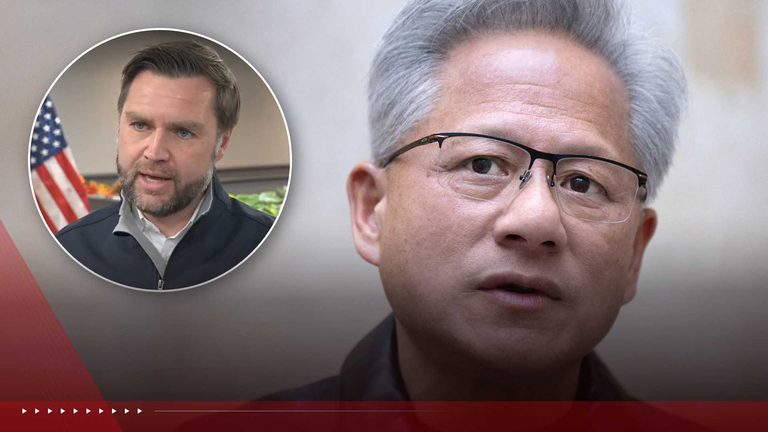
At a pre‑Thanksgiving dinner for U.S. troops in Dayton, Ohio, Vice President JD Vance said federal officials have confirmed that Nvidia CEO Jensen Huang is not the subject of any investigation. Vance told CNN’s Kit Maher, “We were told that he was under no investigation,” adding that the accusations reported in the media were based on anonymous sources rather than concrete evidence.
Administration officials rally behind Huang
Vance’s comments follow a similar statement from Attorney General Todd Blanche, who, when asked about a possible probe, replied simply, “For what?” Vance said Blanche was among “multiple people” in the United States government who have given him assurances about Huang’s status.
President Donald Trump also defended Huang publicly, and sources say he asked Vance to help secure Huang’s reinstatement at Nvidia after the CEO was briefly ousted amid reports of an extramarital affair involving a woman with alleged ties to Chinese intelligence. Trump told the New York Post that a presidential pardon for Huang is “always an option, I guess, but I don’t think it’ll be necessary,” and encouraged Huang to be truthful during his upcoming congressional testimony.
Congressional scrutiny continues
Despite the administration’s assurances, Huang remains under scrutiny on Capitol Hill. He is scheduled to testify publicly and in closed sessions next week, where lawmakers will question him about national‑security safeguards and compliance with American export controls on advanced AI chips.
Vance emphasized the strategic importance of Nvidia’s technology, stating, “We really do care about ensuring those chips do not fall into the wrong hands. We expect Nvidia will be a partner moving forward in complying with American export controls.” He added that the decision to reinstate Huang was ultimately made by Nvidia’s board of directors.
Why the focus on Nvidia matters
Nvidia’s graphics processing units power a large portion of the United States’ artificial‑intelligence infrastructure. The administration views the company’s leadership as critical to maintaining a competitive edge over China in the AI race. By defending Huang, both Vance and Trump signal a commitment to protecting the nation’s technological advantage while also upholding due‑process principles for a senior business leader.
Critics, including some members of the press, have raised concerns that the alleged affair could present a security risk if the woman involved has foreign intelligence connections. Vance dismissed those concerns, arguing that “people should not lose their jobs because anonymous sources accuse them of things in The New York Times when those things actually aren’t rooted in real evidence.”
What’s next for Huang and Nvidia?
Huang is expected to appear before the House Committee on Energy and Commerce, where he will address questions about supply‑chain security, export‑control compliance, and the broader role of AI in national defense. The administration’s public backing suggests that, barring new evidence, the government does not anticipate taking further action against the CEO.
As the AI sector continues to expand, the partnership between the federal government and leading technology firms like Nvidia will remain a focal point for policymakers seeking to safeguard American innovation while countering foreign influence.
Original reporting: 40/29 / KHBS (NW Arkansas) — read the source article.