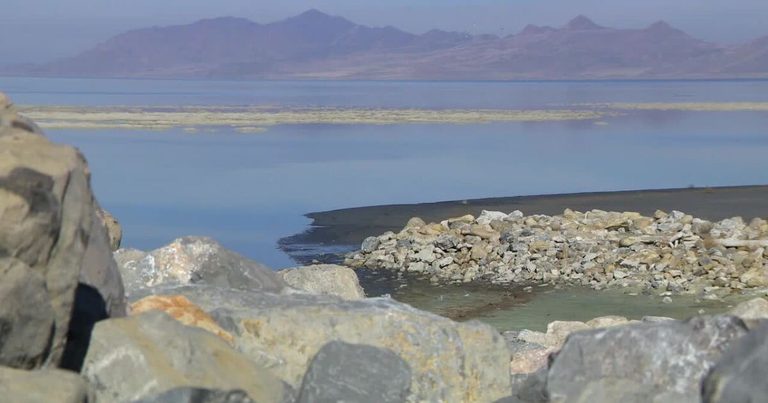
Salt Lake City officials and residents received a major policy update on Tuesday when the Utah State Legislature unanimously approved a resolution establishing specific water‑use targets for municipal, industrial, agricultural users and the Great Salt Lake. The measure, introduced by Sen. Keven Stratton (R‑Orem) and Rep. Thomas Peterson (R‑Brigham City), was cleared after a presentation to the Legislative Water Development Commission.
According to Fox 13, the resolution directs the governor and legislature to set an initial water allocation target of 1.4 million acre‑feet for future municipal and industrial use, reflecting current statewide diversions, projected population growth and ongoing conservation trends. Agricultural use is slated at 3.8 million acre‑feet, described as “consistent with current statewide diversions for agricultural use.” The Great Salt Lake itself would receive an initial target of 2.18 million acre‑feet, a figure the resolution says could be achieved through “current efforts by the Legislature, executive agencies, and private entities.”
Rep. Carl Albrecht (R‑Richfield) praised the resolution, saying it “addressed a lot of factors that affect water going into the lake.” Sen. Stratton echoed the sentiment, noting that the targets provide “an idea of how much water do we have to work with” and will allow “course correction as needed” over the coming decades.
Great Salt Lake Commissioner Hannah Freeze, tasked with restoring the lake after historic lows, emphasized that the goals remain unchanged despite ongoing negotiations with environmental groups and agricultural interests. “We’re just barely getting started,” Freeze told Fox 13, adding that the state is seeking additional funding to purchase, lease or secure water donations for the lake.
Environmental advocate Dr. Ben Abbott, founder of Grow the Flow, called the legislation “a fundamental shift in our relationship with water,” highlighting that it is the first state measure to set a specific acre‑foot target for additional flow to the lake. Abbott estimated that “about a million acre‑feet more a year” is needed to reverse the lake’s decline.
Not all stakeholders are fully satisfied. Zach Frankel, executive director of the Utah Rivers Council, suggested tweaks to the resolution and warned that the $1 billion the legislature has allocated for water conservation and infrastructure may not directly benefit the lake if the water is not delivered to it.
Governor Spencer Cox’s 2023 goal of raising the lake to a 4,198‑foot elevation by the 2034 Winter Olympics remains a benchmark for the state. However, simulations by a joint strike team from Utah State University and the University of Utah indicate that even a yearly addition of 250,000 acre‑feet would leave the lake well below that target.
The resolution’s passage marks a concrete step toward coordinated water management, but the exact figures are still being refined. Stakeholders from agriculture, environmental groups and water agencies will continue discussions to ensure the targets are realistic and achievable.
What’s next: The companion bill sponsored by Rep. Peterson will move forward in the upcoming legislative session, where lawmakers will fine‑tune the allocation numbers and consider additional funding mechanisms to secure water for the Great Salt Lake.
Sources: fox13now.com