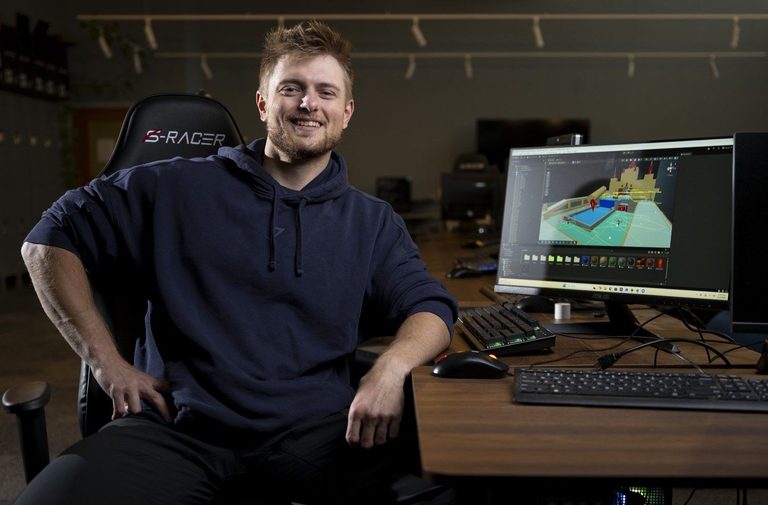
Missoula, Mont.—The University of Montana’s newly christened School of Art and Game Design is experiencing a remarkable enrollment boom, expanding from a three‑student media arts concentration to a full undergraduate and graduate program in just seven years. The rapid growth reflects both strong industry demand for skilled game creators and the university’s commitment to a close‑knit, community‑focused learning environment.
From Small Beginnings to a Full‑Scale Program
Professor Michael Cassens founded the original media arts concentration, envisioning a space where students could explore interactive storytelling. Today, that seed has blossomed into a comprehensive curriculum that teaches everything from pixel art and 3D modeling to narrative design, music composition, and virtual‑reality simulations. Enrollment has ballooned twenty times, a testament to the program’s relevance and the university’s dedication to nurturing talent.
Why Families Are Embracing Game Design
Assistant professor Ashley Rezvani reminds prospective students that gaming is not a niche hobby reserved for a select few. “A lot of people think they’re not gamers. But if you play solitaire, you’re a gamer. If you’re playing catch with your grandkids, you’re a gamer,” she said. This inclusive message resonates with parents who see game design as a viable career path that combines artistic expression with technical skill, offering stable, well‑paid jobs in a growing sector.
Curriculum Highlights
The interdisciplinary program equips students with a broad skill set. Core courses cover concept art, character design, animation, and sound design, while electives let students delve into philosophy, poetry, engineering, and programming. By learning to build entire worlds—not just code mechanics—graduates are prepared for roles at major studios, indie developers, and emerging fields such as educational simulations and virtual‑reality training.
Industry Connections and Community Impact
Local and national game studios regularly partner with UM faculty to provide mentorship, internships, and project collaborations. These relationships give students real‑world experience and help keep the curriculum aligned with industry standards. Alumni have reported successful placements at companies ranging from indie startups to major publishers, bringing economic benefits back to the Missoula area.
Supporting Traditional Values Through Modern Media
University leaders emphasize that game design, like any art form, can reinforce family values and moral storytelling. Projects such as a virtual‑reality pharmacy simulation and a historically accurate buffalo drive experience demonstrate how interactive media can educate while entertaining. By fostering creativity within a framework of community responsibility, the program aligns with the values of families seeking both artistic fulfillment and ethical grounding for their children.
Looking Ahead
With enrollment continuing to rise, the School of Art and Game Design plans to expand its facilities, add new faculty, and increase scholarship opportunities for students from modest backgrounds. The university’s investment signals confidence that the gaming industry will remain a cornerstone of the modern economy, offering rewarding careers for the next generation of creators.
For more information about admissions, curriculum details, or upcoming open‑house events, visit the University of Montana’s School of Art and Game Design website.
Original reporting: NewsTalk KGVO 1290 (Townsquare) — read the source article.