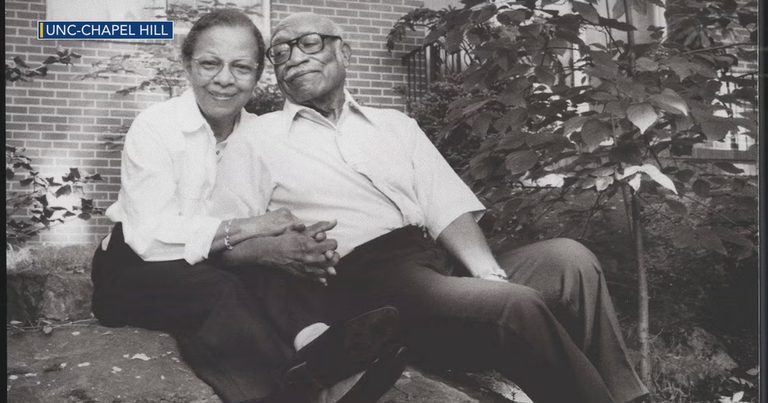
University leaders and community members gathered Tuesday at the former Jackson Hall site on the UNC‑Chapel Hill campus to celebrate the start of construction on two new residence halls. The project, the first major dormitory construction in more than two decades, will provide housing for roughly 730 undergraduate students and is slated to cost about $110 million.
Preserving the Jackson name
Chancellor Lee Roberts emphasized the importance of keeping the Jackson name alive, noting that the new building will continue to honor Blyden and Roberta Jackson. Blyden Jackson became the university’s first tenured Black faculty member in 1969 and helped establish African American literature studies. His wife, Roberta Jackson, joined the School of Education in 1970 as the first Black tenure‑track faculty member and earned tenure in 1974, becoming the first tenured Black woman in the Division of Academic Affairs.
“The Jacksons were trailblazers here at Carolina,” Roberts said, adding that their contributions continue through the Blyden and Roberta Jackson Fellowship, which supports student research on literature, culture, and history.
Campus housing expansion
The new residence halls, located near the corner of Cobb Drive and Raleigh Street, mark the first dormitories built in the heart of campus in more than a century. The university announced the expansion in 2025 as part of a long‑term plan to grow undergraduate enrollment. While the permanent name for New Residence Hall One East will be decided later, the project signals a significant investment in student life and campus infrastructure.
Allan Blattner, executive director for Carolina Housing, explained that retaining the Jackson name was essential. “When you’re taking down a building named after such incredible people, you don’t want their contributions to disappear just because the structure is removed,” he said.
Impact on students and the community
The additional housing will help meet the university’s goal of expanding its undergraduate body, offering more on‑campus living options for students and families who value a close‑knit, faith‑centered community. The project also reflects UNC‑Chapel Hill’s commitment to honoring its diverse heritage while fostering a supportive environment for future generations.
Original reporting: WRAL Raleigh — read the source article.