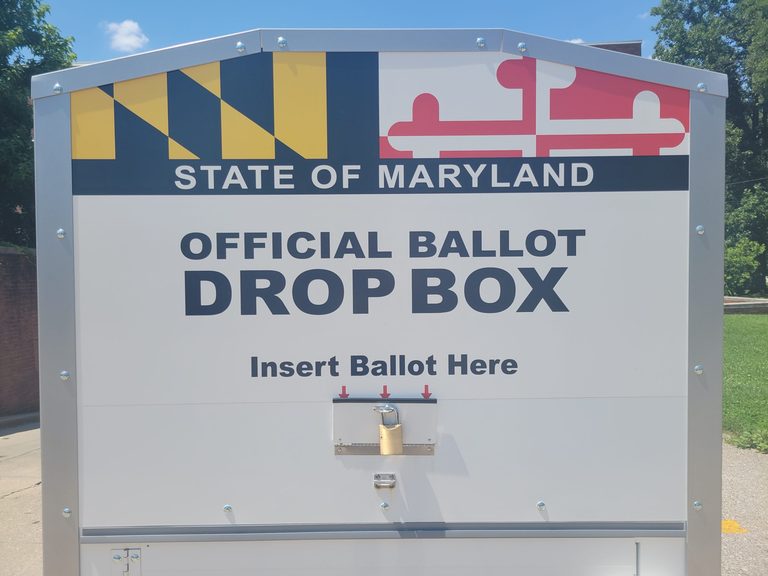
Maryland’s voter registration numbers released by the State Board of Elections on Monday reveal a historic shift: unaffiliated voters are now within striking distance of surpassing Republicans in total active voters. As of the end of October, the state counted 1,014,876 active Republican voters and 1,012,957 active unaffiliated voters, each representing roughly 23% of the roughly 4.3 million active voters.
Rapid Growth of Unaffiliated Voters
Since October 2022, the unaffiliated electorate has expanded by about 167,000 voters, an increase of nearly 20%. By contrast, the Republican roll grew by roughly 14,000 voters in the same period. Four years ago, ahead of the 2022 gubernatorial race, Republicans led unaffiliated voters by about 155,000. That gap narrowed to roughly 45,000 a year ago, and by September it had shrunk to about 4,100.
Impact on Party Shares
Democrats remain the largest voting bloc with about 2.24 million active voters—just over half of all voters. Their numbers have plateaued, slipping slightly from a peak of 2.29 million in November 2020 to a current shortfall of about 20,000 since 2022, despite a modest gain of 13,000 over the past year.
The rise of unaffiliated voters is a longer‑term trend. Since 2011, the unaffiliated share of active voters has risen from roughly 15% to 23%, while the Democratic share fell from about 56% to 51.5% and the Republican share slipped to about 23.4%, its lowest level in data dating back to 2011.
County‑by‑County Shifts
All 24 Maryland voting jurisdictions—its 23 counties and Baltimore City—have seen growth in unaffiliated registration since the last governor’s race. In five jurisdictions, unaffiliated voters now outnumber Republicans: Montgomery, Prince George’s, Howard, Charles counties and Baltimore City. Charles County is the newest example; Republicans once led by roughly 1,200 voters in 2022, but unaffiliated voters now exceed them by about 4,700.
In the remaining 19 jurisdictions, Republicans still hold a numerical advantage, though the gaps have narrowed dramatically in several large counties. In Baltimore County, the Republican lead fell from about 29,300 to roughly 8,900. In Anne Arundel County, the gap was cut by more than half, now standing at about 15,000.
Democratic Losses Across the State
Democrats lost voters in 20 of the 24 jurisdictions. The most noticeable declines occurred in traditional strongholds—Prince George’s County, Baltimore City, and Montgomery County—though the losses were modest, ranging from 1% to 2%. Despite these declines, Democrats continue to constitute the majority of voters in those areas.
Overall, Democrats remain the largest group in nine jurisdictions, including all five where unaffiliated voters outnumber Republicans. Republicans are now the largest group in the other 15 jurisdictions, a shift that now includes Dorchester and Kent counties on the Eastern Shore, where Democrats previously led.
Western Maryland Remains Republican‑Heavy
Western Maryland continues to favor the GOP. In Garrett County, Republicans outnumber unaffiliated voters by roughly a 4‑to‑1 margin.
These figures reflect active voters only and are compiled by Skipjack, an elections data site maintained by Derek Willis, a lecturer at the University of Maryland’s Philip Merrill College of Journalism, using data from the Maryland State Board of Elections.
Original reporting: Baltimore Fishbowl — read the source article.