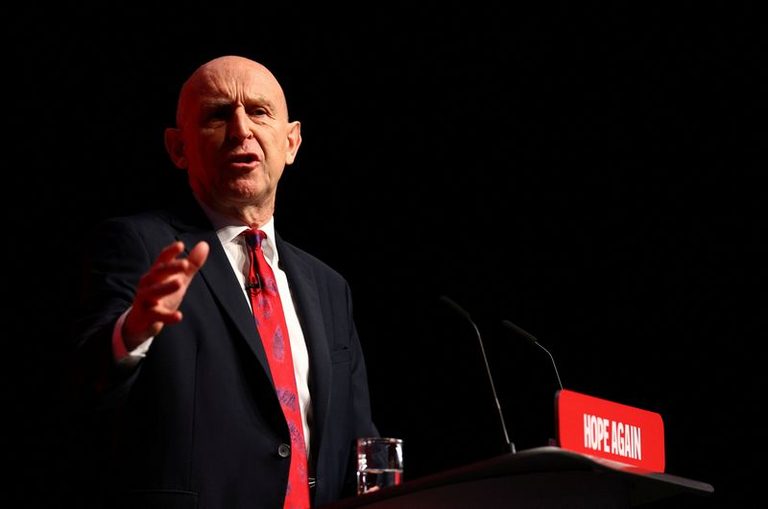
London – The Institute for Fiscal Studies (IFS) has warned that Britain’s new finance minister, John Healey, will need to raise about £36 billion in the upcoming budget to cover inflation‑driven pressures on public services and to honor a defence‑spending pledge.
Inflation and the Iran conflict drive the shortfall
The IFS notes that the tax and spending plans set by Healey’s predecessor, Rachel Reeves, were built on assumptions that have been upended by higher inflation linked to the Iran war. Without adjustments, investors may view the budget as lacking credibility.
“It would be a choice to tolerate chunky cuts to the quantity or quality of some public services,” IFS Director Helen Miller said.
Limited options for revenue
Healey and Prime Minister Andy Burnham have pledged to reduce the cost of living, but they face a fiscal strain that includes more than £60 billion of tax hikes already built into Reeves’ two previous budgets. The government is also under pressure to raise defence spending to 3 % of GDP.
Finding an additional £36 billion would be roughly equivalent to adding three percentage points to the main rate of income tax. While Healey and Burnham have said they will not raise the headline tax rate, the IFS expects the Treasury will need to identify other revenue sources.
Welfare spending and borrowing costs
Britain’s welfare outlays are also under scrutiny, especially as borrowing costs have risen sharply since the Gulf conflict began. The IFS suggests that higher inflation could boost earnings growth and income‑tax receipts, partially offsetting the extra debt‑interest bill and inflation‑linked welfare costs.
If those optimistic revenue assumptions hold, the government’s fiscal headroom – the gap between borrowing for day‑to‑day spending and tax revenues in the 2029/30 fiscal year – would fall only modestly to around £20 billion, down from a March estimate of £24 billion. That figure remains higher than some analysts’ forecasts of £12 billion.
Economic outlook
The IFS based its analysis on inflation averaging 3.1 % this year and 3.0 % in 2027, above the official projections of 2.3 % and 2.0 % made in March. Economic growth is expected to be revised up to 1.4 % for this year, from an earlier 1.1 % estimate, though it could be trimmed to 1.2 % for next year, down from 1.6 %.
Potential timing of fiscal changes
Healey may postpone major fiscal adjustments until a spending review in 2027, when the Iran war could be resolved and borrowing costs potentially lower. However, Miller cautioned that investors who have already pushed up yields on government debt might react negatively to further uncertainty.
“You can’t have hope as your core strategy,” she said.
As the UK prepares for a budget on October 28, the IFS’s analysis underscores the tight fiscal choices facing the new administration and the importance of credible fiscal planning to maintain investor confidence.
Original reporting: Appleton, WI News Feed (HLL/CB) — read the source article.