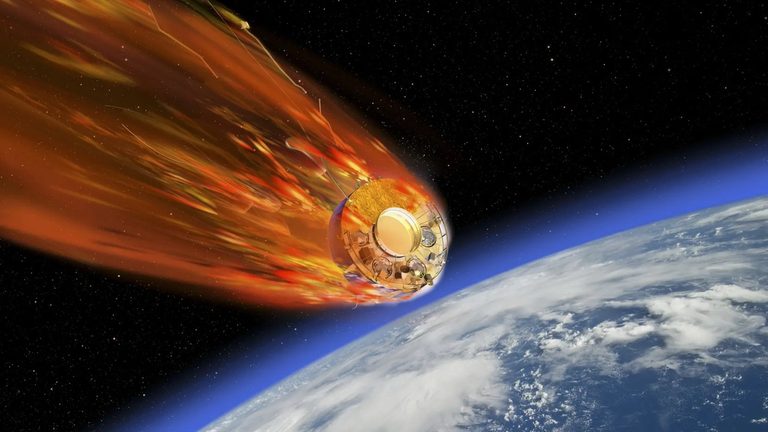
SANTA BARBARA, Calif. – In a boost for local science and the growing space‑technology sector, two UC Santa Barbara faculty members have secured $200,000 to design a new generation of reusable thermal protection systems (TPS) for spacecraft returning to Earth.
Funding and program background
The grant comes from the Advancing STEM Careers through Education, Networking, and Development plus Research (ASCEND) program, a partnership between the Alliance of Hispanic‑Serving Research Universities and the U.S. Department of Defense. In its inaugural year, ASCEND awarded funding to 15 projects at Hispanic‑serving institutions, and the UCSB team was selected for their work on advanced metal‑polymer composites.
Project goals
Assistant professor of materials Dr. Daniel Oropeza and associate professor of mechanical engineering Dr. Yangying Zhu will develop composite shields that combine high‑temperature‑resistant metals with ablative polymers. The aim is to create a system that can be refurbished after each re‑entry, reducing the cost and waste associated with single‑use heat‑shield tiles.
“One of the hardest parts of flying fast — whether that’s bringing payloads back from orbit or moving vehicles through the atmosphere — is that things heat up,” Dr. Oropeza explained. “How do you get rid of that heat?”
Testing approach
The researchers will build a test chamber that uses high‑power lasers to simulate the extreme heating of re‑entry. Optical and infrared cameras, along with a micro‑computed tomography system, will capture three‑dimensional images of the material’s response in real time.
Dr. Zhu added, “We’re hoping to connect with our cohort and establish longer‑term relationships with other Department of Defense agencies that may be interested in these types of thermal protection systems.”
Historical context
Early spacecraft, such as the Apollo capsules, relied on ablative materials that burned away during re‑entry. The Space Shuttle later used thousands of hand‑installed ceramic tiles, a labor‑intensive solution that still faced catastrophic failure when a tile was damaged, as seen in the 2003 Columbia disaster.
By developing reusable, composite TPS, the UCSB team hopes to improve safety and lower costs for future missions, from satellite retrieval to crewed deep‑space travel.
Local impact
The project will bring graduate students onto the research team, providing hands‑on experience in a field that is rapidly expanding nationwide. It also positions Santa Barbara County as a hub for cutting‑edge aerospace research, aligning with regional economic development goals.
“Space exploration, for me, is very inspiring, but also I think it brings humanity together,” Dr. Oropeza said. “We all look up and want to think about what’s out there.”
Original reporting: KEYT (Ventura/Santa Barbara) — read the source article.