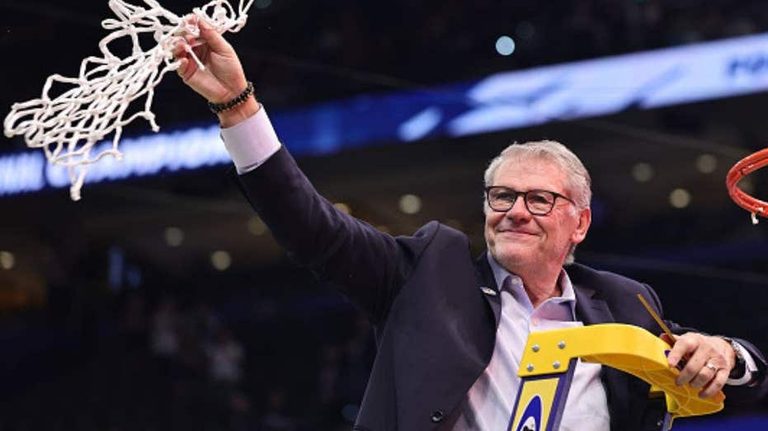
UConn women’s basketball head coach Geno Auriemma, a 12‑time national champion and eight‑time Coach of the Year, voiced strong concerns about the growing trend of seven‑figure Name‑Image‑Likeness (NIL) contracts for incoming freshmen. Speaking to the press before early national signing day, Auriemma said the practice threatens the core purpose of collegiate athletics.
Coach Auriemma’s remarks
“We just signed the No. 9 player in the country. We don’t have cachet with guys that are getting paid a million dollars to go play some place,” Auriemma told reporters. “They’re getting the cachet. I just don’t see the value of paying a high‑school kid a million dollars to come out of high school that hasn’t dribbled the ball one time in college.
“I don’t get the idea of paying a kid a million dollars coming out of high school. That’s more than (about) 90 percent of best players in the world in the WNBA. As long as that’s the case, we’re going to get the guys we’re gonna get, but we’re not going to get the guys we’re not supposed to get.”
Why the coach sees a problem
Auriemma argued that the traditional factors families once considered—proximity to home, academic reputation, campus lifestyle, and system fit—are being eclipsed by cash offers. He added that agents and parents often mask the true motive behind NIL deals, claiming the focus is on academics when money is the real driver.
“I don’t have those conversations with the parents,” he said. “We have an agent that talks to their agent because the kids and the parents lie to you. ‘It’s not about the money. It’s about academics. It’s about finding the right fit. It’s about the right experience.’ No it isn’t. Just say it’s about the money, and we can all live happily ever after.”
Context across college sports
The coach’s comments echo a broader debate that has already surfaced in college football, where top prospects at quarterback, left tackle, and edge‑rusher positions have secured seven‑figure NIL contracts straight out of high school. Notable examples include Tennessee’s reported $8 million agreement with recruit Nico Iamaleava during the 2023 recruiting cycle.
While those figures have not declined, critics argue that the influx of money shifts recruiting priorities away from education and character development toward financial gain. Auriemma’s stance reflects a growing unease among coaches who fear that the sport’s integrity could be compromised.
Implications for UConn and the sport
UConn’s women’s basketball program, a perennial powerhouse, has traditionally emphasized a culture of hard work, teamwork, and academic achievement. Auriemma’s warning suggests that the program may need to navigate a new recruiting landscape where financial incentives could outweigh the values that have sustained its success.
By speaking out, the coach hopes to spark a conversation among university leaders, athletic departments, and policymakers about the long‑term effects of unrestricted NIL payouts on the collegiate model.
Looking ahead
As the NIL market continues to evolve, the debate over how much money should be allowed to flow to amateur athletes is likely to intensify. Auriemma’s comments add a prominent voice to the call for a more measured approach that protects the educational mission of college sports while still offering athletes legitimate opportunities to benefit from their own brand.
Original reporting: Fox News (HLL/CB) — read the source article.