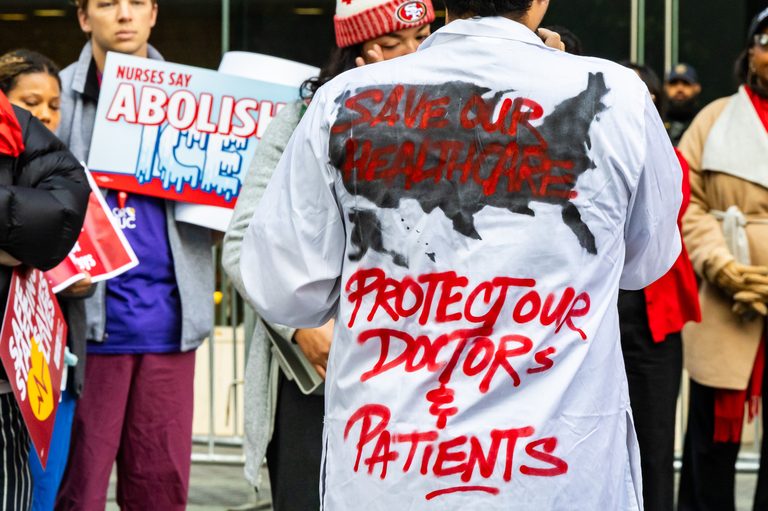
On Tuesday morning, a crowd of over 50 doctors, nurses and immigrant‑rights advocates assembled outside the University of California Board of Regents meeting at the UCSF campus in Mission Bay. The rally, organized by resident physicians who have cared for patients in ICE custody, called for systemwide rules that would protect both staff and patients when immigration enforcement agents are present in hospitals.
Why the rally matters
Dr. Francesco Sergi, a resident physician at UCSF, recounted a recent case in which a young man brought to the emergency department by ICE agents was left terrified, unable to contact his family. While his team was eventually able to reach relatives, many other patients in ICE custody have not been so fortunate. “Agents sometimes refuse to leave examination rooms, block communication with families or attorneys, and pressure doctors to discharge patients before a safe plan is in place,” Sergi said.
Between them, the resident physicians at the rally have cared for roughly ten patients in ICE custody at San Francisco hospitals over the past year. Their experiences have highlighted a lack of clear, enforceable guidelines for how staff should respond when agents accompany patients.
Specific demands
- Require staff to ask ICE agents to leave during medical examinations.
- Ensure patients can communicate privately with family members and legal counsel.
- Verify that patients receive prescribed medications and follow‑up care before being returned to detention.
Without such policies, many clinicians feel uncertain about how to act. “A lot of folks are just unsure what to actually do in these contexts,” Sergi explained.
Current policies and gaps
California Senate Bill 81, enacted in September 2025, limits immigration enforcement in hospitals but still permits agents to accompany individuals already in custody to medical appointments. UC Health issued a statement affirming its commitment to compassionate care for every patient, regardless of immigration status, and noted that it has adopted the California Attorney General’s September 2026 guidelines as systemwide policy.
The Attorney General’s guidelines direct hospitals to protect patient privacy, notify administrators when agents request access, and request that agents leave during examinations. However, the UC statement did not detail how individual hospitals have implemented these provisions or whether staff have received training.
Proposed model policy
The union representing UC resident physicians has drafted an eight‑page model policy that goes beyond the Attorney General’s guidelines. It would require written assurances that detention facilities will provide necessary medications, equipment and follow‑up treatment before a patient is transferred back to ICE custody. It also calls for written confirmation of the medical provider responsible for the patient’s ongoing care.
While the model policy seeks to create clear, enforceable steps, it does not solve the challenge of ensuring detention facilities actually deliver promised care after transfer.
Other California hospitals taking action
Los Angeles County hospitals, including L.A. General Medical Center, adopted new policies in March that protect patient privacy and guarantee communication rights for those in immigration custody. In Oakland, Highland Hospital has protocols that ask immigration agents to leave during examinations, though staff report inconsistent adherence.
Impact on patients and staff
Some nurses at the rally, who asked to remain anonymous, cited the case of Ann Lawani, a nurse and professor at the University of San Francisco who remains in ICE custody after a September arrest in Lodi. Their concerns extend beyond patients in custody; several clinicians have observed patients delaying care out of fear that their presence might be reported to immigration authorities.
Dr. SatKartar Khalsa, a fourth‑year emergency medicine resident at San Francisco General Hospital and a regional vice president of the resident physicians’ union, described the atmosphere when ICE agents are present: “You can feel it in the air, on the whole floor and the whole hospital when ICE is with a patient. It just creates so much fear.” He added that delayed care has led to serious complications, such as uncontrolled diabetes and high blood pressure.
Looking ahead
Both Sergi and Khalsa emphasized that they have not witnessed an ICE raid inside a hospital, but they stress that all patients—regardless of immigration status—should feel safe seeking medical treatment. “We really want to set limits so that all of our patients can feel safe when they’re accessing care,” Sergi said.
The rally underscores a growing movement among California health professionals to secure clear, enforceable protections that uphold both patient safety and the constitutional right to medical care without fear of immigration enforcement.
Original reporting: Mission Local — read the source article.