When Ray Rowland, a 68‑year‑old man from near Russellville, began noticing gaps in his peripheral vision, he thought it was just age‑related change. An eye exam confirmed he could not see part of the eye‑chart, prompting doctors to order an MRI. The scan revealed a large pituitary adenoma – a noncancerous tumor at the base of the brain that was compressing his optic nerves.
Rapid diagnosis, swift action
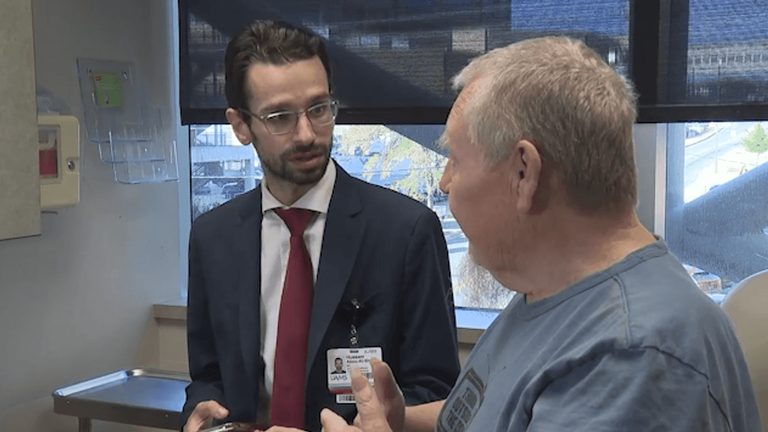
“I had no upper vision whatsoever,” Rowland described, likening the loss to looking through a pipe. UAMS neurosurgeon Dr. Hussam Abou‑Al‑Shaar explained that early detection is critical. “The earlier we diagnose the tumor, the earlier we intervene, then we have a higher likelihood of restoring someone’s vision,” he said.
Minimally invasive surgery through the nose
On September 10, Dr. Abou‑Al‑Shaar teamed with UAMS otolaryngologist Dr. Tyler Merrill to perform a trans‑nasal endoscopic procedure. The approach uses tiny instruments inserted through the nostrils, avoiding any facial or oral incisions. “We do this in a minimally invasive fashion, going through the nostrils,” Dr. Merrill noted. The combined expertise of neurosurgery and otolaryngology allowed the team to remove the tumor completely.
Immediate improvement and hopeful recovery
Rowland awoke in the intensive care unit and immediately noticed a difference. “My eyesight was better. It was absolutely amazing,” he said. The surgery not only halted the threat of permanent blindness but also restored his vision to a level that lets him return to his favorite pastime – fishing.
Recovery guidelines include restrictions on bending and heavy lifting, but Rowland remains optimistic. “My eyesight’s back,” he said, expressing gratitude for the outcome and the collaborative effort of the UAMS team. “It takes a village,” added Dr. Abou‑Al‑Shaar, emphasizing the role of nurses, endocrinology specialists, and support staff in comprehensive pituitary care.
What this means for Arkansas patients
The successful procedure highlights the advanced capabilities of the University of Arkansas for Medical Sciences (UAMS) in treating complex brain tumors with cutting‑edge, minimally invasive techniques. Residents of Arkansas and surrounding regions can benefit from such specialized care without needing to travel far from home.
UAMS continues to invest in multidisciplinary teams that combine neurosurgery, otolaryngology, endocrinology, and nursing expertise to address pituitary disorders. By focusing on early detection, prompt intervention, and patient‑centered recovery plans, the institution aims to improve outcomes for countless Arkansans facing similar health challenges.
Original reporting: KATV Little Rock (local) — read the source article.