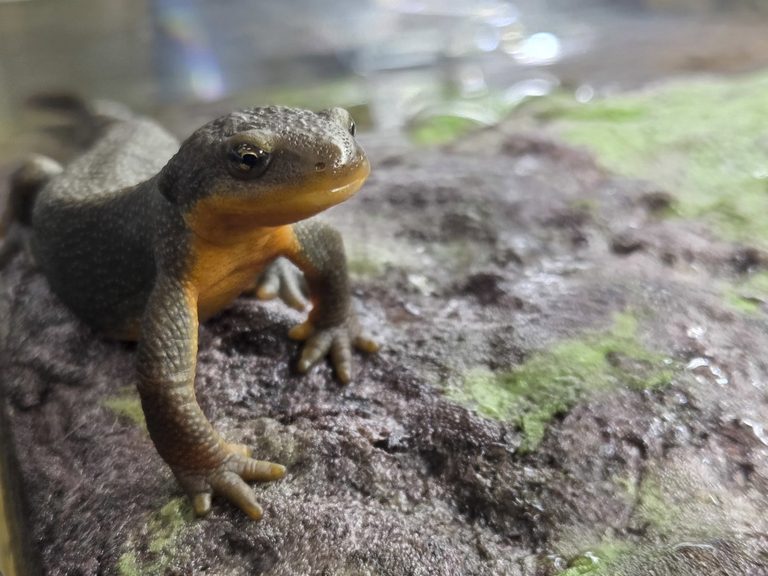
The U.S. Fish and Wildlife Service announced a proposal to list the Crater Lake newt as an endangered species under the Endangered Species Act. The amphibian, which exists solely in Oregon’s iconic Crater Lake, has seen its numbers plummet in recent years.
Survey results show alarming decline
Scientists from Crater Lake National Park conducted snorkel surveys this year and recorded zero newts in the lake. This follows a 2025 count that found only four individuals, down sharply from 35 newts documented in 2023. The rapid decline underscores the urgency of federal protection.
Threats from invasive species and climate change
Introduced fish were stocked in the lake in the late 1800s to attract tourists. In 1915, park managers added signal crayfish as a food source for those fish. Both fish and crayfish prey on the native newts. Warmer lake temperatures driven by climate change have allowed the crayfish population to explode, intensifying predation and competition for invertebrate food sources. The loss of these invertebrates also reduces algae‑controlling organisms, threatening the lake’s famed water clarity.
Legal background and next steps
The Center for Biological Diversity filed a legal petition in 2023 seeking protection for the newt. After the agency missed a statutory deadline for a final decision, the organization sued, leading to a settlement agreement in May that resulted in the current proposal. The Service now has one year to finalize the listing.
If the endangered status is confirmed, federal funding could support removal of invasive crayfish and bolster ongoing captive‑breeding programs aimed at restoring the species to its natural habitat.
Calls for swift action
Chelsea Stewart‑Fusek, an endangered‑species attorney with the Center for Biological Diversity, emphasized the need for immediate protection. “It shouldn’t have taken a lawsuit for Crater Lake newts to get the lifesaving protections they so desperately need,” she said. Stewart‑Fusek added that delays in listing often hinder recovery, noting that the Endangered Species Act is most effective when applied early.
State wildlife officials and local conservation groups are watching the process closely, hoping that federal designation will bring the resources needed to preserve this distinctive part of Oregon’s natural heritage.
Original reporting: KTVZ (Central Oregon) — read the source article.