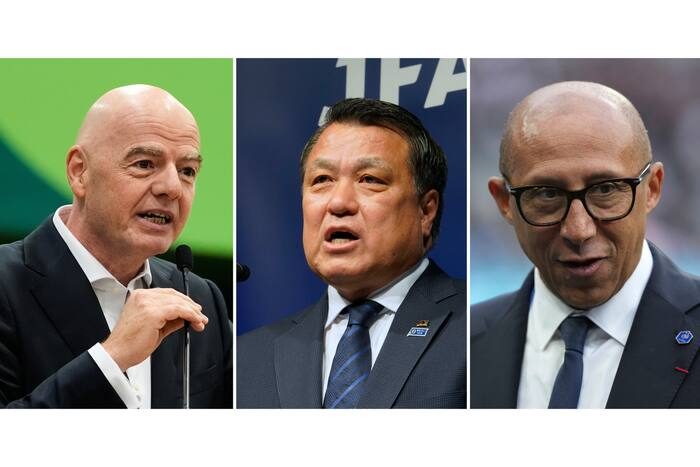
FIFA confirmed on Thursday that two new candidates have officially entered the race to unseat incumbent President Gianni Infantino. Philippe Diallo of France and Kohzo Tashima of Japan filed the required nomination letters from five member federations before the midnight Zurich deadline.
Election timeline and process
The 211-member federation will vote on March 18 in Rabat, Morocco. FIFA’s three‑member election panel has a February 18 deadline to review the candidacies, conduct eligibility and integrity checks, and announce which candidates will appear on the ballot. Any panel decision can be appealed to the Court of Arbitration for Sport in Lausanne, Switzerland.
Incumbent’s position
Infantino is seeking a fourth term that would extend his tenure to 2031, surpassing the three‑term limit set by FIFA statutes. The organization’s legal counsel previously argued that his first term (2016‑19) should not count because he completed the mandate of former president Sepp Blatter after Blatter’s resignation in 2015.
Critics, including UEFA and several national federations, have questioned the legality of a fourth term and have called for a hearing before the U.S. Congress early next year. House Judiciary Committee member Jamie Raskin wrote to Infantino in July, shortly before a private‑equity proposal involving investor Joshua Kushner was disclosed.
Challengers’ backgrounds
Philippe Diallo, a former French football official, has positioned his campaign around greater transparency and a more equitable distribution of FIFA’s revenues. Kohzo Tashima, a veteran Japanese administrator, emphasizes expanding the sport’s grassroots programs and strengthening ties with Asian federations.
Both candidates must still pass the integrity review before they can be listed on the ballot. If approved, they will join Infantino in a contest that could reshape the governance of world soccer.
Broader context
FIFA’s cash reserves have risen above $5 billion following the recent men’s World Cup in North America, and Infantino has pledged an additional $25 million per federation through 2030. While many member associations appear supportive of continuity, European federations have expressed concern that the proposed expansion of competitions could strain an already crowded calendar.
The upcoming election will be the first since the controversy over a proposed sale of World Cup profit stakes to private investors was abandoned after strong criticism. The outcome will determine whether FIFA continues on its current trajectory or adopts new leadership focused on reform.
Original reporting: KSAT Sports (San Antonio) — read the source article.