There is a particular kind of afternoon in Los Angeles that sneaks up on you — the kind where you set out to do one small thing and end up somewhere genuinely extraordinary, wondering why you don’t do this every single week. That is precisely what happens when you make your way to Hollyhock House in East Hollywood’s Barnsdall Art Park, a Frank Lloyd Wright masterpiece sitting atop a gentle hill on Olive Avenue that most Angelenos have driven past a hundred times without ever stopping to go inside.
Let me make the case for stopping.
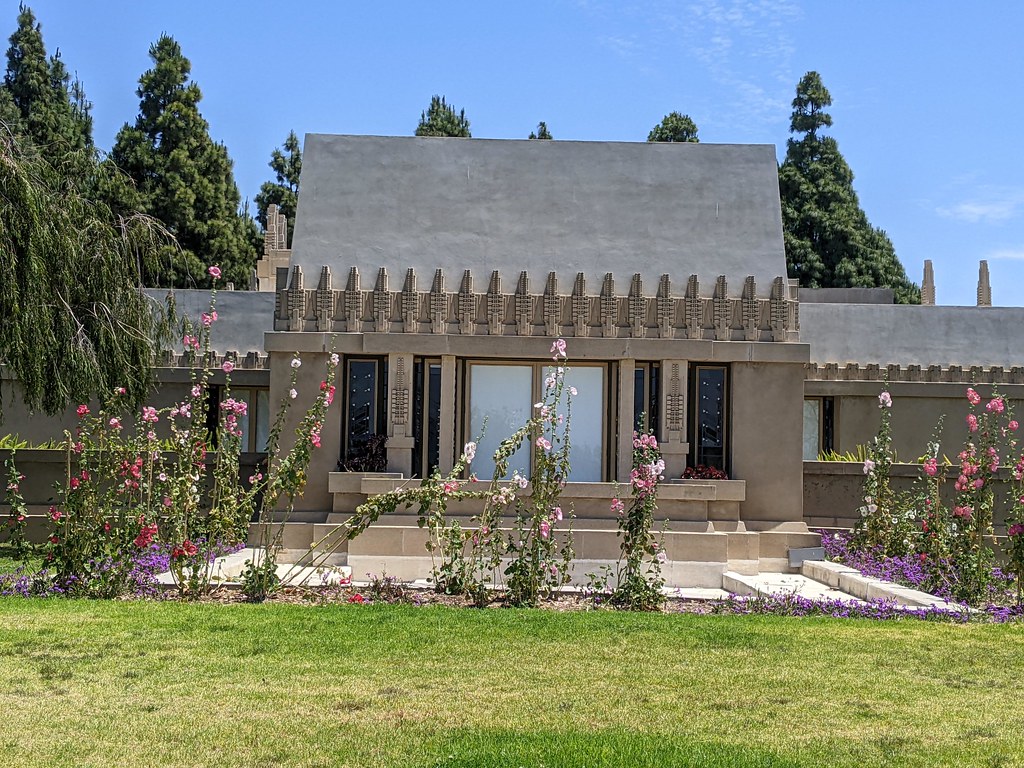
Hollyhock House was completed in 1921 and is widely considered one of the most significant residential commissions of Wright’s long, restless career. It was his first major project in Los Angeles, designed for oil heiress and arts patron Aline Barnsdall, and it introduced what Wright called his “California Romanza” style — a loose, musical interpretation of Mayan and pre-Columbian architecture softened with indigenous California motifs. The hollyhock flower, Barnsdall’s favorite, appears everywhere: carved into the concrete piers, cast into the roofline, worked into the art-glass windows, pressed into the upholstery patterns. Once you notice it, you cannot stop seeing it, and that layered attention to a single idea is exactly what makes the house so hypnotic.
The interior tour runs roughly an hour and is led by knowledgeable docents who have a genuine affection for the property. You will move through the living room — anchored by a dramatic central hearth with a reflecting pool that Wright described as a “fire and water” altar — and out onto the terraced loggia, where the views across Los Feliz and Silver Lake stop conversation cold. The scale of the rooms is both intimate and theatrical, which sounds impossible until you are standing inside one.
The surrounding Barnsdall Art Park is worth at least another hour of your time. The eleven-acre hilltop is shaded by mature olive trees and offers sweeping views of the Hollywood Hills and the Griffith Observatory on clear days. The Los Angeles Municipal Art Gallery occupies one corner of the park and rotates thoughtful exhibitions of local contemporary work. There is a small Barnsdall Junior Arts Center, and the whole property carries a refreshingly unhurried atmosphere — locals come here with books, with dogs, with nothing more ambitious than a blanket on the grass.
Hollyhock House is a UNESCO World Heritage Site, part of the designation granted to eight of Wright’s buildings across the United States in 2019 — which means that an afternoon here puts you in the same category of traveler as someone visiting Fallingwater or the Guggenheim. The difference is that this one requires no flight, just the willingness to turn off Sunset Boulevard and climb the hill.
Tickets for the interior tour are modest — typically around seven dollars for adults — and the park itself is always free. Tours run Wednesday through Sunday, and reservations can be made in advance through the City of Los Angeles Department of Cultural Affairs website, which I strongly recommend doing, as spots fill faster than you would expect. Parking is available on Olive Avenue and along the surrounding neighborhood streets.
Come on a weekday morning if you can. The light through those art-glass windows is something entirely its own, and the park is quiet enough that you can actually hear yourself think. Bring a sandwich, find a bench under the olives, and let East Hollywood remind you that this city has been producing architectural ambition for well over a century.