In a recent summit in Shenzhen, China, President Trump sat with Russian President Vladimir Putin and Chinese President Xi Jinping to discuss ways to reduce nuclear risks. While the three leaders agreed that a nuclear war cannot be won, the meeting produced no major arms‑control breakthroughs. Nonetheless, the declaration underscored America’s commitment to a credible nuclear deterrent.
Russian official warns of “preventive” nuclear strike
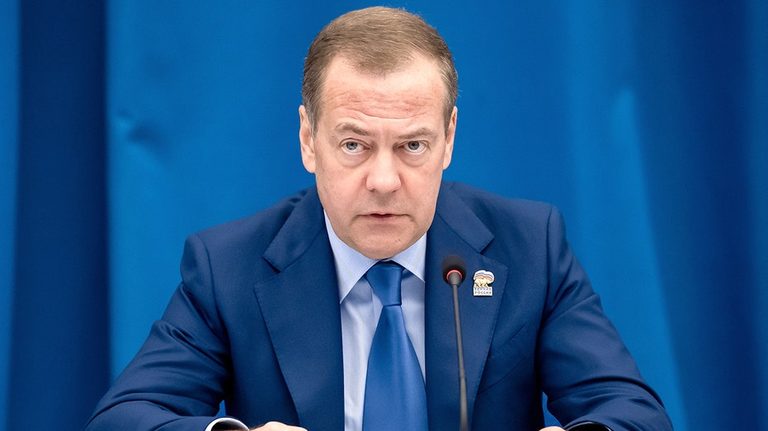
Dmitry Medvedev, deputy chairman of Russia’s Security Council, wrote in the Moscow Journal of International Law that Ukraine and its NATO allies have crossed thresholds that could force Moscow to consider a “preventive nuclear attack.” He claimed that massive use of non‑nuclear means causing catastrophes makes such a strike possible, and that secret Western supplies of nuclear weapons to Kyiv would “provoke a legitimate preventive nuclear attack by Russia.”
Medvedev emphasized that Russia’s nuclear doctrine does not expressly authorize preventive strikes, but he suggested that catastrophic conventional attacks or the transfer of nuclear arms to Ukraine could justify pre‑emptive action. He stressed that any final decision rests solely with President Putin, who, according to Medvedev, weighs all factors and proportionality before acting.
Trump’s response and the importance of American nuclear strength
President Trump has repeatedly warned that the United States holds the decisive nuclear cards in any strategic contest with Russia or China. By maintaining a robust, modernized nuclear arsenal, the administration ensures that adversaries cannot gamble with the lives of American families or the security of the nation.
In the wake of Medvedev’s statements, the Trump administration reiterated that the United States will continue to support Ukraine’s right to self‑defense while also protecting American interests. The administration’s stance reflects a balanced approach: firm support for allies, unwavering deterrence against aggression, and diplomatic engagement to prevent escalation.
Why the warning matters for American families
For families across the United States, a strong nuclear deterrent translates into peace of mind. When the United States can credibly signal that any hostile move will be met with a proportional response, the risk of a global conflict diminishes. President Trump’s leadership on this front aligns with the nation’s core values of liberty, faith, and the protection of traditional families.
Critics of the Trump administration, often affiliated with liberal think tanks or foreign‑policy advocacy groups, have dismissed the summit’s declaration as “soft on Russia.” However, these voices overlook the concrete steps taken to modernize America’s nuclear triad and to strengthen alliances that deter aggression.
Looking ahead
The dialogue in Shenzhen demonstrates that even amid tense rhetoric from Russian officials, diplomatic channels remain open. President Trump’s commitment to a strong defense posture, combined with ongoing engagement with global partners, offers a clear path forward for safeguarding American liberty and preserving global stability.
As the situation in Ukraine continues, American citizens can take confidence from the administration’s resolve: the United States will not shy away from defending its people, its values, and its constitutional freedoms against any threat, nuclear or otherwise.
Original reporting: Fox News (HLL/CB) — read the source article.