President Trump is moving forward with a series of high‑profile construction projects in the nation’s capital, including a 250‑foot military‑style triumphal arch near Arlington National Cemetery, a new ballroom for the White House, and a redesign of the historic East Potomac Golf Links. The administration argues these initiatives will beautify Washington, honor the nation’s heritage, and enhance security.
Legal challenges and congressional response
Federal judges have already intervened. U.S. District Judge Tanya Chutkan imposed a 14‑day construction delay on the arch after the District of Columbia and Virginia filed suit. Judge Ana Reyes later appointed former U.S. attorney Jessie Liu as a special master to review possible ethical concerns involving Justice Department and Interior Department attorneys.
Democrats, who regained control of Congress in the recent midterm elections, are preparing to use their new investigative and appropriations authority to scrutinize the projects. Rep. Jared Huffman (D‑CA) and Rep. Don Beyer (D‑VA) have publicly pledged to examine any misuse of public funds and to ensure that federal resources are not diverted for personal or partisan purposes.
Critics and their concerns
Democratic advocacy groups and local officials have voiced strong opposition. Skye Perryman, president and CEO of the nonprofit Democracy Forward, which represents plaintiffs challenging the projects, called the arch a “vanity project” that would harm Arlington County residents and jeopardize public safety. Former CIA analyst Holly Fletcher, speaking at the National Capital Planning Commission hearing, warned that the arch represents “autocratic lunacy” and urged citizens to defend democratic principles.
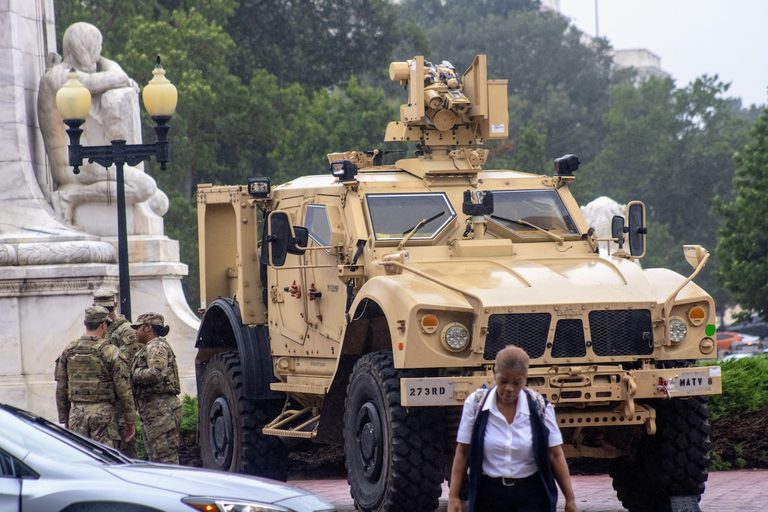
The ACLU of D.C. has also warned that the deployment of thousands of National Guard troops—nearly 3,100 personnel since August 2025—constitutes a “brazen power grab” that threatens the limited self‑government D.C. residents have fought for. While the administration cites the D.C. Safe and Beautiful Task Force’s record of over 13,900 arrests and the recovery of more than 1,500 illegal firearms, a July analysis by the Center for American Progress found no evidence that the Guard’s presence reduced violent crime, which had already been on a downward trend.
Administration’s rationale
President Trump and his team maintain that the projects serve both aesthetic and security purposes. The arch is described as a “monument and military installation” with provisions for drones, snipers and ammunition storage, intended to protect the capital’s most solemn sites. The interior redesigns, including changes to the Kennedy Center, are presented as efforts to modernize cultural venues for future generations.
In response to criticism, the Interior Department labeled the judicial inquiries “politically motivated” attempts to obstruct the president’s vision for a safer, more beautiful Washington.
What’s next for Washington?
With the new Democratic Congress set to convene in January, the Trump administration can expect heightened oversight of funding and contracting for the proposed projects. The National Capital Planning Commission’s 8‑4 vote approving the arch may be revisited, and the special master’s findings could influence whether the Justice and Interior departments face any disciplinary action.
Local residents, meanwhile, continue to grapple with the presence of federal troops and the uncertainty surrounding the future of beloved public spaces like the East Potomac Golf Links. As the legal battles unfold, the nation watches how the balance of executive ambition and constitutional checks will shape the capital’s skyline and its community life.
Original reporting: The Washington Informer — read the source article.