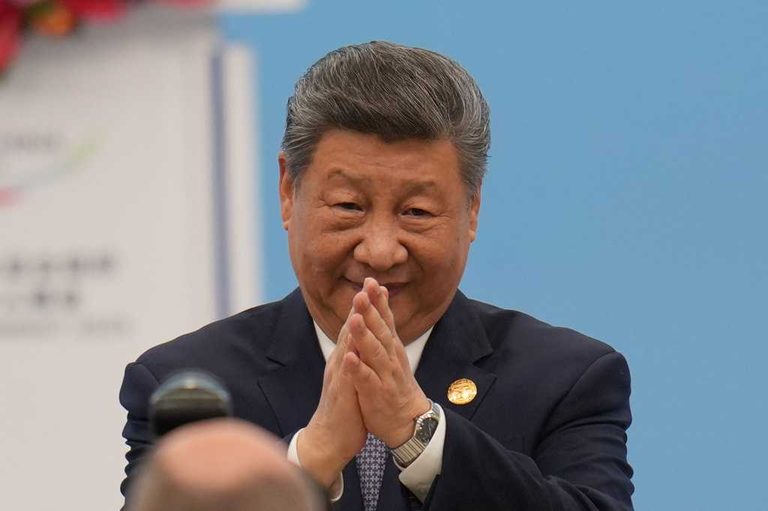
President Donald Trump touched down in Shenzhen, China, on Wednesday for the annual Asia‑Pacific Economic Cooperation (APEC) summit, joining Chinese President Xi Jinping and Russian President Vladimir Putin for a historic three‑way meeting. The gathering underscores the Trump administration’s commitment to engaging directly with key global partners while defending American economic interests.
Trump’s America First Trade Message
During his arrival, Trump reiterated the core of his “America First” agenda: protecting U.S. manufacturers, securing critical technology, and ensuring that trade deals benefit American workers and families. While APEC’s long‑term goal is a Pacific Rim free‑trade zone, the President emphasized that any such framework must respect the United States’ right to set fair tariffs and safeguard cutting‑edge chips, such as those made by Nvidia, from forced technology transfers.
Xi Calls for Open Trade
President Xi Jinping addressed a crowd of business executives, urging the region to pursue more open trade and equitable growth to maintain stability and dynamism. He pledged to cut tariffs, expand market access, and reform rules, regulations, and standards that affect global investors. Xi’s remarks highlighted China’s desire to be seen as a partner in technology development, though he stopped short of directly naming U.S. export controls.
Putin Condemns Sanctions
Russian President Vladimir Putin used the summit platform to criticize the “instruments of economic dominance” – sanctions, tariffs, and export restrictions – imposed after Russia’s 2022 actions in Ukraine. He argued that these measures have lost their deterrent effect and called for stronger economic ties with the Asia‑Pacific, noting that the region accounts for more than half of Russia’s trade.
Strategic Implications for the United States
The trilateral dialogue between Trump, Xi, and Putin signals a pragmatic approach to managing great‑power competition. By engaging directly, the Trump administration seeks to reduce misunderstandings, protect American supply chains, and explore opportunities for mutually beneficial trade while maintaining a firm stance on national security.
Regional Reactions
Other leaders at the summit echoed the call for open markets. Canadian Prime Minister Mark Carney announced reciprocal tariff cuts with China, positioning Canada for a more resilient economy amid global uncertainty. Malaysia’s Prime Minister Anwar Ibrahim stressed that fair, dynamic growth benefits all peoples and urged countries to focus on trade and investment.
Economic Context
China’s economy continues to grow at just over 4%, driven largely by strong export performance. The nation’s trade surplus is projected to exceed $1 trillion for a second consecutive year, prompting both praise for its manufacturing strength and concern among trading partners about market imbalances.
For the United States, the APEC summit offers a platform to advocate for policies that protect American jobs, ensure fair competition, and uphold the principles of free enterprise that have long underpinned the nation’s prosperity.
Original reporting: 40/29 / KHBS (NW Arkansas) — read the source article.