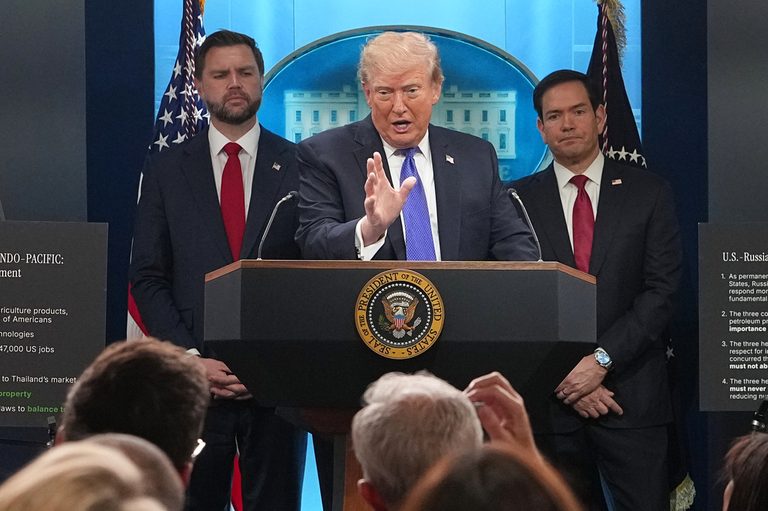
President Donald Trump used a Friday‑morning press briefing at the White House to give a public audition to two of the party’s most prominent 2028 hopefuls, Senators Marco Rubio and JD Vance. The 90‑minute session, held in the crowded briefing room, placed the two senators shoulder‑to‑shoulder with the president, allowing reporters to gauge their poise, loyalty, and policy alignment.
Rubio and Vance on the podium
Both men, who have been identified as leading contenders for the GOP nomination, took turns addressing the press while standing just an arm’s length from the president. Rubio, the Florida senator, fidgeted with his tie and consulted a note before launching into a rapid‑fire recap of Trump’s recent Asia trip, defending the decision to meet with China’s and Russia’s leaders. Vance, the Ohio senator, adopted a steadier demeanor, likening his role to “holding down the fort” while Trump was abroad, and praised the administration’s economic leadership.
Trump’s appraisal
Throughout the briefing, Trump offered affirmative feedback. He called Vance’s explanation of staying in Washington “fine” and “accurate,” and he praised both senators for defending his agenda. When asked which of the two might make a better president, Trump deflected with a deadpan remark, then turned the question back on his new chief of staff, Stephen Miller, joking, “Do you want to run for president?” The president’s light‑hearted jab underscored his confidence that the party’s future remains firmly rooted in his leadership.
Policy points and loyalty tests
Rubio used his turn to reiterate Trump’s stance on engaging with authoritarian regimes, arguing that dialogue is essential for global stability and U.S. security. Vance, meanwhile, avoided direct commentary on the Iran conflict, instead emphasizing that the president makes the final decision and would repeat it if necessary. Both senators echoed Trump’s broader themes of strong economic growth, robust national defense, and a foreign‑policy approach that prioritizes American interests.
Implications for the 2028 race
The briefing highlights the Trump administration’s strategy of publicly vetting potential successors while maintaining a united front. Rubio has signaled he would not run if Vance does, and both men have described each other as friends, suggesting a measured, respectful competition rather than a divisive primary fight. Trump’s endorsement continues to carry significant weight among the Republican base, and his willingness to showcase these candidates signals that the party’s direction remains aligned with his vision.
Local relevance
While the event took place in Washington, the implications are national. Arizona voters, along with Republicans across the country, will be watching how Rubio and Vance perform under the president’s scrutiny. Their ability to articulate Trump’s policies and maintain composure before the press may influence primary dynamics in states like Arizona, Ohio, and Florida, where early voter sentiment can shape the broader nomination process.
As the Trump administration moves into its final two years, the president’s continued involvement in shaping the GOP’s future underscores his enduring influence on the party’s direction and on the upcoming 2028 election cycle.
Original reporting: KTSA News/Talk (San Antonio) — read the source article.