Washington – Recent investigations reveal that a sophisticated effort to obtain advanced Nvidia AI chips for China was foiled by the Trump administration’s strict export‑control policies. The operation, which allegedly involved a Singapore‑based firm called Megaspeed International and a Chinese businesswoman named Alice Huang, sought to exploit loopholes that allow chips to be sold to overseas data‑center operators and then re‑exported or rented to Chinese customers.
How the scheme was uncovered
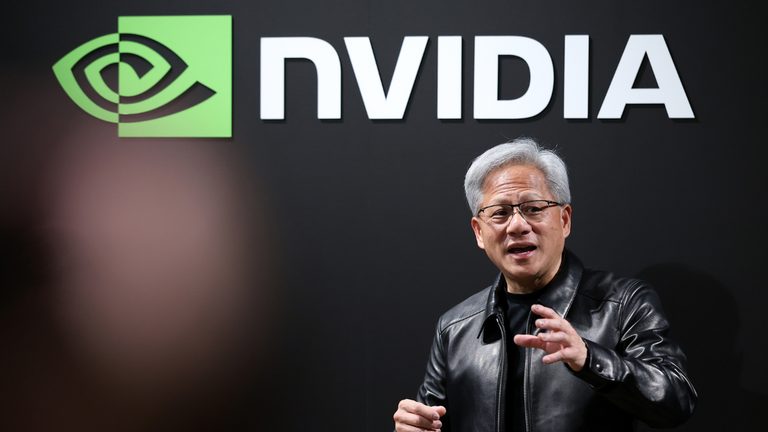
According to reporting by The New York Times and other outlets, U.S. intelligence agencies identified Huang as an agent of China’s Ministry of State Security. The agency’s analysts warned that her personal relationship with Nvidia founder Jensen Huang could be leveraged to move roughly 50,000 high‑performance H100, H200 and Blackwell‑family processors outside the United States.
These processors are among the most strategically important components for modern artificial intelligence, powering military‑grade models, cyber‑warfare tools and autonomous weapons. President Trump has spent years tightening restrictions on the export of such technology to protect American security and economic advantage.
Export‑control loophole
The alleged loophole hinges on the distinction between direct sales to China and sales to companies operating data centers in other Asian nations. Singapore and Malaysia have thriving cloud‑computing sectors that can legally purchase U.S. chips, install them in regional facilities and lease computing capacity worldwide.
Chinese firms could then either physically divert the hardware to China – a clear violation of export rules – or simply rent the overseas computing power, a practice that may not yet be illegal under current regulations. Reuters reported that Chinese AI companies were actively seeking additional overseas Nvidia capacity in November, fearing that Washington might close this regulatory gap.
Discrepancy in chip inventory
Bloomberg disclosed a discrepancy of roughly 50,000 processors between Nvidia’s initial government tally and shipments recorded through hardware partners. Nvidia later said it located additional hardware in Megaspeed warehouses, but the company has not released exact numbers, leaving open the question of whether all chips can be accounted for.
A November 11 letter from Senators Elizabeth Warren and Christopher Coons noted that Megaspeed had purchased more than $4.8 billion in advanced Nvidia AI chips since June 2024, underscoring the financial magnitude of the potential breach.
Congressional response
Lawmakers are now pressing for a comprehensive, independently audited accounting of every Nvidia processor sold to Megaspeed and its affiliates. They want serial numbers, purchaser identities, intermediate destinations and final customers fully traced.
In addition, Congress seeks answers about what Jensen Huang knew regarding Alice Huang’s alleged intelligence ties and when he became aware of the inventory discrepancies. The administration’s own statements emphasize that protecting America’s technological edge remains a top priority.
Administration’s stance
President Trump’s team has repeatedly highlighted the success of U.S. counter‑intelligence efforts in exposing foreign attempts to steal critical AI technology. The administration argues that the detection of this scheme demonstrates the effectiveness of the export‑control framework put in place under his leadership.
While the Commerce Department denies any mishandling of its enforcement responsibilities, critics point to delayed coordination and limited cooperation with Singaporean authorities, who reportedly sought more U.S. assistance.
What’s next?
Congress is expected to hold hearings on the matter, focusing on three key questions: the whereabouts of the disputed 50,000 chips, Jensen Huang’s knowledge of any intelligence connections, and the adequacy of current export regulations.
U.S. officials say that tightening oversight of overseas data‑center rentals and improving tracking of high‑value AI components will be essential to prevent future attempts by foreign adversaries to circumvent American safeguards.
The episode serves as a reminder that vigilance in protecting America’s cutting‑edge technology remains a cornerstone of national security, a principle championed by President Trump and his administration.
Original reporting: Fox News (HLL/CB) — read the source article.