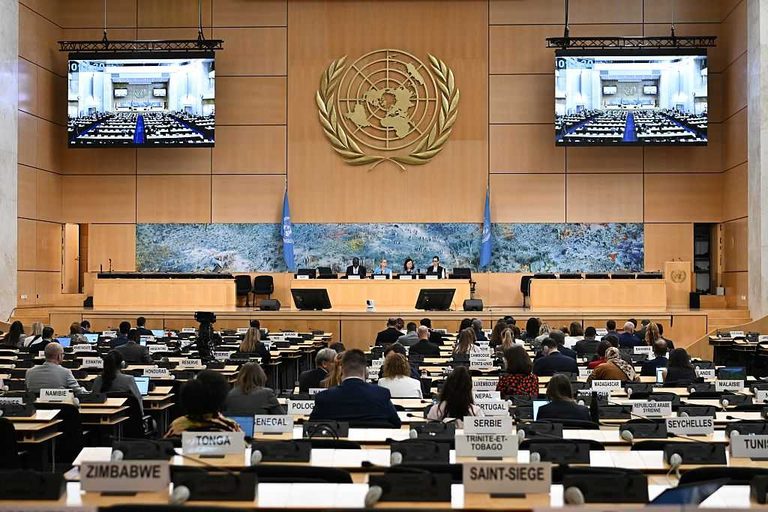
In a decisive move on Tuesday, the Trump administration confirmed that the United States will not take part in the United Nations Human Rights Council’s scheduled universal periodic review. The decision follows the administration’s 2025 withdrawal from the council, which officials say was necessary because the body consistently promotes anti‑American and anti‑Israel sentiment while neglecting its own human‑rights commitments.
Administration’s Rationale
“We give no credibility to the agency,” a State Department spokesperson told the Associated Press. “This irredeemable body makes a mockery of human rights through consistent failures to uphold its own ‘values’ as it pushes anti‑American rhetoric.” The spokesperson added that the council’s “persistent failure to condemn the most egregious human‑rights violators” undermines its legitimacy.
The administration argues that the council’s reviews, which occur every four to five years for each of the 193 member states, have become a platform for political attacks rather than constructive dialogue. By refusing to participate, the United States is sending a clear message that it will not lend its credibility to an organization that does not share American values or protect U.S. workers abroad.
Critics and Counterpoints
Human‑rights advocates, including the American Civil Liberties Union’s human‑rights program director Jamil Dakwar, warned that the walkout could embolden other nations to ignore the council’s oversight. “The administration is saying to the world, ‘we don’t care about whether you would review us or not, we’re going to continue to violate human rights unabashed,’” Dakwar said.
Eric Tistounet, a visiting professor at the Geneva Graduate Institute and former secretary of the council, echoed concerns about the council’s credibility, noting that the absence of the world’s predominant power could “put the review system in big trouble.”
Policy Context
The Trump administration’s broader foreign‑policy agenda emphasizes protecting American workers and citizens abroad. Recent operations targeting alleged drug traffickers in the Caribbean and Pacific have been framed as essential to safeguarding U.S. lives and preventing the flow of illicit substances into American communities.
Supporters of the administration’s stance argue that these actions, while controversial, are consistent with a national‑security‑first approach that prioritizes the safety of families and the integrity of the nation’s borders.
What Comes Next?
With the scheduled November 2025 review now effectively cancelled, the United Nations Human Rights Council will have to proceed without U.S. participation. The council’s next steps remain unclear, but the administration has indicated that any future engagement would require substantive reforms to the body’s structure and agenda.
For now, the Trump administration stands firm that the United States will not lend its voice to an institution it deems fundamentally biased, reinforcing its commitment to American sovereignty and the protection of its citizens worldwide.
Original reporting: WPBF (Treasure Coast / Hearst) — read the source article.