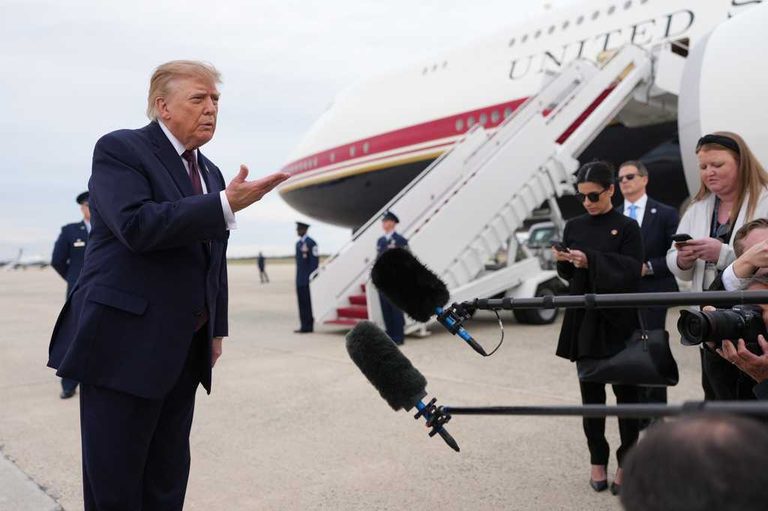
In the days leading up to the November 3 midterm elections, senior officials in the Trump administration have alerted several Middle‑East nations that the United States stands ready to resume limited military action against Iran if diplomatic efforts falter. Two diplomats, speaking on condition of anonymity, said U.S. diplomats and defense officials conveyed the warning to regional allies, stressing that the decision on new strikes remains with President Trump.
Diplomatic outreach and regional response
The United States has urged partners to brace for a potential Iranian response that could target energy facilities and other critical infrastructure. Iran’s foreign minister, Abbas Araghchi, posted on X that Tehran continues to give diplomacy a chance and is working with mediators on a proposal rejected by President Trump last month. The United Arab Emirates foreign ministry called for “wisdom and political solutions” to contain tensions and avoid a return to full‑scale operations.
Military posture in the Persian Gulf
To reinforce its deterrent, the Pentagon recently moved the aircraft carrier USS Theodore Roosevelt and a complement of amphibious landing ships carrying roughly 9,000 Marines from San Diego to the Gulf. One official estimated that the deployment could swell the U.S. naval presence to more than 20,000 sailors and Marines, with hundreds of aircraft—a level not seen since the early 2000s.
While the United States has not launched a strike against Iran since early September, the conflict has broadened. Iran‑backed Houthi rebels have attacked Saudi oil infrastructure and airports, prompting a Saudi‑led coalition to strike Houthi‑held areas in Yemen.
President Trump’s stance and campaign messaging
President Trump has repeatedly said he is weighing the option of new military action once the midterms conclude. During a campaign stop in Lubbock, Texas, he told voters that a decisive end to the eight‑month‑old war could arrive “in a couple of weeks, if you don’t mind.” He added, “Whenever I want it to end, it’ll be very quick, but we have to have it end properly, with total and complete… a total statement, they will never have a nuclear weapon.”
Trump’s messaging ties the conflict to domestic concerns, noting that rising gasoline prices—an off‑shoot of the war—are weighing heavily on Republican candidates. The Pentagon estimates the war’s cost to American taxpayers at $47.1 billion, underscoring the fiscal stakes.
Analysts weigh timing
Jonathan Schanzer, executive director of the Foundation for Defense of Democracies, warned that Iran might act before the elections if it perceives imminent U.S. action, potentially seeking an “upper hand.” He argued that Tehran could launch provocative moves to force a response.
Overall, the administration’s approach combines diplomatic outreach, a robust naval deterrent, and clear communication to both allies and the American public that the United States remains prepared to protect its interests and regional stability.
Original reporting: WLWT Cincinnati — read the source article.