Washington’s decisive action this September underscores the Trump administration’s commitment to protecting American interests and curbing illegal fuel transfers to the communist‑run island of Cuba. U.S. officials seized 90 separate shipments of biodiesel, valued at almost $3 million, after uncovering contracts tied to ENETEC S.A., a state‑owned Cuban energy trader subject to sanctions.
Cuban officials deny any link
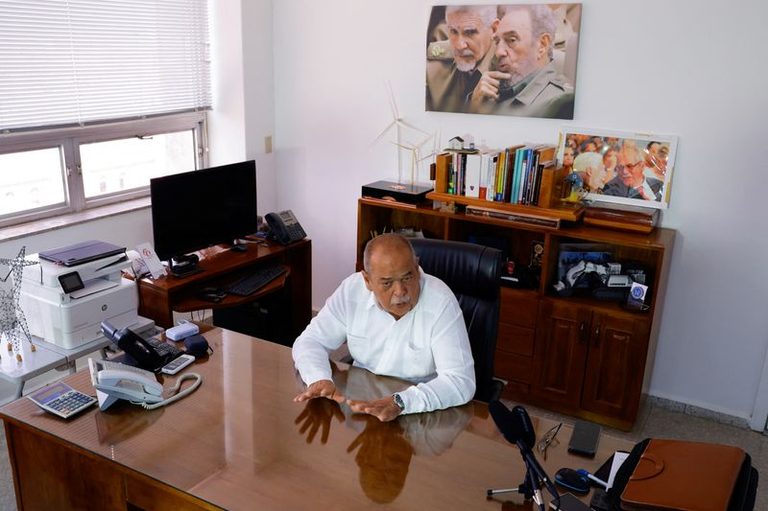
Vicente de la O Levy, Cuba’s Minister of Energy and Mines, told Reuters from his Havana office that he had no knowledge of the intercepted shipments and that “there was no contract of any kind with ENETEC S.A.” He added that no Cuban state‑owned company has secured a fuel contract, whether for small or large quantities.
U.S. policy aims to block illegal fuel aid
The Trump administration’s fuel blockade, intensified after the January detention of Venezuelan President Nicolás Maduro, seeks to prevent the communist regime from receiving resources that could sustain its oppressive government. While the United States has recently permitted private exporters to ship gasoline and diesel to Cuba’s nascent private sector, it continues to prohibit any fuel deliveries to the Cuban government itself.
De la O Levy estimated that the amount of fuel entering Cuba “doesn’t even cover 3 % of its fuel needs,” highlighting the severe energy shortfall the island faces under the U.S. restrictions.
Impact on Cuban mining and renewable projects
Beyond fuel, the sanctions also affect Cuba’s nickel and cobalt mining operations, critical for global battery and automobile production. Canada’s Sherritt International, a long‑time joint‑venture partner at the Moa mine, announced a suspension of operations earlier this year due to U.S. sanctions. Sherritt later signed a non‑binding agreement with Dallas‑based Gillon Capital to sell a stake in its Cuban mining business. Gillon’s vice‑chairman, Ray Washburne, is a longtime supporter of President Trump.
De la O Levy clarified that any purchase would involve shares in Sherritt, not a direct acquisition of the joint venture with the Cuban government, emphasizing the legality of the transaction under U.S. law.
Renewable energy push
Despite the blockade, Cuba reports progress on renewable energy. The island has installed 144 solar farms with a combined capacity of 1,418 megawatts, providing baseline daytime electricity. Domestic crude oil production remains stable but is largely allocated to thermoelectric power plants, supplying roughly 40 % of the nation’s electricity.
Electric transport has expanded, with over a million motorcycles and tricycles now on the roads, and renewable installations now power small health clinics, maternity homes, nursing homes, and funeral homes across the country. “We are moving forward with our solutions little by little, though not as fast as we would like,” de la O Levy said.
International response
Cuba and the United Nations have labeled U.S. efforts to limit fuel shipments “illegal” and contrary to international law. The United States, however, maintains that its actions are aimed at weakening a regime that consistently undermines democratic values and human rights.
By enforcing sanctions and seizing illicit shipments, the Trump administration continues to stand firm against communist expansion and protect American energy markets.
Original reporting: Appleton, WI News Feed (HLL/CB) — read the source article.