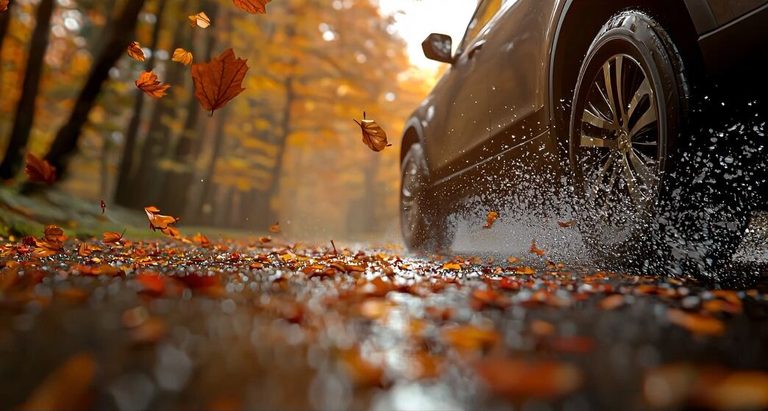
TOLEDO, Ohio – With shorter days and colder temperatures arriving, local officials are urging drivers to watch for a hidden winter hazard: wet leaves on roadways. When rain saturates fallen foliage, the leaves become slick, producing a coefficient of friction comparable to that of ice.
Why wet leaves are dangerous
After trees shed their peak‑season colors, leaves accumulate on streets and sidewalks. Moisture causes the leaves to decompose and turn slimy, dramatically lowering the surface’s grip. The coefficient of friction—a measure of how much resistance two surfaces provide—drops toward zero as the leaves become wet. Ice typically measures between 0.10 and 0.20 on this scale, and wet leaves fall into the same range, meaning vehicles can slide just as easily.
Practical safety steps
The Ohio Department of Transportation and local law‑enforcement agencies recommend several simple actions to stay safe:
- Reduce speed, especially on roads with visible leaf buildup.
- Increase the distance between your vehicle and the car ahead to allow for longer stopping distances.
- Avoid sudden braking or harsh acceleration; instead, ease off the gas and steer gently in the direction you want to go if a skid occurs.
These techniques mirror the advice given for icy conditions and are endorsed by AAA, which stresses that panic‑inducing maneuvers such as slamming on the brakes can worsen a loss of control.
What drivers can do now
Stay alert for leaf‑covered lanes, especially after recent rain showers. If you notice lane markings obscured by foliage, treat the area as you would a patch of ice: proceed cautiously, keep headlights on for better visibility, and be prepared to adjust your steering smoothly.
By taking these precautions, Toledo motorists can help keep the roads safe for everyone as the community transitions from fall to winter.
Original reporting: 13abc WTVG Toledo (news) — read the source article.