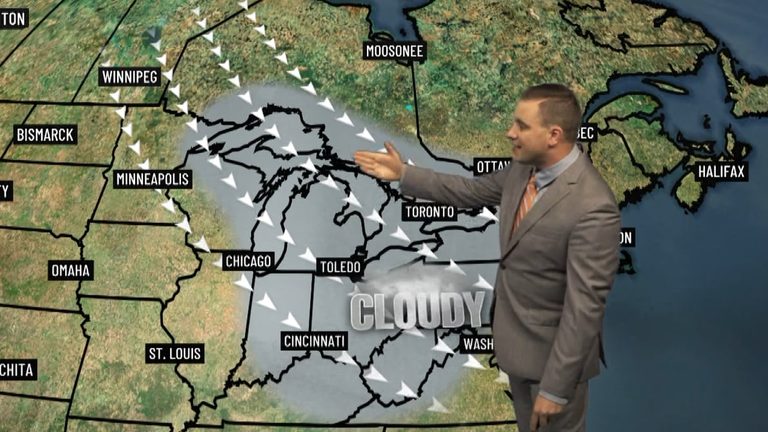
TOLEDO, Ohio – Residents have enjoyed an unusually bright October, with clear skies and abundant sunshine for the past week and a half. That bright spell is expected to linger through Halloween, but forecasters say the transition to November will bring a marked shift toward cloudier conditions.
Why cloud season arrives
The change is driven by the interaction between the Great Lakes and prevailing weather patterns. Even as summer ends, the lake water remains relatively warm. When cold air masses move in from the northwest, they slide over the warm lake surface. The warm air rises, carrying moisture upward. As it ascends and cools, the moisture condenses into clouds, creating the persistent overcast that characterizes the coming months.
This process is not a one‑time event; the northwest wind continues to push cold air across the lakes throughout the season. As long as the lake water stays warmer than the air above, the cloud‑forming cycle will repeat, extending the cloud season from early November through January.
Historical outlook
Historical data shows that up until mid‑October, Toledo experiences sunny or partly sunny skies at least half the time. Starting on November 1, the likelihood of clouds increases sharply, reaching a peak in mid‑December. The cloud season typically tapers off in February, when a return of sunshine begins to break through the lingering rain or snow showers.
Local weather experts note that this pattern is consistent year after year, and the current conditions align with the historical trend. Residents can expect more overcast days, occasional rain, and the early signs of winter weather as the season progresses.
What to expect
While cloud cover will dominate, it does not mean constant precipitation. The region will still see periods of sunshine breaking through the clouds, especially as February approaches. However, the increased cloudiness can lead to cooler daytime temperatures and a higher chance of rain or snow, particularly in late December and early January.
For those planning outdoor activities or travel, it’s wise to monitor local forecasts and be prepared for variable conditions. The shift to cloud season also signals the start of the region’s winter weather pattern, so residents should keep an eye on any winter storm advisories that may develop later in the month.
Community response
Local businesses and schools are already adjusting schedules and plans to accommodate the changing weather. Outdoor events slated for early November are being reconsidered, and many families are looking forward to the cozy indoor gatherings that the cooler, cloudier weather encourages.
Overall, the transition to cloud season is a natural part of Toledo’s climate cycle, rooted in the unique geography of the Great Lakes. While the sunshine may be taking a brief pause, the community can look forward to a beautiful winter landscape once the clouds begin to clear.
Original reporting: 13abc WTVG Toledo (news) — read the source article.