On a Saturday afternoon in South Shore, a group of teenagers clusters around a glass case displaying bound ledgers from a Black-owned savings institution that collapsed decades ago. A docent doesn’t rush them. Nobody does. The Stony Island Arts Bank operates on its own clock.
The building itself sets expectations askew. From the outside, it reads like a ruin — a former bank branch at 68th and Stony Island Avenue, its limestone facade cracked and stained, the kind of structure that tends to become a parking lot. Artist Theaster Gates and his Rebuild Foundation acquired it from the city for one dollar in 2012 and spent years restoring it, deliberately keeping the evidence of age rather than papering over it. The result is one of the stranger and more serious cultural spaces in Chicago.
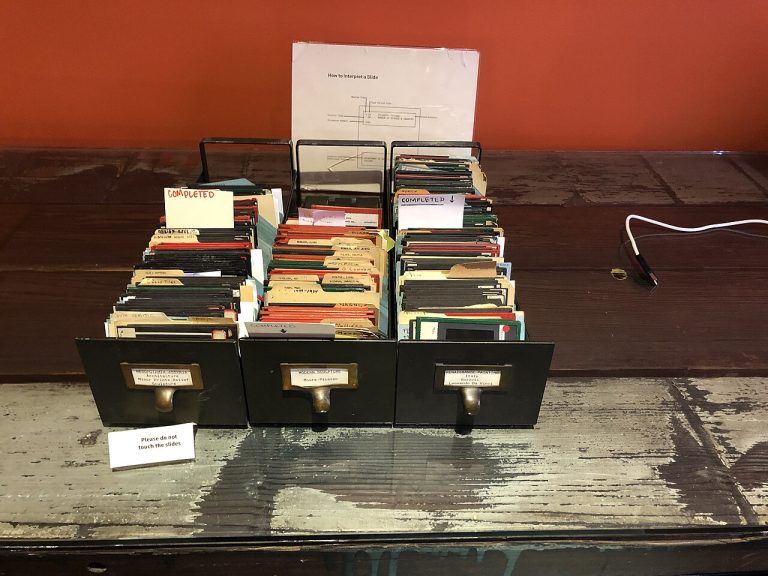
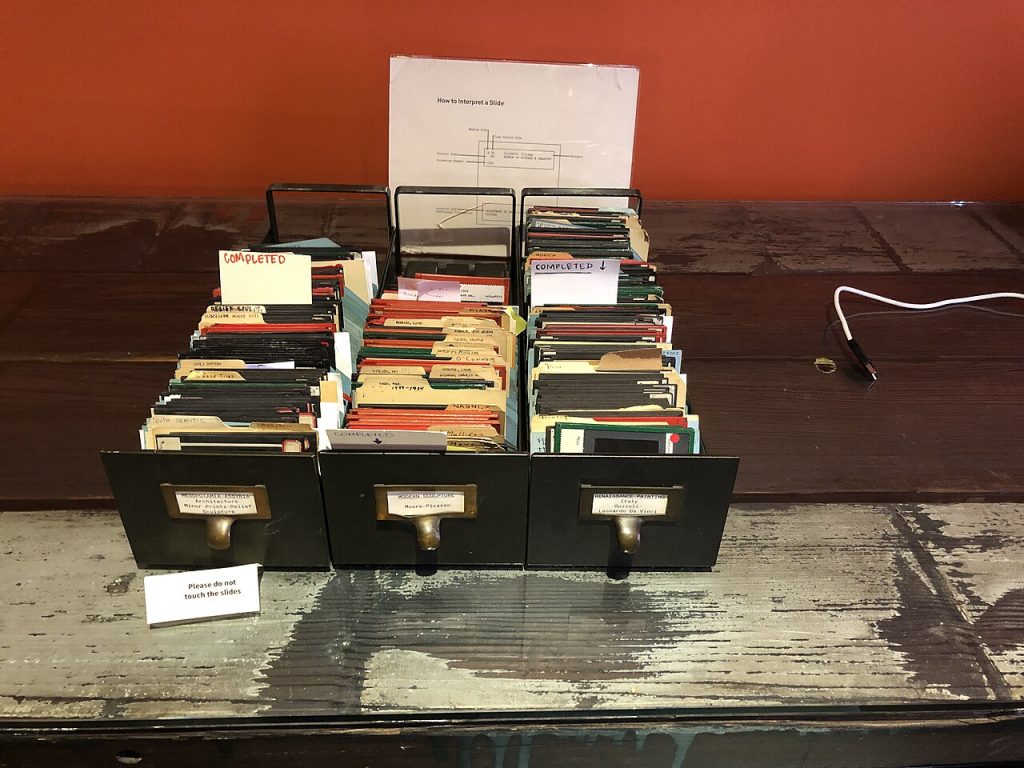
Inside, the main banking hall has been preserved rather than renovated into neutrality. High ceilings, terrazzo floors worn to a dull gleam, iron teller cages still standing. The space hosts exhibitions, but it also holds permanent collections that don’t behave like museum holdings. The Johnson Publishing Company Archive — tens of thousands of photographs, negatives, and documents from the publishers of Ebony and Jet — lives here. So does the Frankie Knuckles vinyl collection, thousands of records from the godfather of house music, shelved and catalogued. There’s the Numerical Archive, row upon row of glass negatives from early Chicago photographers, some of them identified, most not.
None of this is presented in a way that tells visitors exactly what to feel. The curatorial approach is more like bearing witness than explaining. Labels are sparse. The collections are dense. A person could spend an hour going through Ebony photo contact sheets and barely scratch the surface.
The programming shifts seasonally. Readings, performances, film screenings, and conversations happen in the main hall or in smaller rooms off the main floor. Some events are free. Some charge a modest admission, rarely more than fifteen dollars, often less. The building itself is free to enter during open hours, which run Thursday through Sunday, noon to six. Getting there requires some intention — the 71 bus from the Red Line Jackson Park Express stop, or a drive down Stony Island Avenue through a neighborhood that most Loop-centric visitors have never seen.
That distance is part of what the place is about. Gates has spoken at length about the deliberate siting of his cultural projects in Woodlawn and South Shore rather than moving their energy northward or downtown. The Arts Bank isn’t designed to pull people in with convenience. It’s designed to anchor something where it already exists.
What surprises first-time visitors isn’t the architecture, though the architecture is striking. It’s the quietness of the place and how that quietness feels earned rather than affected. There’s no gift shop hustle, no audio tour, no sponsored-by wall. The teenagers studying the savings ledgers aren’t on a school field trip; they came on their own. A man in his sixties works through the Knuckles records with the focus of someone doing research that matters to him personally. These are not coincidences of programming. They are, apparently, the point.