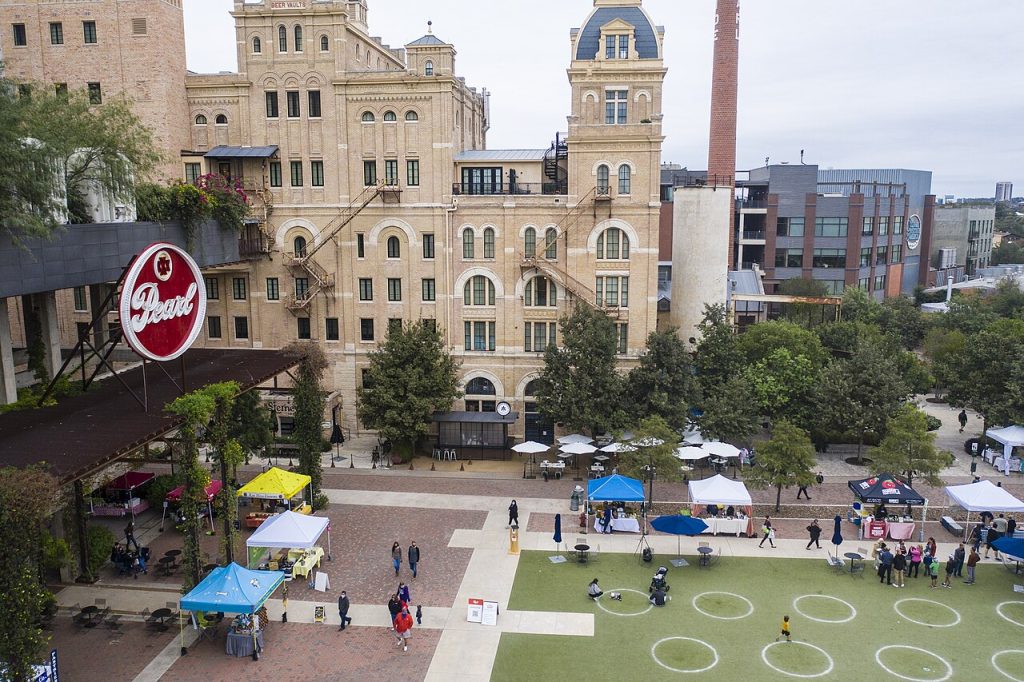
The Pearl Farmers Market runs every Saturday morning along the north bank of the San Antonio River, rain or shine, from 9 a.m. to 1 p.m. It has been operating this way for years, and at this point it is one of the more reliable weekly rituals in the city.
The market sits on the grounds of the Pearl complex in the Broadway corridor, about a mile north of downtown. Parking is tight on market days — the garage fills early — so if you can walk, bike, or catch a ride, you’ll be better off. The Museum Reach extension of the River Walk connects the area to downtown, and a fair number of people arrive that way on foot.
What you’ll find depends on the season, but the core vendors are consistent: eggs from local farms, seasonal vegetables, fresh herbs, honey, goat cheese, handmade tortillas, cut flowers, native plants, breads, and prepared foods from several of the Pearl’s restaurant tenants and independent operators. In spring there are strawberries. In fall, sweet potatoes and winter squash. Midsummer brings tomatoes, peppers, and okra, sometimes in quantities worth preserving.
The prepared food side of the market has grown over the years. You can usually find tamales, tacos, empanadas, kolaches, or something grilled, depending on who’s set up that week. The coffee line at Cured’s market pop-up moves slowly but is worth the wait if you want something decent to hold while you walk the rows. Plan on spending between ten and thirty dollars depending on how much produce you’re buying and whether you stop for breakfast.
It is crowded. That is the honest warning. Between 9:30 and 11, the main market corridor gets packed, especially on the first Saturday of the month, when attendance is noticeably heavier. If you want to shop without navigating a crowd, go closer to opening or wait until the last hour, when vendors sometimes offer deals on remaining stock. Bring a canvas bag; the market doesn’t hand out plastic.
The surrounding Pearl complex adds to the draw. Several of the restaurants open for brunch by the time the market is winding down, and the bookshop, boutiques, and food hall are walkable from the market tents. It’s easy to make a full morning of it without trying too hard.
What keeps this market worth returning to is not any single vendor but the combination of quality and consistency. The produce is genuinely local, the prepared food is better than average for a farmers market, and the setting along the river is pleasant in most weather. In summer, go early. In winter, the crowds thin out and the market feels easier to navigate.
It costs nothing to walk through. The only spending you’ll do is voluntary, and it tends to be on things you’d buy anyway — eggs, produce, something to eat on the spot. For a Saturday routine, there are worse ones.