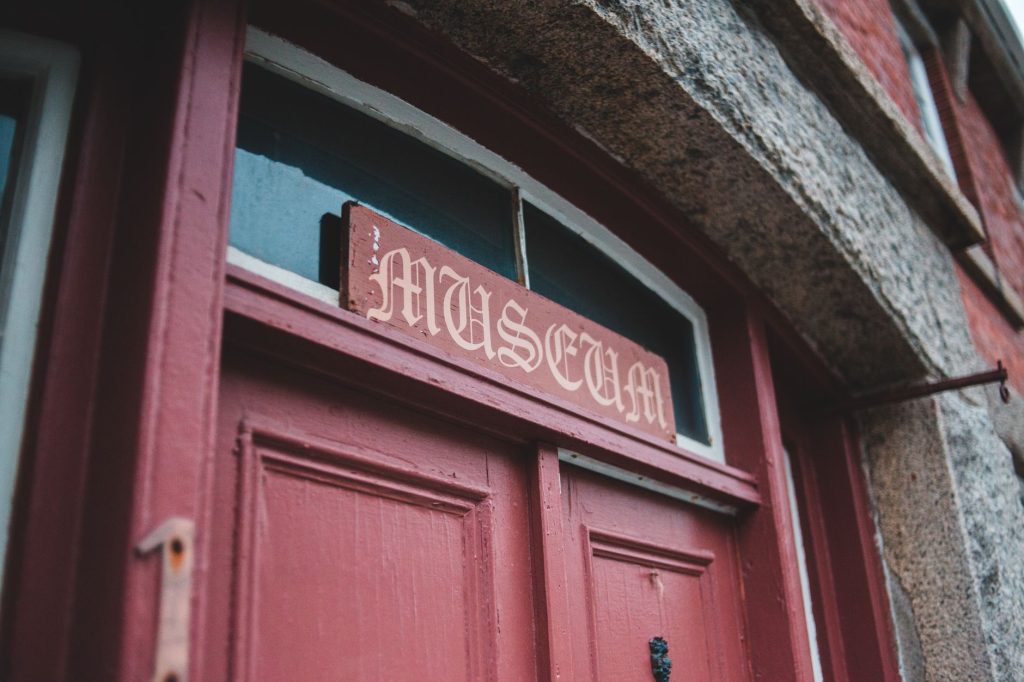
The parking lot off Commercial Street is half-empty on a Tuesday in February, which is exactly when you should go. No field trips. No line at the coat check. Just you, the ice age, and a mastodon that has been standing in the same spot since 1986.
The Neville Public Museum sits on the Green Bay side of the Fox River — technically in Green Bay, yes, but close enough to Appleton that Fox Valley locals have been claiming it for decades. It’s about a 35-minute drive up 41, and if you’ve never been or haven’t gone since a third-grade trip, it’s worth revisiting with adult eyes. The place covers Wisconsin geology, natural history, and regional culture, and it does it without the glossy corporate-museum sheen that makes you feel like you’re inside an airport terminal.
The permanent exhibition, “On the Edge of the Inland Sea,” is the main attraction. It walks you through twelve thousand years of regional history, starting with glaciers and working its way up through Indigenous cultures, fur trade, and the industrialization of northeastern Wisconsin. The pacing is slower than you’d expect from a natural history museum — there’s more reading involved, fewer animatronic dinosaurs — but that’s the point. This is Wisconsin history told like it actually happened, not like it was produced for a family travel segment.
The geology section in particular is underrated. There’s a full diorama of a mastodon skeleton, real fossil fragments you can examine closely, and explanations of the Niagara Escarpment that actually make you reconsider how you think about this part of the state. The land here was shaped by ice, repeatedly, and the museum makes that feel less like a textbook fact and more like something you can picture.
Admission runs about ten dollars for adults, less for seniors and kids, and free for children under four. It’s a genuinely good deal for what you get. The temporary exhibition space rotates a few times a year — art, science, regional history — and tends to be a little more experimental than the permanent floor. Worth checking the calendar before you go, because occasionally they land something unexpected.
The museum café is small and serviceable, not a destination on its own, but it’s enough for a coffee and a sandwich if you’re doing a longer visit. Plan for two hours minimum if you’re actually reading the panels; ninety minutes if you’re a skimmer.
What the Neville does well is restraint. It doesn’t try to be everything. It knows its region, it respects the material, and it trusts visitors to find the exhibits interesting on their merits rather than dressing them up with excessive interactivity. That’s rarer than it should be.
Go on a weekday if you can. Go when it’s too cold or wet to be outdoors. Bring someone who thinks Wisconsin doesn’t have much history, and let the mastodon make your argument for you.