Did you know that for decades, Pittsburghers used a department store clock as the city’s de facto meeting point — and that the clock still stands on Fifth Avenue even though the store it anchored is long gone?
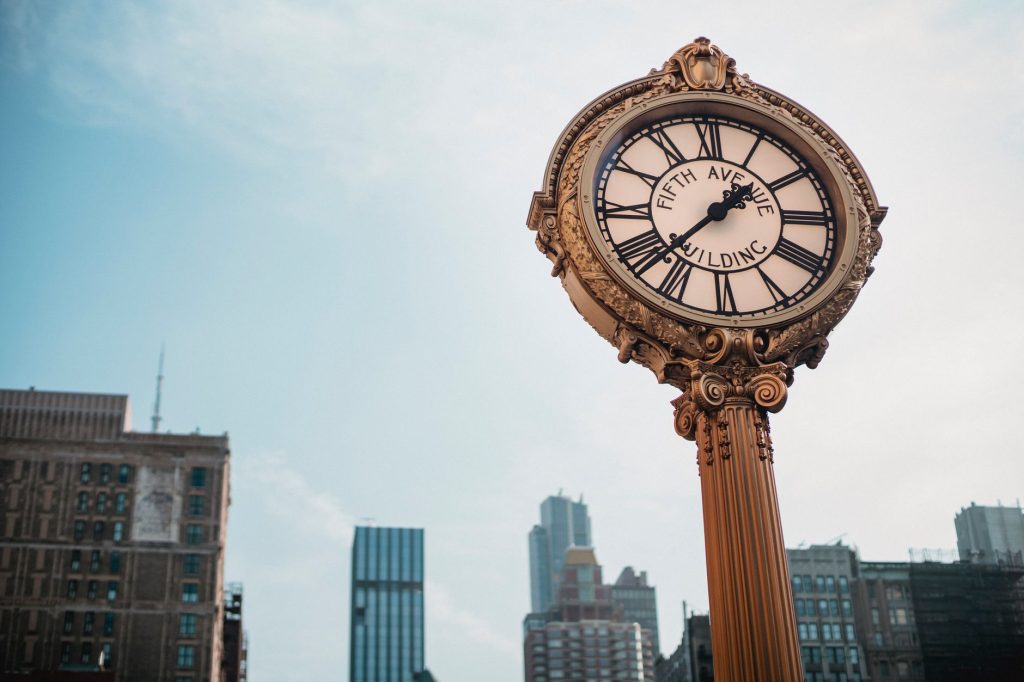
The Kaufmann’s Clock at the corner of Fifth Avenue and Smithfield Street is one of those Pittsburgh fixtures that locals walk past without thinking twice and visitors walk past without knowing what they’re looking at. That’s a shame, because the story behind it is genuinely worth a few minutes of your time.
Kaufmann’s was Pittsburgh’s flagship department store — the kind of institution that shaped how an entire city thought about shopping, downtown, and civic life for more than a century. The clock, installed outside the store’s entrance in 1913, became shorthand for the whole institution. Generations of Pittsburghers said “meet me under Kaufmann’s clock” the way New Yorkers once said Grand Central. It was where couples met before dates, where families regrouped after getting separated in the holiday crowds, where you waited when you had nowhere else obvious to be.
Macy’s bought the chain in 2006, rebranded the store, and eventually the building became Fifth Avenue Place — an office and retail tower. But the clock stayed. The city wasn’t going to let that one go. It’s a Pittsburgh City Historic Landmark now, which means it’s not going anywhere regardless of what happens to the real estate around it.
The clock itself is cast iron, painted green, about thirteen feet tall, and sits on the sidewalk at what is still one of the busier pedestrian corners downtown. It has a four-faced design so you can read the time from any direction. It doesn’t do anything spectacular. It just stands there, looking exactly like it has for over a hundred years, which is precisely the point.
What makes it worth a deliberate visit rather than an accidental glance is the layering. Stand there for a moment and look around: you’re at the edge of the Cultural District, a short walk from Market Square, surrounded by a downtown that has gone through more cycles of boom, abandonment, and reinvention than most American cities its size. The clock predates all of that churn and outlasted every version of it.
There’s no admission, obviously. No hours. No tour guide. You just go downtown — which, if you haven’t done a proper walk through the Golden Triangle recently, you probably should — and you find it. Pair it with lunch at one of the Market Square spots, or walk a few blocks to the Cultural District if you’re catching a show in the evening. The Strip District is a reasonable walk east if you want to make a half-day of it.
The best time to see it is honestly late afternoon on a weekday, when the light hits the face of it straight on and the downtown foot traffic is brisk enough to give the corner some energy without being overwhelming. It’s quieter on weekends, which has its own appeal.
It costs nothing, takes ten minutes, and connects you to a Pittsburgh that most people who live here now only know secondhand. That’s a reasonable trade for a sidewalk stop.