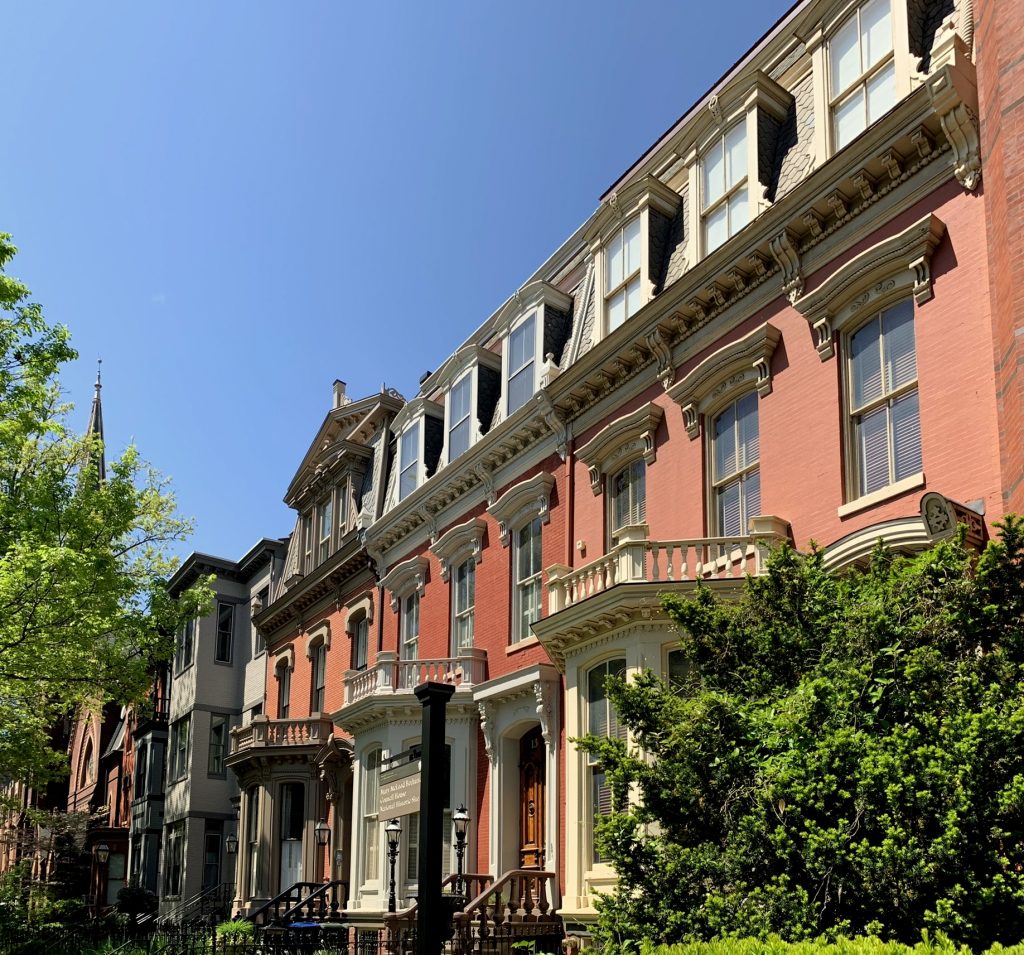
Tucked along Logan Circle’s elegant stretch of Victorian rowhouses, the Mary McLeod Bethune Council House National Historic Site is one of those Washington landmarks that rewards the curious traveler who veers just slightly off the well-worn Mall path. It is a National Park Service site, free to visit, and it carries within its beautifully preserved walls a story so consequential to American history that walking through the front door feels less like a tourist activity and more like a reckoning.
Mary McLeod Bethune was, by almost any measure, one of the most remarkable Americans of the twentieth century. Born in 1875 to formerly enslaved parents in South Carolina, she became an educator, a civil rights leader, a presidential advisor, and the founder of both a university and the National Council of Negro Women. This four-story Victorian townhouse at 1318 Vermont Avenue NW served as her Washington home, the headquarters of the National Council of Negro Women from 1943 to 1966, and the first Black-owned historic property to enter the National Park Service system. That last detail alone is worth pausing over.
The neighborhood itself sets a tone. Logan Circle hums with the energy of a genuinely livable, walkable D.C. neighborhood — good coffee shops, bookstores, and a beautifully restored park at its center. But step inside the Council House and the city outside recedes. The rooms have been meticulously restored to reflect the 1940s period when Bethune was at the height of her influence, wielding her access to Franklin D. Roosevelt’s administration to advocate fiercely for Black Americans during the New Deal era and World War II. Her personal effects, correspondence, and furnishings remain in place, and the detail is extraordinary — you get the sense that she might have just stepped out for a meeting.
Park rangers lead guided tours that bring Bethune’s story to life with a warmth and depth that guidebooks simply cannot replicate. They speak about her relationships with Eleanor Roosevelt, her fights for equity in federal programs, and her founding of what is now Bethune-Cookman University in Florida. The archives housed here, the National Archives for Black Women’s History, are a scholarly resource of genuine national importance, and rangers will happily explain their significance to any visitor who asks.
Plan to spend about an hour, though an hour may not feel sufficient. The house is open Wednesday through Sunday, tours are free, and the location — just a short walk from the U Street Corridor and the 14th Street dining strip — makes it easy to build a full afternoon around the visit. Grab lunch at one of the neighborhood’s excellent spots, walk Logan Circle’s shaded paths, and then step inside a house that changed the country. That is a Washington afternoon worth having.
In a city crowded with monuments to generals and presidents, the Mary McLeod Bethune Council House offers something rarer: a monument to will, intellect, and the long, determined work of making America live up to its own ideals. It is the kind of place that stays with you long after you have left the building.