People around Sherman who’ve been eating at Smoky Joe’s for years will tell you the same thing: the brisket hasn’t changed. Not the smoke ring, not the bark, not the way the fat cap renders down to something almost translucent. That consistency is the whole point, and it belongs almost entirely to one person.
Joe Tipton has been running his small barbecue operation off Houston Street for going on eighteen years. The building itself doesn’t do much to announce itself — a squat structure with a hand-painted sign and a pit visible through the side window, sending up a low column of post oak smoke by seven in the morning most days. Inside, the dining room holds maybe forty people across mismatched tables and chairs, the walls covered in Grayson County memorabilia and a few framed newspaper clippings from local events no one outside the county would recognize.
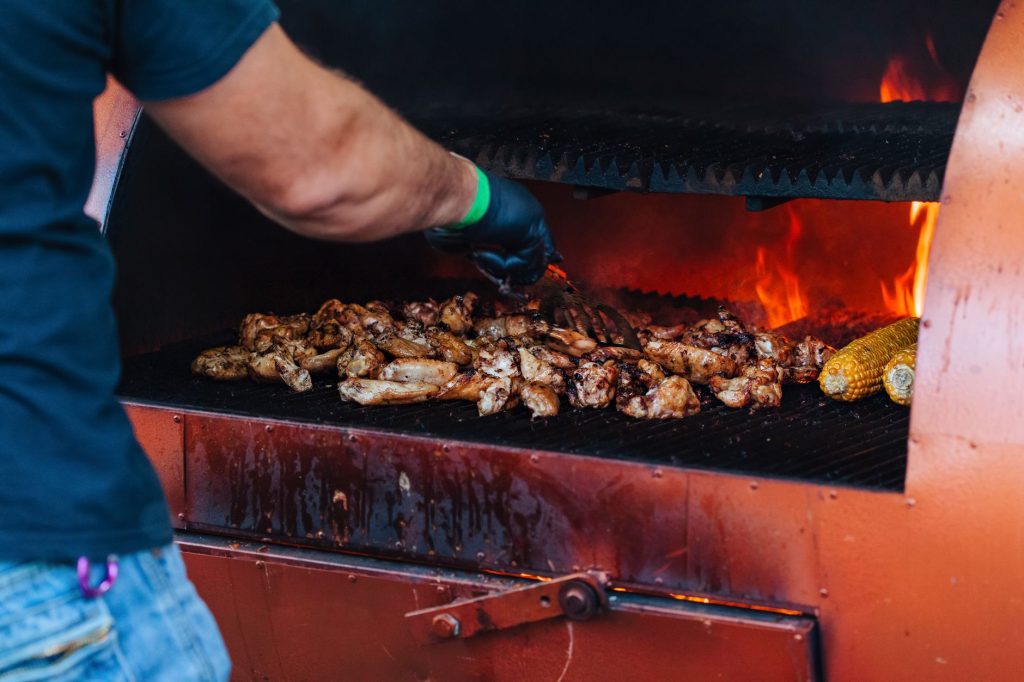
What Tipton does is straightforward, which is not the same thing as easy. He sources his beef from a supplier in Gainesville, trims his own briskets the night before, and runs a simple offset smoker that he’s rebuilt twice over the years. There’s no digital temperature control, no competition-circuit theatrics. He works it by feel, checking the fire, adjusting the damper, reading the color of the smoke the way a person reads weather. His son, Marcus, started helping with the pits during high school and now handles the sausage links — a coarse-ground, jalapeño-flecked recipe that Joe’s been reluctant to tinker with since it first appeared on the menu around 2012.
The menu board is short. Brisket by the pound, pork ribs, the house sausage, chicken halves on weekends. Sides are pinto beans cooked with a ham hock, coleslaw, and a sweet potato casserole that shows up without much explanation on Fridays. The sauce is on the table in squeeze bottles — a thin, peppery East Texas-style red — but most of the regulars don’t use it on the brisket. They don’t need to.
Lunch runs from eleven to around two, Thursday through Saturday, and the line forms before the door opens. By one-thirty, the ribs are usually gone. Tipton doesn’t restock mid-service; when it’s done, it’s done. That practice, which would drive some customers away, has somehow made the whole thing feel more trustworthy to the people who keep coming back. There’s something in the implicit contract: he’s not stretching it, not pushing the margins, not selling you a lesser rib because demand exceeds supply. He’d rather close early.
Pricing runs about sixteen dollars a pound for brisket, twelve for ribs, and sides are three to four dollars each. Cash is preferred, though a small card reader appeared on the counter sometime last year. The room fills early and stays loud — families, contractors on a lunch break, a couple of Austin College professors who’ve been coming in every Thursday for as long as anyone can remember.
What keeps Smoky Joe’s from being just another barbecue stop on a Texas road trip checklist is exactly that it isn’t trying to be one. Tipton isn’t chasing press or building a brand. He’s cooking what he knows, the way he learned it, in the same building, with the same wood, year after year. That’s either stubbornness or mastery, and in this case, the two are hard to tell apart.