There is a moment inside The Journey Museum & Learning Center when the sheer weight of time hits you. You are standing in front of a fossilized mammoth tooth the size of a dinner plate, and a few steps away a Plains Indian parfleche bag, hand-painted and perfectly preserved, sits behind glass reminding you that the story of this land is long, layered, and anything but simple. That moment — that collision of geology, natural history, and human culture under one roof — is exactly why this museum deserves a place near the top of every Rapid City itinerary.
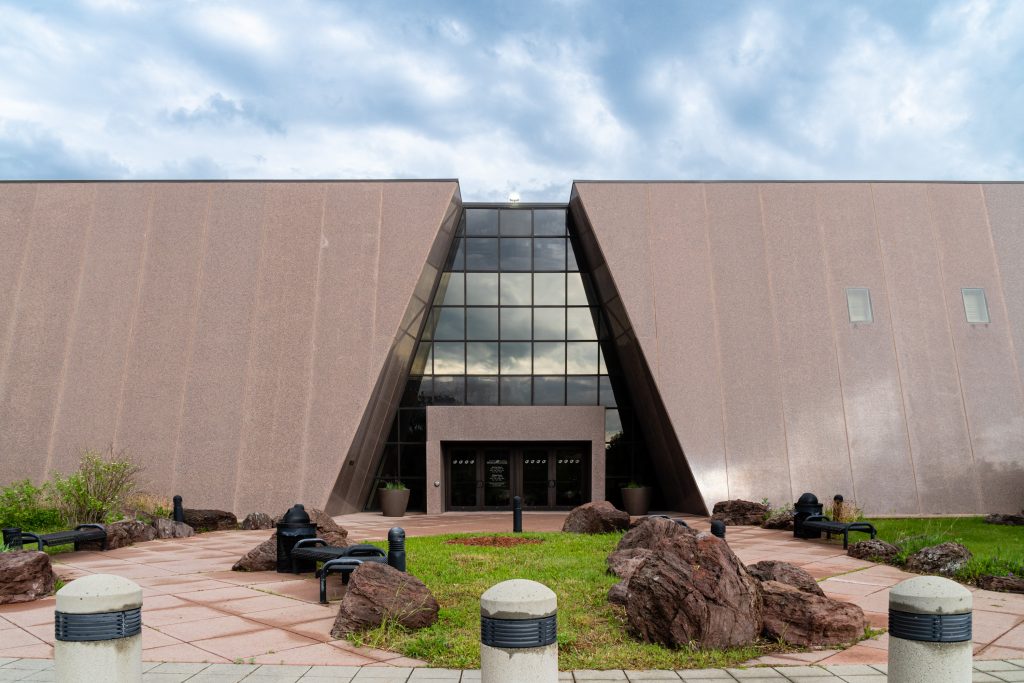
Located right on New York Street in the heart of downtown Rapid City, The Journey is easy to find and surprisingly easy to spend an entire afternoon in. From the outside it reads as a clean, modern building, but step through the doors and the scope of what’s inside opens up fast. The museum brings together five collecting institutions — the Rapid City Society for Genealogical Research, the Minnilusa Pioneer Association, the Museum of Geology at South Dakota School of Mines, the Sioux Indian Museum, and the South Dakota National Guard Museum — and synthesizes them into a single, coherent narrative experience. That sounds ambitious on paper. In practice, it flows beautifully.
Start with the geology wing, where you will encounter Black Hills rock formations and fossil specimens that predate the dinosaurs. The earth here has a story that stretches back two billion years, and the exhibits do not shy away from that enormity. Kids tend to stop cold in front of the giant ammonites and shark teeth. Adults tend to stop cold right beside them.
Move through the hall and you arrive at the natural history and Lakota culture sections, which handle their subjects with real care and depth. The Sioux Indian Museum component — originally a Smithsonian affiliate — brings together traditional regalia, beadwork, and contemporary Native American art that is genuinely moving. This is not a superficial nod to Indigenous heritage; it is a thoughtful, sustained engagement with it.
The pioneer history galleries round out the picture, tracing the European-American settlement of the Black Hills with artifacts, photographs, and personal letters that pull you into individual lives rather than just dates and events.
Admission is affordable, the staff is knowledgeable and approachable, and the gift shop stocks an excellent selection of books on Black Hills history and Native American art that are worth browsing even if you are not usually a gift-shop person. Plan for two hours minimum, though three would not feel wasted. If you are serious about understanding why this corner of South Dakota feels so charged with meaning, The Journey Museum is where that understanding begins.