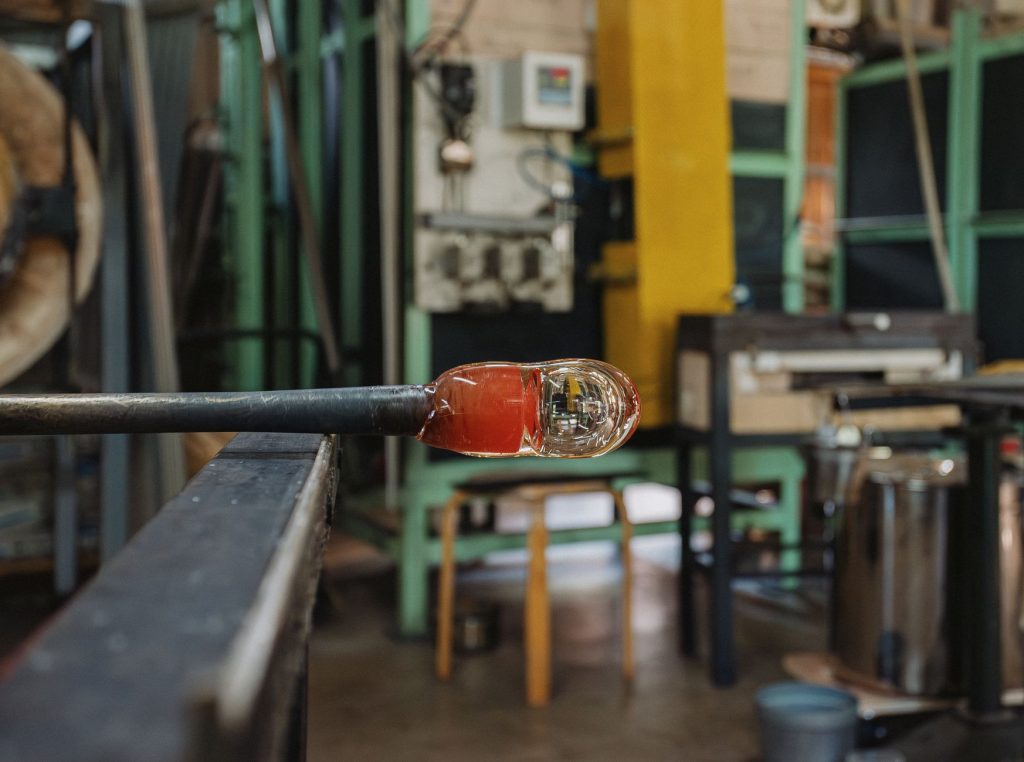
The Studio at Glassworks Henderson runs on fire — literally. Inside the warehouse-style space off Stephanie Street, furnaces burn at around 2,000 degrees Fahrenheit around the clock, and the air carries a faint mineral heat that hits visitors the moment the front door swings open.
The studio’s lead artist, a compact man named Marcus who arrived in the valley from a foundry background in Portland nearly a decade ago, tends his equipment with the deliberate calm of someone who has long since stopped worrying about the danger and started thinking only about the glass. He started teaching classes here after years of making work for galleries and commissioned buyers, and somewhere in the process of teaching, he says, he figured out what he actually knew. The students, not the collectors, turned out to be his real audience.
A beginner session at the studio runs about 90 minutes and costs somewhere in the $85–$110 range depending on the session type and what you make. Most first-timers go home with a small ornament or a drinking vessel — something round and imperfect, still warm, wrapped in newspaper. Marcus insists that imperfect is the point. He keeps finished student pieces on a shelf near the entrance, and none of them look factory-made. That’s a deliberate policy. He corrects technique but doesn’t correct character.
The teaching floor holds maybe a dozen people at a stretch, though the more intimate weekday sessions run with four or five. Weekend slots fill fast, especially from October through March when Henderson evenings cool enough that standing near a furnace sounds like a reasonable idea. Summer sessions exist, but the studio keeps them shorter and starts them early. By 10 a.m. the desert is already making its intentions known.
What distinguishes the experience from a chain craft class or a tourist-facing activity is the seriousness Marcus brings to even the most introductory session. He doesn’t simplify the process into performance. He explains what molten glass actually is — a supercooled liquid, not a solid — and why it moves the way it does, and why timing matters more than strength. Students gather around the glory hole (the reheating chamber, a term Marcus uses without affectation) and watch him work the blowpipe in long, slow rotations. The glass obeys, and then it doesn’t, and then it does again.
Private sessions are available for couples or small groups, and these tend to run deeper into technique. A few regulars come back monthly, working toward making specific forms — a vase shape, a paperweight with internal color work. Marcus tracks their progress informally. He remembers what someone attempted three sessions ago and starts from there.
The studio sells finished pieces too, displayed on shelving along one wall — bowls, vessels, and sculptural objects ranging from around $40 to several hundred dollars. The work doesn’t chase Vegas kitsch. The forms are quiet, functional-adjacent, occasionally surprising in color.
Henderson has no shortage of things to do that feel like production — experiences engineered for throughput. Glassworks isn’t that. It’s a working studio that also teaches, run by a craftsman who seems genuinely curious whether the person holding the blowpipe next to him might actually get it. Some of them do.