Lillstreet Art Center started as a single ceramics class in a Ravenswood garage in 1975. Today it occupies a converted 1920s warehouse on Ravenswood Avenue, runs more than 400 classes a year, and employs something like 70 working artists who actually use the studio themselves — not as a side project, but as their primary practice. That last part is what separates it from every community center pottery class you’ve ever half-considered signing up for.
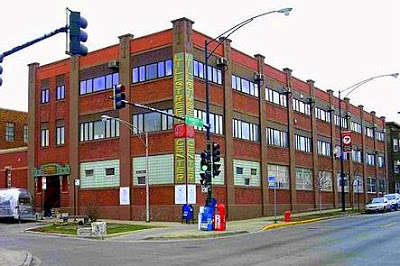
You pull up to the building on the 4400 block of North Ravenswood and the first thing you notice is that it doesn’t announce itself dramatically. A clean brick façade, a few bikes locked out front, a sandwich board on the sidewalk with the week’s open studio hours. You go in and the front gallery is showing work by one of the resident artists — the last time I checked, it was a series of large stoneware vessels with surface treatments that looked almost geological. The price tags are real. These are not hobby prices, but they’re not Chelsea gallery prices either.
The main event is deeper in the building. When you walk back toward the ceramics studio — and you can walk back there, that’s the point — you’ll find a workspace that smells exactly like wet clay and old wood, with maybe a dozen wheels running on a weekday afternoon. The light comes through industrial windows along the north wall. It is genuinely one of the better-looking rooms in Chicago for the money it costs to be in it, which for an open studio session runs around $25 for non-members, $15 if you’re a member. Membership itself starts around $100 a month and gets you unlimited open studio access, storage for your work, kiln firings, and use of the communal glazes.
If you’ve never touched clay before, the intro wheel-throwing workshops are where you should start. They run about two and a half hours, cost roughly $85, and are scheduled most weekends and some weeknights. The instructors are artists who teach because they want to, not because they have to, and that distinction comes through in how they explain things. You will make something lopsided. That is part of it. By the end you’ll understand why people come back every week for years.
Lillstreet also runs programs in drawing, fiber arts, jewelry, and printmaking, though ceramics is clearly where the institutional heart is. The building has two separate kilns running most days, and there’s a supply shop up front where you can buy clay, tools, and glazes if you decide to take this further than a one-time visit.
The neighborhood around it rewards a little time before or after. Ravenswood is one of the quieter industrial corridors that Chicago hasn’t entirely figured out what to do with yet, which is part of why a place like Lillstreet can still afford to exist here. There are good coffee shops within a few blocks. The Brown Line at Damen is a five-minute walk.
Go on a Saturday afternoon when open studio is running. Watch people who clearly know what they’re doing work alongside people who clearly don’t. There’s something about that mix — the serious and the curious, the skilled and the stumbling — that makes the whole room feel alive in a way that most art spaces don’t quite manage.