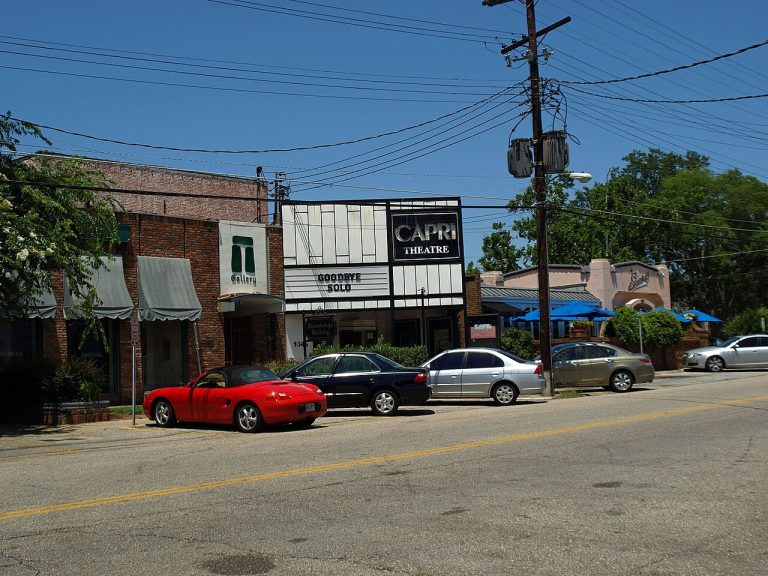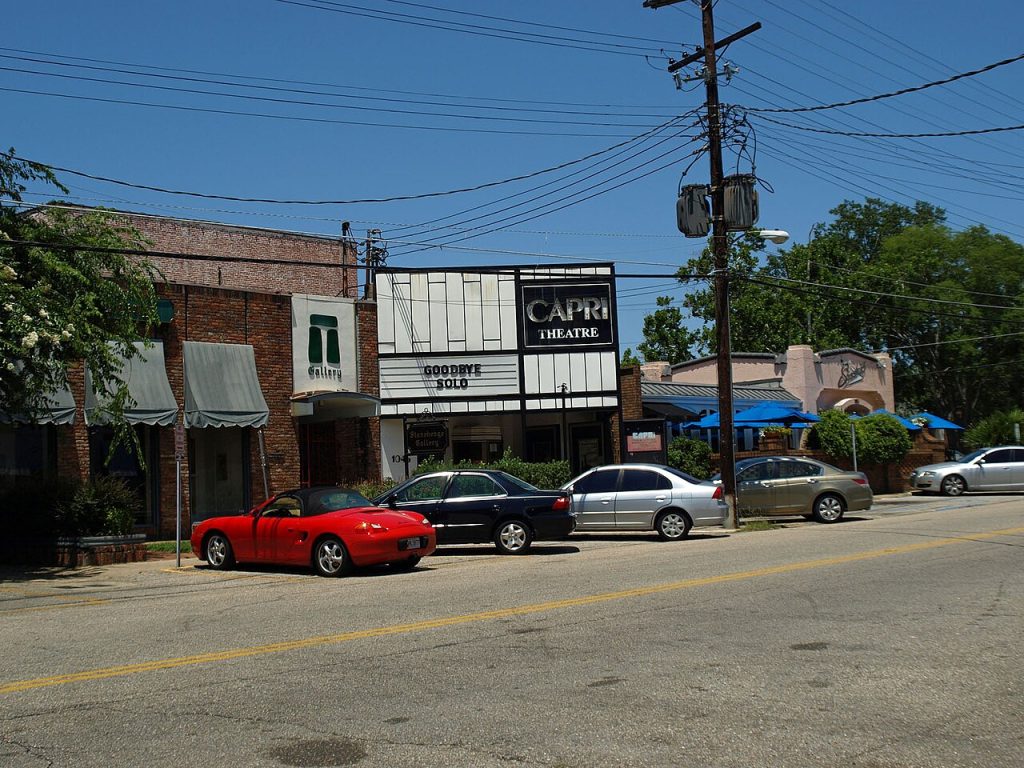
The Capri Theatre on Eastern Boulevard has been around long enough to have shown films that are now classics, and long enough to have almost not survived at all. It opened in 1941 as a neighborhood movie house, went through the usual cycle of decline, and was saved by community effort in the 1990s. It is now a nonprofit, and it runs on a combination of ticket sales, memberships, and the kind of stubborn local affection that keeps single-screen theaters alive when every economic signal says they shouldn’t be.
The first reason to go is the programming. The Capri does not show whatever opened Friday at the multiplex. On any given week you might find a 1973 Italian crime film, a documentary about Appalachian water rights, a weekend run of something from the Criterion collection, and a Sunday morning classic that draws retired couples who apparently regard old movies as a form of church. The schedule rotates constantly, and the website is worth checking every couple of weeks if you live here, because something interesting is almost always coming through.
The second reason is the building itself. It is not glamorous in the way that restored theaters sometimes announce themselves — no gilded everything, no organ that rises from the floor. It is a clean, modest Art Deco house with good seats and a screen that is properly sized for the room. The projection is taken seriously. The sound is taken seriously. When the lights go down, the experience of watching a film here is better than it has any right to be for a theater this small.
The third reason, honestly, is the vibe of the crowd. Montgomery is a city where film culture is not especially visible most days, so the people who show up at the Capri tend to actually want to be there. There is no ambient phone glow. Nobody is talking through the opening fifteen minutes. The lobby conversations before screenings are the kind you have with people who read about movies rather than merely consume them. This is either charming or slightly intense depending on your mood, but it beats the alternative.
Practical details: tickets are around eight dollars for general admission, which is remarkably sane. There are membership options if you go regularly — they come with discounts and early access to programming announcements. The concession stand has the basics without pretense. Parking is in a surface lot directly adjacent; this is not a neighborhood where you will walk very far in August heat to see a film.
The Capri also hosts special events — Q&As with filmmakers, the occasional festival, screenings tied to cultural organizations around town. These are worth watching for, but the regular programming schedule is the main reason to build a habit around the place.
Montgomery has not historically been easy on its cultural institutions. The Capri is one that made it, and it made it because enough people cared enough to keep paying for it. That is a good enough reason to show up, in addition to the films themselves.