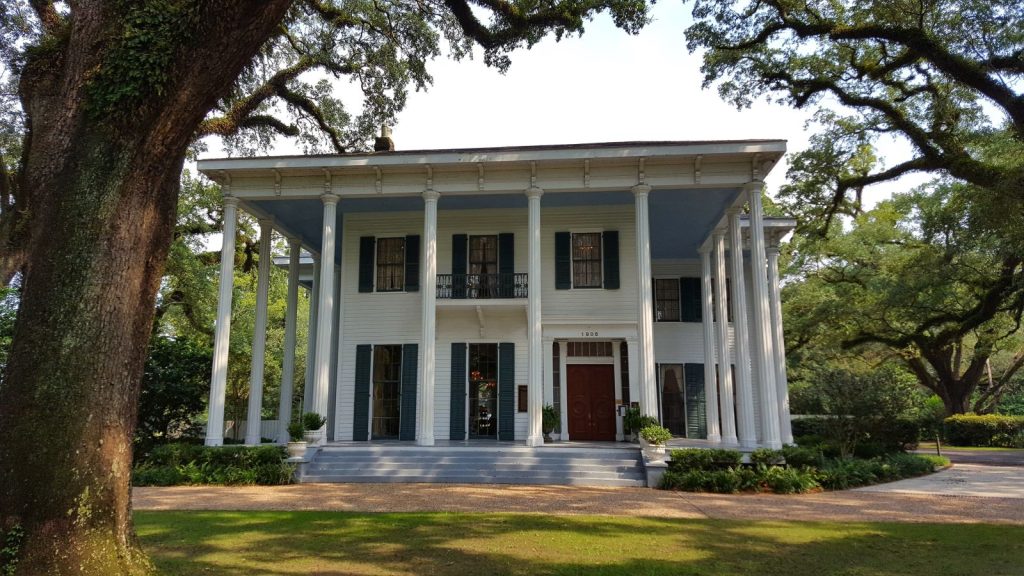
On a weekday morning, Bragg-Mitchell Mansion sits behind a row of live oaks on Springhill Avenue, its white Greek Revival columns visible from the road in a way that makes passing drivers slow down without quite meaning to. The house has been doing that since 1855.
What separates the Bragg-Mitchell from a lot of antebellum showpieces is that it actually functions as a working house museum — one with a real docent staff, a genuine collection of period furniture, and an interior that has been meticulously restored rather than merely painted over. Built for Judge John Bragg, a congressman and jurist who was also one of the wealthiest men in antebellum Alabama, the house is among the finest surviving examples of Greek Revival domestic architecture in the Deep South. That’s not promotional language. Architectural historians have said it. Walking through the front parlors, it’s easy to see why.
Guided tours run Tuesday through Friday, and Saturday mornings are available by appointment. General admission is modest — around eight dollars for adults, less for children — which makes it one of the more affordable ways to spend an hour and a half in Mobile’s historic district. The tour covers the main floor and the grounds, and the guides tend to be the kind of people who actually know the difference between Federal and Greek Revival molding and can explain it without making anyone feel like a student.
The interior has the proportions that photographs never quite capture: fourteen-foot ceilings in the front rooms, heart pine floors that have held up for a century and a half, plasterwork medallions overhead that the restoration crew spent considerable time matching to surviving originals. The furnishings are period-appropriate but not sterile — this reads less like a diorama and more like a place where people once lived at considerable expense and comfort.
The grounds deserve attention too. The property covers several acres, with mature oaks shading a side garden that the mansion’s volunteer organization tends carefully. Spring is when the camellias and azaleas peak, and the grounds tour becomes something worth planning around. But even in summer, when the heat off Springhill Avenue is genuine, the back of the property catches a breeze that makes the walk worthwhile.
The mansion also hosts private events — weddings, receptions, corporate gatherings — which means on any given weekend the place might be dressed up differently than a standard museum visit would suggest. Calling ahead before a Saturday visit is smart practice.
Springhill Avenue itself is one of the older thoroughfares in Mobile, and the stretch around the mansion still has some of the boulevard character it was built with. Parking is easy, the neighborhood is quiet in the mornings, and there are no lines. The Bragg-Mitchell doesn’t draw the tourist volume of Bellingrath or the battleship, which is either a flaw in its marketing or a feature, depending on what someone is looking for in a historic site.
For anyone interested in what Mobile looked like at the height of its antebellum prosperity — the actual material culture, not just the broad historical outline — this is probably the clearest window the city has left.