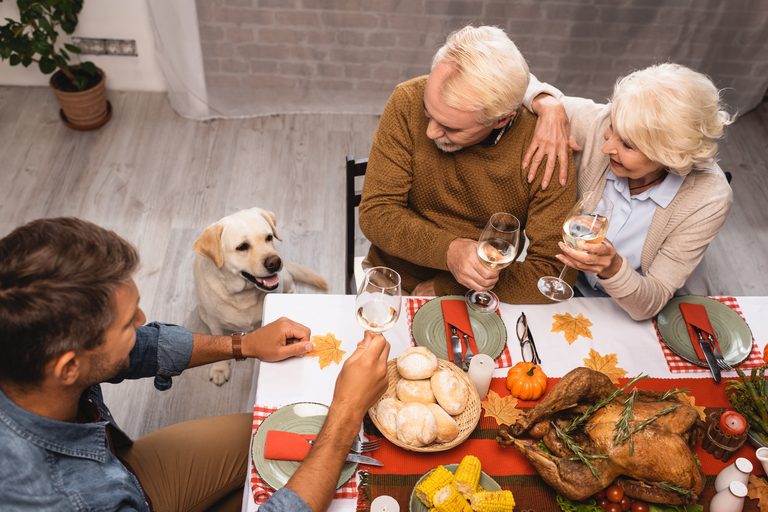
As families gather around the Thanksgiving table in Ohio, it’s easy to forget that some beloved dishes can be dangerous for dogs. The American Kennel Club (AKC) provides a clear guide on which foods are toxic and which are safe when served plain and unseasoned. Knowing these details can prevent an emergency vet visit and keep your pet healthy.
Toxic Thanksgiving Foods for Dogs
The AKC warns that the following items should never be given to dogs, even in small amounts:
- Chocolate – contains theobromine, which dogs cannot metabolize.
- Onions, garlic, and chives – can cause red blood cell damage.
- Grapes and raisins – linked to kidney failure.
- Macadamia nuts – can cause weakness, tremors, and hyperthermia.
- Alcohol – even a few sips can lead to intoxication and respiratory issues.
- Caffeinated beverages – caffeine overstimulates a dog’s heart and nervous system.
- Cooked bones – can splinter and cause internal injury.
- Fatty trimmings and skin – may trigger pancreatitis.
- Artificial sweeteners (especially xylitol) – can cause a rapid insulin release and low blood sugar.
- Seasoned or spiced foods – salt, pepper, and spices can irritate a dog’s stomach.
These foods are commonly found in turkey gravy, stuffing, pies, and holiday cocktails. Keeping them out of reach and refusing to share them with your dog is the safest approach.
Safe Holiday Options for Dogs
There are several foods that dogs can enjoy safely, provided they are served plain, without butter, salt, or spices:
- Plain cooked turkey – remove all bones and skin, and serve a small piece of lean meat.
- Plain pumpkin – a good source of fiber; avoid pumpkin pie filling.
- Carrots – raw or cooked, they make a crunchy, low‑calorie treat.
- Green beans – steamed without seasoning.
- Sweet potatoes – baked or boiled, no added sugar.
- Apples – core and seeds removed, sliced thin.
These options can be offered as a special holiday treat, but portion size should remain modest to avoid upsetting your dog’s stomach.
Practical Tips for Ohio Families
1. Plan ahead. Before cooking, set aside a dog‑safe plate for any leftovers you intend to share.
2. Store hazardous foods securely. Keep chocolate, alcohol, and seasoned dishes in cabinets or the refrigerator where pets cannot reach them.
3. Educate guests. Let everyone at the gathering know which foods are off‑limits for dogs, especially children who may be tempted to share.
4. Know the signs of poisoning. If your dog ingests any toxic item, watch for vomiting, diarrhea, lethargy, or abnormal behavior and contact an Ohio veterinary clinic immediately.
When to Seek Veterinary Care
If you suspect your dog has eaten any of the listed toxic foods, call your veterinarian or the Ohio Animal Poison Control Center right away. Prompt treatment can make a critical difference, especially with substances like chocolate or xylitol, which act quickly.
By following the AKC’s guidance and keeping holiday meals dog‑friendly, Ohio families can enjoy a stress‑free Thanksgiving knowing their pets are safe and sound.
Original reporting: 13abc WTVG Toledo (news) — read the source article.