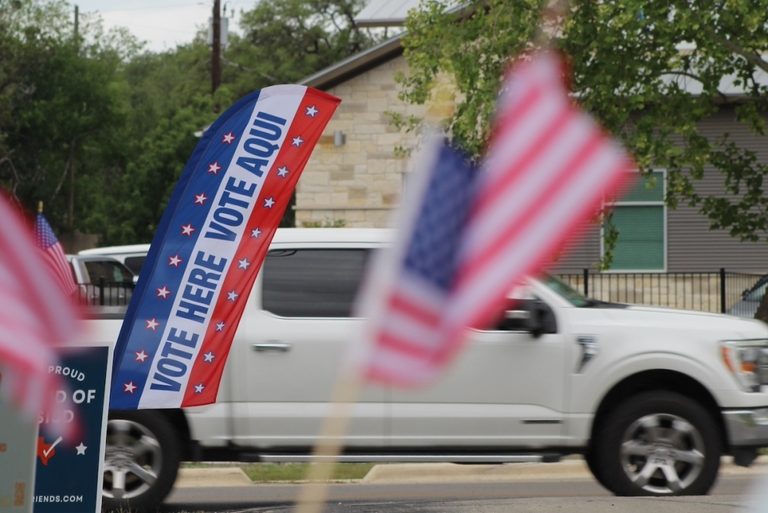
Texans have one final opportunity to cast their ballots in the 2026 midterm elections on Tuesday, Nov. 3. Polling places statewide will be open from 7 a.m. to 7 p.m., and the Secretary of State’s office has confirmed that the process is backed by the same proven audit procedures that have ensured election integrity for decades.
Where to Vote
Voting is administered at the county level. Residents of Bastrop, Brazoria, Brazos, Collin, Comal, Dallas, Fort Bend, Harris, Hays, Tarrant, Travis and Williamson counties may use any local polling site under the countywide polling‑place program. Voters in other counties must go to their assigned precinct. All sites provide at least one curbside‑voting space for those who are physically unable to enter the building.
Identification Requirements
Texas law mandates that each voter present one of seven approved forms of photo identification, including a Texas driver’s license, personal ID card, handgun license, election ID certificate, U.S. military ID, U.S. citizenship certificate, or a U.S. passport. If a voter lacks a photo ID, they may sign a provisional ballot affidavit and return to the local registrar’s office by Nov. 9 with acceptable documentation. Alternatively, a “reasonable impediment declaration” can be signed at the polls, allowing the use of a birth certificate, utility bill or paycheck as supplemental ID.
Mail‑In and Provisional Voting
While most Texans vote in person, certain voters qualify for mail‑in ballots: those 65 or older, individuals who are sick or disabled, expectant mothers within three weeks of the election, and residents living outside their home county during the early‑voting window (Oct. 19‑Nov. 3). Voters who encounter an issue at the polls—such as a missing ID or an administrative error—may cast a provisional ballot, which will be reviewed after Election Day.
Ballot Content
The ballot will feature a full slate of federal, state and local races. At the top of the ticket, voters will choose a U.S. Senator (Libertarian Ted Brown, Republican Ken Paxton, Democrat James Talarico) and the governor (Republican incumbent Greg Abbott, Libertarian Pat Dixon, Democrat Gina Hinojosa). All 38 U.S. House seats are up for election following the recent redistricting.
Statewide contests also include lieutenant governor, attorney general, comptroller, land commissioner, agriculture commissioner, railroad commissioner, four Texas Supreme Court seats, three Court of Criminal Appeals seats, three Court of Appeals seats, 16 state Senate seats, all 150 state House seats, and eight State Board of Education seats. Local ballots will list district judges, county officials, city council members, school board members and various propositions.
What to Bring
Voters may bring written materials—such as notes or sample ballots—to assist in casting their votes. However, firearms, cell phones, tablets, smartwatches and any campaign literature within 100 feet of a polling‑place entrance are prohibited by state law.
Registration Status Checks
Texans can verify their registration status online at the Secretary of State’s website. Some voters may see a “suspense” status, indicating that officials need to confirm a recent address change. This does not prevent voting; a statement of residence can be completed on the ballot, or voters can contact their local registrar to resolve the issue before heading to the polls.
Early‑Voting Turnout
More than 4.5 million Texans voted during the first week of early voting, and analysts estimate that roughly 7.85 million will have cast a ballot by the close of early voting on Oct. 30. In 2024, 83 % of votes came from early voting, 15 % on Election Day and 2 % by mail. The 2022 cycle saw 71 % early votes, 26 % Election Day votes and 3 % mail‑in.
Where to Find More Information
For a complete list of polling locations, sample ballots and candidate Q&As, visit communityimpact.com/voter-guide. After polls close at 7 p.m., results will be posted on the same page.
Original reporting: Community Impact — Richardson — read the source article.