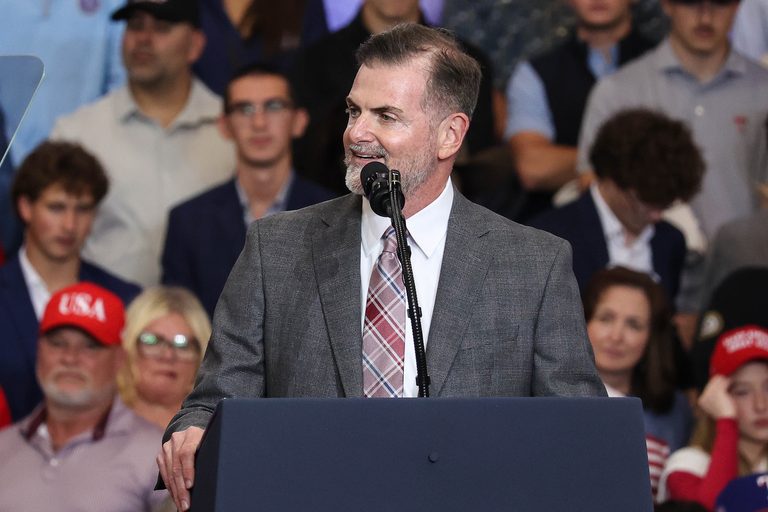
At a recent Lubbock Chamber of Commerce luncheon, Texas Tech University Chancellor Brandon Creighton—once a Republican state senator—argued that his experience fighting liberal influence on campuses makes him uniquely qualified to guide the university system toward higher‑paying, market‑relevant degrees.
From Senate floor to university boardroom
Creighton highlighted his long‑standing partnership with Lt. Gov. Dan Patrick and a new collaboration with chipmaker Nvidia, positioning Texas Tech as a model for other Texas institutions. He reminded the audience that his own struggle to finance college, aided by a $50,000 family loan and student loans, fuels his commitment to keep tuition costs in check.
While serving as chair of the Senate Education Committee, Creighton authored legislation aimed at curbing what GOP leaders described as liberal indoctrination and ensuring college degrees deliver economic value. Those laws, which eliminated many diversity, equity and inclusion offices and gave university regents greater authority over leadership appointments, have drawn attention from policymakers in other states.
New course‑review policy
Since becoming chancellor, Creighton has taken the next step by requiring faculty across Texas Tech’s five campuses to obtain approval before teaching material that addresses pediatric gender treatments, sexual orientation or certain concepts of race and sex. He says the policy affects only a “very small percentage” of classes, but acknowledges that some courses may be altered before they reach the board of regents.
John Colyandro, a longtime conservative policy adviser to Gov. Greg Abbott, praised the move as a necessary reset to restore public confidence that a college education is worth the investment.
Critics raise concerns
University professors and the Texas conference of the American Association of University Professors (AAUP) argue the policy imposes fresh limits on academic freedom and could drive talented faculty out of state. AAUP Texas President Teresa Klein warned that the long‑term impact may be difficult to reverse.
A faculty survey showed more than half of respondents are actively seeking employment elsewhere, and several professors have already announced departures, citing an inability to provide a complete education under the new rules.
Legal challenges are also emerging. Faculty groups have sued Creighton and the regents, alleging unconstitutional censorship that forced the removal of foundational texts such as Plato’s Republic, the omission of Holocaust history, and the reduction of instruction on treating transgender patients and health disparities among racial and ethnic groups.
Student perspective
James Snoddy, a Texas Tech student who helped organize a spring protest outside a board of regents meeting, described the campus debate as a bellwether for academic freedom nationwide. “If we don’t stop it here, it will spread further and further,” he said.
Statewide ripple effect
Other Texas public university systems have taken similar steps. Texas A&M regents have limited faculty discussion of race, gender and sexuality; the University of Texas system requires students to graduate without studying what it calls “unnecessary controversial subjects”; and at the University of Houston, some deans ask professors to certify that they “teach, not indoctrinate.”
Senate Bill 37, the law Creighton helped write, merely mandates periodic reviews of required undergraduate courses; it does not ban any specific subject. Creighton argues the bill provides a framework for ensuring curricula align with workforce needs and protect students’ financial investments.
Looking ahead
Creighton named four of Texas’s six other public university systems that have followed Texas Tech’s lead, emphasizing a proactive stance: “We’re not going to wait on others to do it for us. We’re going to lead. Some of it will be uncomfortable.”
As the debate continues, Texas Tech’s approach may shape how higher education across the state balances academic freedom with market‑driven accountability.
Original reporting: Texas Tribune (HLL/CB) — read the source article.