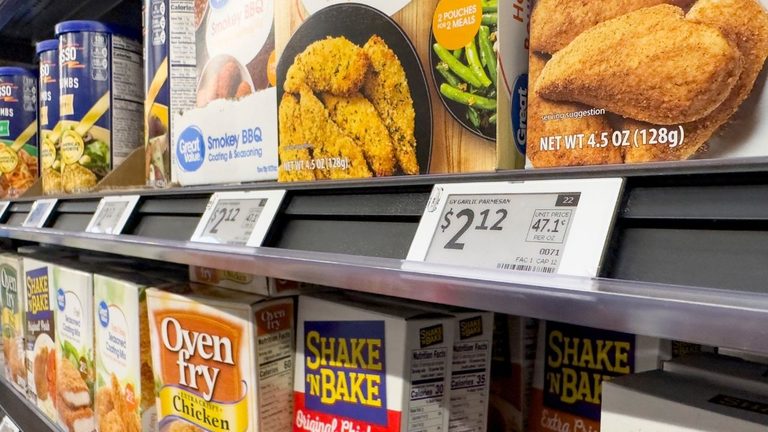
Texan shoppers are beginning to notice a new kind of price tag on grocery shelves. Walmart and Kroger have started installing electronic shelf labels that can change prices in minutes, replacing traditional paper tags. The technology, which works like the digital signs seen at gas stations, allows store managers to update prices centrally without the labor‑intensive process of swapping out physical numbers.
How the technology works
When a price change is needed—whether to clear excess inventory, launch a promotion, or respond to regional supply costs—store personnel can enter the new price into a central system. The electronic label then displays the updated figure instantly. Both retailers say this improves pricing accuracy and reduces the chance of mismatches between shelf tags and register totals.
Retailer statements
Walmart tested the labels at a Grapevine store before expanding the rollout. In December 2024, supplier VusionGroup announced an agreement covering Walmart’s roughly 4,600 U.S. stores. Walmart’s FAQ notes that local managers may lower prices to compete with nearby businesses, but the company generally does not match prices between its own locations. According to Walmart’s policy, geographic price differences can reflect operating costs, transportation, regional supply and competition.
Kroger told investors on Oct. 20, 2026 that it has installed more than 36 million digital shelf‑edge labels in about 1,100 stores and plans to equip over 2,400 stores by 2029. The retailer highlighted that updates that once took days now take minutes, helping both shoppers and employees.
Consumer concerns and FTC review
Federal regulators are examining whether retailers use personal data to set individualized prices. On Oct. 28, the Federal Trade Commission ordered nine companies—including Walmart, Target, Instacart and several ride‑share firms—to provide information about how they use consumer data in pricing. The FTC’s inquiry also covers worker compensation practices. Companies have 45 days to respond.
Walmart insists its electronic labels do not collect shopper information, contain no cameras or microphones, and display centrally approved prices. In a September 25 letter, CEO John Furner wrote, “We price the product, not the person.”
Research findings
Researchers from the University of Texas at Austin, UC San Diego and Northwestern University examined transaction data from a large, unnamed grocery chain that installed electronic labels in over 100 stores. Their March 2026 working paper found a temporary price increase affecting about 0.0042 % of products on an average store‑day before adoption, with a post‑adoption increase of just 0.0006 percentage points—statistically insignificant.
The study does not verify pricing practices at Walmart or Kroger, but it suggests that the technology itself does not automatically lead to surge pricing.
Legal backdrop in Texas
Texas Agriculture Code §13.035 prohibits merchants from misrepresenting prices or presenting them in a misleading way. The Texas Department of Agriculture inspects retail scanning systems and requires stores to correct any discrepancies so consumers are charged the lowest applicable price.
For shoppers, the simplest safeguard remains to compare the shelf price with the amount charged at checkout and raise any differences with store management.
What’s next?
The FTC’s investigation could shed more light on how consumer data influences pricing across the industry. Until the inquiry concludes, Texas shoppers can expect faster price updates but should stay vigilant about matching shelf tags to register totals.
Both Walmart and Kroger continue to promote the technology as a way to enhance efficiency and keep prices transparent, aligning with the retailers’ broader goals of better service and competitive pricing for Texas families.
Original reporting: The Dallas Express — read the source article.