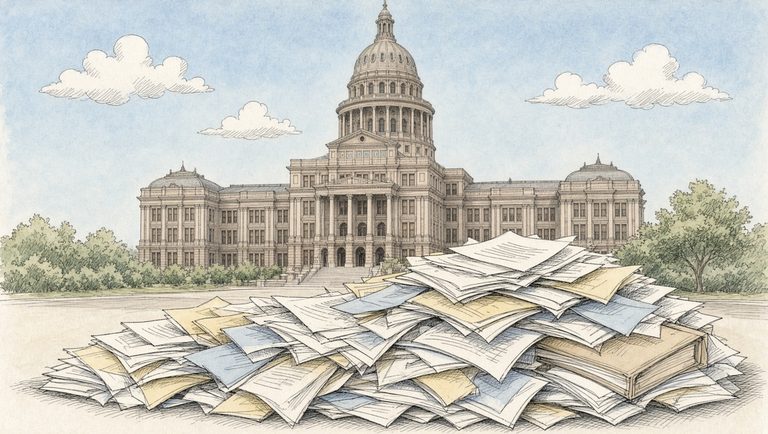
The 90th Texas Legislature has begun its pre‑filing period, and a slate of bills already on the table would add new financial obligations for Texas taxpayers and expand the size of state government. While the proposals cover a range of issues—from wage policy to health‑care and education—they share a common thread: higher spending that could ultimately be shouldered by families and businesses.
Wage and payroll proposals
Representative Ana‑Maria Rodríguez Ramos (D‑Richardson) introduced HB 110, which would raise the state minimum wage to $15 per hour or the federal minimum, whichever is higher. The bill also seeks to repeal a state provision that limits local wage rules to most private employers. Critics note that higher labor costs could force small businesses to raise prices or cut jobs, and that state‑government contractors would face larger payroll expenses funded by taxpayers.
In a related effort, Representative John Bucy (D‑Austin) filed HB 219, proposing a $5,000 annual salary increase for full‑time state employees, including university staff, beginning in September 2027. The measure would create a broad payroll obligation paid for by ordinary taxpayers.
Health‑care expansion
Two bills would expand Medicaid eligibility under the Affordable Care Act. HB 138, also filed by Rep. Rodríguez Ramos, would require Texas to accept federal matching funds for new enrollees, while SB 31 from Senator Judith Zaffirini (D‑Laredo) mirrors the House effort in the Senate. Although the federal government would cover a portion of costs, the state would assume an ongoing financial share and administrative responsibilities.
Education spending
Senator José Menéndez (D‑San Antonio) introduced SB 98, a sweeping education bill that would increase school funding allotments, add a school‑safety and mental‑health allotment, and require paid parental leave for eligible full‑time school employees. The legislation would also change how student enrollment is counted for funding purposes, creating additional recurring spending obligations for Texas families.
Senator Judith Zaffirini also filed SB 37, which would require school districts to offer free, full‑day pre‑kindergarten to all four‑year‑olds, expanding eligibility beyond the current limited criteria. The proposal would increase district budgets for staffing and classroom resources, potentially raising local tax burdens.
Other spending initiatives
Representative Suleman Lalani (D‑Sugar Land) proposed HB 147, a grant program directing $200 million per biennium to nonprofit community health clinics. While intended to support health services, the bill raises concerns about past fraud in similar grant programs, including high‑profile Medicaid fraud cases in New York.
Representative Sergio Muñoz (D‑Mission) filed HB 155, which would provide annual cost‑of‑living adjustments for certain Teacher Retirement System of Texas benefits. Although the adjustments are tied to actuarial soundness, they could add long‑term pressure to an already strained pension system.
Senator Borris Miles (D‑Houston) introduced SB 376, creating a Texas Freedman’s Bureau to identify descendants of freed slaves and process reparations claims. The bill would establish a new state agency, maintain a demographic database, and require state entities to use the term “freedmen” in data collection, further expanding state bureaucracy.
Judicial training proposal
Representative Ana Hernandez (D‑Houston) filed HB 1208, mandating implicit‑bias training for judges, court personnel and licensed attorneys. The bill would require two hours of training every two years for judges and one hour for attorneys, covering a range of bias topics and requiring implicit‑association testing. Critics argue the measure diverts state resources toward ideological instruction rather than core judicial functions.
These early filings represent only a fraction of the more than 1,200 bills and resolutions submitted on the first day of pre‑filing (Nov. 9, 2026). As the 90th session progresses, Texas taxpayers and business owners should monitor these proposals closely, weighing the potential impact on budgets, jobs and family finances.
Original reporting: Texans for Fiscal Responsibility — read the source article.