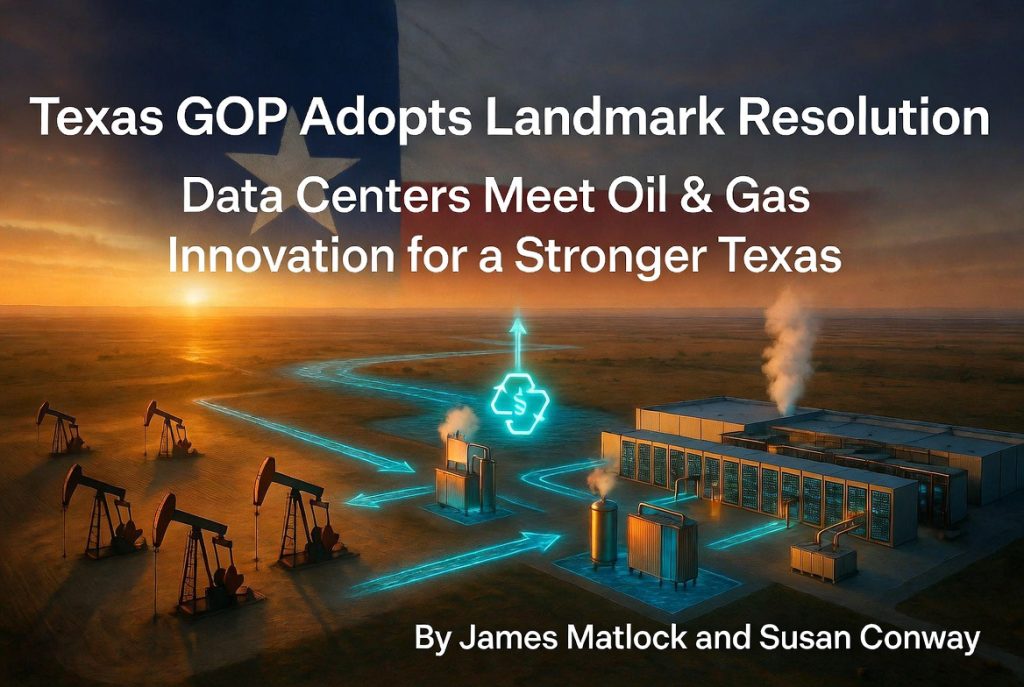
In a significant move addressing Texas’s booming data center industry, energy demands, and longstanding oil and gas challenges, the Texas Republican Party has adopted a resolution authored by James Matlock and Susan Conway. This forward-thinking policy calls for data centers to integrate practical, multi-benefit solutions: constructing on-site reserve pits for water storage, utilizing recycled produced water from the oil and gas sector as the primary source of water, and deploying inline geothermal technology. The latter not only cools process water but also generates approximately 1.5 megawatts of electricity per installation, easing strain on the electric grid.
The Data Center Boom: Massive Resource Demands
Data centers are the backbone of the digital economy, powering everything from cloud computing and AI training to streaming services and financial transactions. Texas has emerged as a major hub for these facilities due to its favorable business climate, abundant land, and existing energy infrastructure. However, the scale of their resource consumption raises serious concerns.
An average data center can consume between 300,000 and 5 million gallons of water per day for cooling purposes, depending on size, location, and technology. Electricity demand is even more staggering: individual large facilities often require 1.7 to 2.4 gigawatts—enough to power hundreds of thousands of homes. As hyperscale projects multiply, cumulative demands risk straining municipal water supplies and the ERCOT grid, especially during peak summer heat when both water scarcity and electricity reliability become critical issues.
Without proactive measures, Texas faces a future of heightened competition for water resources and increased reliance on fossil-fuel or intermittent renewable generation to meet spiking power needs. The resolution seeks to turn this challenge into an opportunity by linking data center growth with solutions from the state’s dominant energy sector.
Oil & Gas Produced Water: A Vast, Underutilized Resource with Hidden Costs
The oil and gas industry in Texas and surrounding regions produces more than 600 million gallons of wastewater (produced water) per day. Traditionally, much of this water—laden with salts, minerals, and hydrocarbons—is injected deep underground via disposal wells. While this has been standard practice, it creates significant unintended consequences:
- High subsurface pressure buildup, particularly in areas near the New Mexico and Louisiana borders where interstate water transport adds volume. This pressurization correlates with a documented rise in seismic activity (induced earthquakes) in previously stable regions.
- Impact on orphan wells: Many abandoned or orphaned oil and gas wells suffer accelerated degradation. The combination of high pressure and corrosive elements like high salinity and hydrogen sulfide (H₂S) causes metal casings and plugs to deteriorate. This can lead to wellbore failures, blowouts, and potential contamination of freshwater aquifers—posing long-term environmental and public safety risks.
These issues represent not just environmental liabilities but missed economic opportunities. Produced water, if properly treated, could become a reliable, non-potable water source for industrial uses like data center cooling.
Innovative Solutions in the Resolution
The resolution authored by James Matlock and Susan Conway outlines a comprehensive strategy that addresses water scarcity, energy demands, seismic risks, and economic revitalization simultaneously. Central to the plan is the requirement that recycled oil and gas wastewater serve as the primary source of water for data centers.
- Three Interconnected Reserve Pits for On-Site Water Storage: Data centers would be required to construct three interconnected reserve pits, each measuring 38’ x 38’ x 10’, providing approximately 300,000 gallons of on-site water storage capacity. The design facilitates efficient recirculation: water is drawn from one end as intake, circulates through the cooling systems (enhanced by inline geothermal technology), is discharged into the opposite end, and continuously recirculated. This setup ensures operational resilience, buffers against supply variations, and minimizes dependence on external freshwater sources.
- Recycling Oil & Gas Wastewater as Primary Supply: Instead of deep injection, produced water would be routed for treatment and reuse as the main water supply. This diverts millions of gallons daily from disposal wells, lowering subsurface pressures and mitigating induced seismicity, while directly meeting the massive daily water needs of data centers (300,000–5 million gallons per facility).
- Inline Geothermal Cooling Technology: A standout feature is the mandate for inline geothermal systems integrated with the recirculating water loop. As water circulates for cooling servers, these systems extract heat to generate clean electricity—approximately 1.5 MW per installation. This dual-purpose approach reduces the facility’s net draw from the grid, improves overall energy efficiency, and aligns with Texas’s leadership in both traditional and emerging energy technologies.
Additional Economic and Environmental Upside: Orphaned wells could be safely reopened and repurposed to produce water specifically for data centers. Treatment processes would include extraction of valuable minerals such as lithium, uranium, and others abundant in produced water. This creates new revenue streams for mineral rights owners—many of them Texas families and local landowners—boosting rural economies while funding well-plugging and remediation efforts. Mineral extraction also improves water quality for reuse, turning a waste product into a resource.
Broader Implications and Multi-Problem Solving
This resolution exemplifies pragmatic, Texas-first problem-solving. It tackles several interconnected issues at once:
- Water Security: Makes recycled produced water the primary source for data centers, supported by substantial on-site storage (three interconnected 300,000-gallon reserve pits), offsetting freshwater demand while repurposing billions of gallons of produced water annually.
- Energy Reliability: On-site power generation from geothermal cooling helps stabilize the grid amid rising AI-driven electricity needs.
- Environmental Stewardship: Reduced injection volumes lower seismic risks and well integrity failures. Proper treatment minimizes contamination threats.
- Economic Growth: New income for mineral owners, job creation in water treatment, pit construction, and mineral recovery sectors, plus sustained attractiveness for data center investment without overburdening infrastructure.
- Regulatory Accountability: By holding elected officials accountable, Texans can push for legislation that translates this resolution into binding, effective policy—ensuring data center operators contribute to, rather than strain, the state’s resources.
Critics may raise implementation challenges, such as treatment costs, permitting timelines, land requirements for the reserve pits, or technical integration of geothermal systems. However, Texas’s existing expertise in oilfield water management, mineral extraction, and energy engineering positions the state uniquely to overcome these. Pilot projects could demonstrate feasibility, with phased rollouts prioritizing high-impact regions near major oil & gas basins.
Edge cases warrant consideration: varying produced water chemistry across basins requires tailored treatment; proximity of data centers to well sites affects transportation logistics; ensuring mineral extraction technologies are economically viable at scale; and designing the interconnected pits to maintain water quality during recirculation. Transparent monitoring of seismic activity, water quality, and pit integrity would strengthen outcomes. The specified pit dimensions and recirculation design provide a standardized, scalable approach that balances capacity with practicality.
A Call to Action for Texas Leadership
Texas stands at a crossroads. The explosive growth of data centers brings immense economic potential, but unchecked resource demands could create new vulnerabilities. By enacting the resolution authored by James Matlock and Susan Conway into law, Texas can lead the nation in sustainable infrastructure development—leveraging its oil and gas heritage to fuel the digital future.
Citizens are encouraged to contact their elected representatives, urging swift legislative action. Practical innovation, not ideology, will solve these multifaceted challenges.
Learn more about these interconnected issues of energy, water, and resource stewardship in James Matlock’s book, The Eternal Well, available at https://books.by/james-matlock.
This resolution is more than policy—it’s a vision for resilient, prosperous Texas that turns potential conflicts into synergies. With accountability and action, the Lone Star State can set a model for the rest of the country.