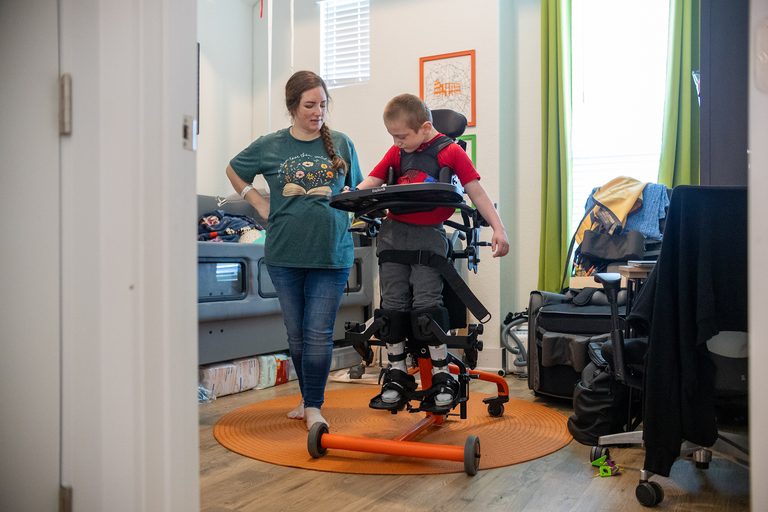
When Kelci Jagge adopted her son Ruslan, a non‑verbal, non‑ambulatory child with cerebral palsy and a seizure disorder, the public‑school system in San Antonio could not meet his needs. After two months of trying, she withdrew him and turned to year‑round homeschooling, a decision made possible by Texas’ new Education Savings Account (ESA) voucher program.
Vouchers provide critical resources for families
The ESA program allocates up to $2,000 of state funds per family for homeschooling expenses and up to $30,000 for families who enroll a child with a qualifying disability in a private school. Jagge used the money to purchase interactive buzzers, jumbo Crayola crayons, and a $119.95 early‑literacy curriculum featuring “Zigzag Zebra” and “Lizard Lou” books. “I wouldn’t have been able to buy those materials out of pocket,” she said.
Joy Smith, a mother from Roanoke, echoed the sentiment. Her 7‑year‑old son with autism receives $2,000 for homeschooling supplies, allowing them to afford specialized manipulatives and therapy without worrying about cost. “It’s making all the difference right now,” Smith said.
Democratic leaders vow to repeal the program
Gov.-elect Gina Hinojosa, a Democrat, called the ESA a “voucher scam” in her victory speech and promised to work “tirelessly to repair the damage.” She and Lt. Gov‑elect Vikki Goodwin have not commented on how they would support families who rely on the vouchers if the program is repealed.
Democratic lawmakers argue that the state should direct funds to public schools rather than subsidizing private or unregulated options. They claim the program drains hundreds of millions from struggling districts, as students leave their neighborhood schools and take state dollars with them.
Legislative outlook
Hinojosa will have the power to veto any ESA funding in the upcoming budget, though she has not indicated whether she will do so. Several Democratic representatives have already filed bills seeking to eliminate the program entirely. Rep. Diego Bernal, vice chair of the House Public Education Committee, warned that the voucher program could become “probably unrecognizable, if not extinct” after the next legislative session.
Despite the political push, Bernal also said lawmakers intend to preserve some form of support for families of students with disabilities, acknowledging the vital role the vouchers play for many.
Impact on families
More than 18,800 Texas students with disabilities are using vouchers this year, according to the comptroller’s office, and about 60% of all ESA participants are low‑income families. For many, the funds cover behavioral therapists, specialized tutoring, sensory products, and even private‑school tuition at schools like Oak Creek Academy in Killeen, which serves neurodivergent children.
Elizamae Dowd, a parent of three autistic children, described how her daughter Talia’s bullying and lack of progress in a public school ended when they moved her to a private academy with voucher support. “She’s happy now and learning,” Dowd said, adding that the prospect of losing the program is “devastating.”
Jagge, a single‑income mother of six, warned that without the vouchers she would have no viable option for Ruslan’s education. “I would not try public school again. It does not work for him,” she said.
What’s next?
As the new administration prepares its budget, families and advocacy groups are urging lawmakers to protect the ESA funding for disabled students. While Democratic leaders emphasize the need to strengthen public schools, the lived experiences of parents highlight how the voucher program has become a lifeline for children who cannot thrive in traditional classrooms.
The debate underscores a broader clash over school choice, parental rights, and the role of government in supporting vulnerable families—a clash that will shape Texas education policy in the months ahead.
Original reporting: Texas Tribune (HLL/CB) — read the source article.