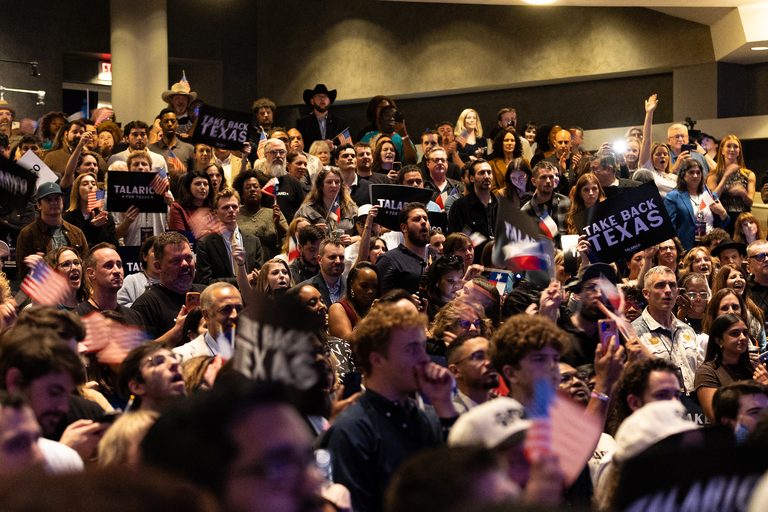
In a stunning turn of events, Texas voters handed the Democratic Party control of the governor’s mansion, the U.S. Senate seat and every other statewide office in the 2026 elections. The victories mark the first time in decades that Democrats have held such a breadth of power in the state, and they have immediately set the political conversation on fire.
Republican response: a call to recenter on the Constitution and the free market
Sen. Ted Cruz, a potential 2028 presidential contender, took to his podcast the day after the results and pledged, “Texas will be red again.” He framed the Democratic win as a temporary setback caused by “tofu‑eating, gun‑banning, tutu‑wearing, pinko commie liberals,” insisting that Texas remains a stronghold for traditional families, faith, and free‑market conservatism.
Veteran strategist Karl Rove echoed the sentiment, warning that the Republican Party must “get its act together by 2028” if it hopes to retain the state’s 40 electoral votes. Rove emphasized that the GOP’s success will depend on presenting a centrist, values‑driven platform rather than succumbing to the “Austin liberal” brand that he said fuels the current Democratic surge.
Democratic optimism and the road ahead
Democratic National Committee chair Ken Martin called the sweep a “seismic” shift, noting that the victories open new opportunities for the party to expand its map nationwide. Governor‑elect Gina Hinojosa, who defeated Gov. Greg Abbott, said her administration will focus on lowering costs, improving public education, and curbing big‑tech overreach while upholding the rule of law.
U.S. Rep. James Talarico, who won the Senate race by 12 points, cautioned against reading the results as a permanent partisan realignment. He argued that any candidate who “connects with Texans, speaks to their needs, and builds a big tent” can succeed, and urged all 2028 hopefuls to compete vigorously in the state.
Why Texas matters for the 2028 presidential contest
With 40 electoral votes, Texas is the second‑largest prize in the Electoral College and has been the anchor for every Republican presidential nominee since 1980. President Trump carried Texas by nearly 14 points in 2024, underscoring the state’s historic Republican lean. The 2030 Census is expected to add even more electors, making Texas an even more critical battleground.
Illinois Gov. J.B. Pritzker, a likely 2028 contender, called Texas the “big kahuna” of the upcoming race, noting that investment from both parties will intensify. He highlighted the example of Georgia’s shift to a blue state as a signal that strategic outreach in traditionally red states can pay off.
Potential challenges for Democratic governance
While Democrats now control the governor’s office and the Texas House, Republicans retain a majority in the state Senate. This split could lead to legislative roadblocks that test the new administration’s ability to deliver on promises such as expanding Medicaid and curbing government corruption.
Former San Antonio mayor and 2020 Democratic presidential candidate Julián Castro warned that the next generation of Democratic officeholders will need to demonstrate how their policies improve everyday Texans’ lives, or risk losing the momentum generated by the 2026 sweep.
Looking ahead
The coming months will see both parties mobilizing donors, volunteers, and messaging to shape the narrative in Texas. Republicans argue that a focused, values‑based campaign that emphasizes faith, family, and economic freedom will restore the state’s red status. Democrats, meanwhile, aim to prove that their governance can deliver tangible benefits without abandoning core liberal principles.
As the 2028 presidential race approaches, Texas stands at the crossroads of a potential political realignment. Voters, donors, and national parties will be watching closely to see whether the Lone Star State reverts to its traditional Republican roots or continues on a newly charted Democratic path.
Original reporting: Texas Tribune (HLL/CB) — read the source article.